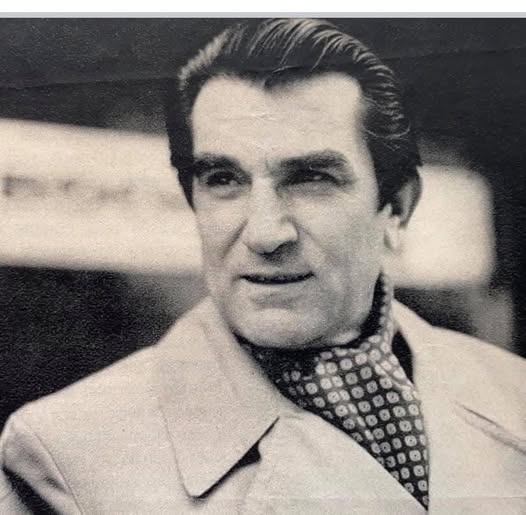
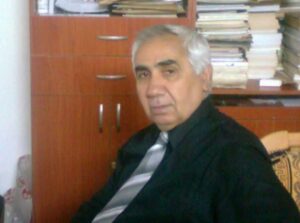
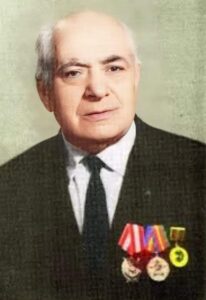
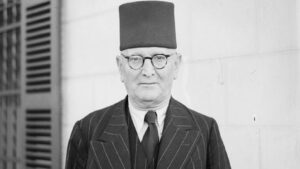
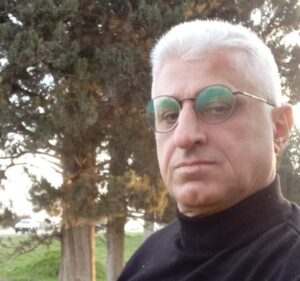
There are figures whose lives are difficult to summarize in a date of birth and death, or in the positions they held and the books they left behind, because over time, their journey turns into a part of the history of an entire people. Their life becomes a mirror of a historical era with all its dreams and hopes, suppression and persecution, struggles and exiles. Among these figures, the name of Dr. Noureddin Zaza stands out—one of the most prominent Kurdish intellectuals and politicians of the twentieth century, and one of the faces whose name was associated with the beginnings of modern Kurdish political organization in Syria.
Dr. Noureddin Zaza was born on February 15, 1919, in Maden, located between Amed (Diyarbakir) and Elazig in Bakur Kurdistan. He grew up in a Kurdish family known for its interest in public affairs. His childhood was not far from the turbulent political transformations witnessed by the region following the collapse of the Ottoman Empire and the rise of the Turkish Republic.
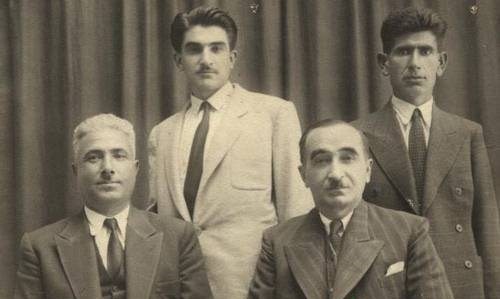
At an early age, Zaza tasted the meaning of political persecution and exile; members of his family were arrested and pursued due to their connections to the Kurdish movement. In the 1930s, he moved to Syria alongside his brother, Dr. Ahmed Nafez Zaza, embarking from that time onward on a path that would be accompanied by the concepts of homeland, exile, and identity throughout his life. Sources indicate that the Zaza brothers found support in Syria from Kurdish circles, particularly from the Bedir Khan family, which had made Damascus an important center for Kurdish cultural activity. His move to Syria was not merely a transition from one place to another; rather, it was a shift to a new space that allowed him to become more broadly acquainted with the Kurdish cultural and political movement, as well as an elite group of intellectuals and activists who were working to revive the Kurdish language and promote national consciousness. Thus, the features of Zaza’s personality began to take shape early on: a Kurd who experienced uprooting, an intellectual who found knowledge to be a means of resistance, and a politician who saw that identity requires awareness and organization in order to transform into a historical force.
Education as a Gateway to Awareness
Zaza believed that the struggle for the rights of the Kurdish people could not rely on political action alone, and that education, culture, and language form the foundation of any long-term revivalist project. He continued his studies in Syria and then moved to Beirut, where he studied political science and earned his university degree in 1947. After that, he headed to Switzerland to pursue his postgraduate studies, entering a new phase of his life in which academic achievement blended with political and cultural activity. In Europe, Zaza did not turn into a student isolated from the issues of his people; instead, he remained in contact with the Kurdish movement and sought to introduce European circles to the Kurdish cause.
In 1949, together with a number of Kurdish students, he participated in establishing the Kurdish Students Society in Europe and assumed its presidency, while its activity was tied to publishing the magazine “Dengê Kurdistan” (The Voice of Kurdistan). In 1956, he obtained his doctorate. Several sources mention that his specialization was related to educational sciences and philosophy, and that his dissertation addressed the ideas of the French philosopher Emmanuel Mounier. After receiving his doctorate, he returned to Syria, carrying with him a European academic and political experience, as well as a conviction that the Kurdish movement needed to transition from fragmented cultural activity to organized political action.
Between Politics and Culture
Noureddin Zaza was not a politician in the narrow partisan sense; throughout his life, he remained close to culture, literature, and language. At early stages, he was linked to the Kurdish cultural movement, writing for the magazine “Hawar,” founded by Celadet Bedir Khan, and contributing to activities aimed at developing the Kurdish language and reviving its use in literature and journalism. His name was also connected with the circles of Xoybûn and the Kurdish cultural and political activity that preceded the establishment of modern parties. Sources indicate that he was among the figures who contributed to bringing the Kurdish cause to European circles.
His vision of the Kurdish cause was broader than direct political demands; he treated it as the cause of a people possessing a language, history, memory, identity, and the right to self-expression. Hence lies the importance of his experience: he did not separate culture from politics, nor education from liberation, nor identity from organization. He believed that a people lacking the tools of knowledge, organization, and self-expression remain vulnerable to having other powers write their history on their behalf.
The Path to the Kurdish Democratic Party in Syria
In the mid-1950s, Kurdish political life in Syria began to witness a new phase. After decades of cultural activity, societies, associations, and independent figures, the need emerged to establish an organized Kurdish political framework capable of expressing the national demands of the Kurds in Syria. On June 14, 1957, the Kurdistan Democratic Party in Syria was founded, which later became one of the most important parties in the history of the Syrian Kurdish political movement. Party sources indicate that among the early founders were Osman Sabri, Hamza Niweran, Muhammad Ali Khoja, Rasheed Hamo, Shawkat Hanan, Khalil Muhammad, Sheikh Muhammad Issa, and Abdul Hamid Darwish. As for Noureddin Zaza, these sources note that he was a supporter of the project and contributed to drafting its political program prior to its founding, but he officially joined the party in 1958 and subsequently became its first president.
Prison Did Not Block the Path
With the establishment of the Syrian-Egyptian Union in 1958 and the subsequent escalation of restrictions on political activity, the party’s leadership was subjected to arrest in 1960. Zaza was among the most prominent detainees, and he utilized the period of his trial to defend his political vision and the national rights of the Kurds. Prison and persecution were part of Noureddin Zaza’s political life, and this experience did not begin solely with the founding of the party. In the 1940s, he was arrested in Iraq, where he spent a period in prison before moving to Lebanon to pursue his studies. Later, he faced arrest in Syria following his political and party activities, particularly during the era of the Syrian-Egyptian Union. After his arrest in 1960, Zaza subsequently faced a new series of pressures, arrests, and persecutions. Sources indicate that he was arrested again in the 1960s, and certain stages of his persecution were tied to his positions on the Kurdish cause in Iraq. In 1966, he was arrested in Lebanon, after which he entered a series of forced movements between countries of the region. However, prison for him was not the end of the road.
When Self-Defense Transforms into Defense of the People
Noureddin Zaza did not view his trial as merely a personal matter related to arrest or charges; rather, he found in it an opportunity to explain the Kurdish cause and place it before public opinion and Syrian authorities from a political and rights-based perspective. During his trial before the Military State Security Court in Damascus in 1960, he presented an important defense memorandum in which he expressed his vision for the Kurdish cause and his position on the rights of Kurds in Syria. His objective, as reflected by his positions, was not merely to defend himself, but to clarify that demanding national and cultural rights for the Kurds does not necessarily mean seceding from Syria; rather, it can be part of building a state based on the recognition of diversity and equality among its citizens.
This memorandum reveals an important aspect of Zaza’s political thought; he was attempting to shift the Kurdish cause from the realm of security accusations to the realm of political and rights-focused discourse. At a time when the authorities were treating Kurdish activity as a threat to the unity of the state, Zaza sought to emphasize that recognizing the Kurdish presence and rights does not contradict belonging to Syria, but can instead form the basis for a more stable relationship between the state and its Kurdish citizens.
From Damascus to European Exile
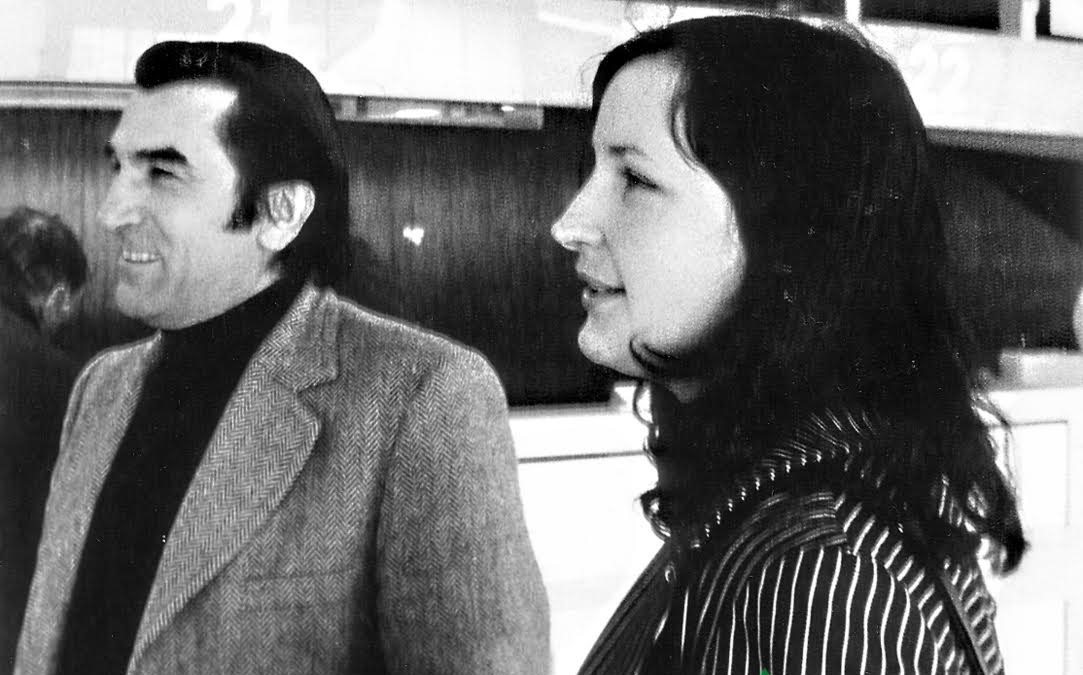
With mounting political and security pressure, Zaza’s remaining in Syria became increasingly difficult, ultimately leading to his return to Switzerland in 1970. This time he was not a student seeking knowledge, but a Kurdish intellectual and politician carrying behind him a long history of imprisonment, persecution, struggle, and exile. He settled in the city of Lausanne, continuing to write and engage in cultural and political activity, participating in efforts to raise awareness about the Kurdish cause. His name was also later associated with Kurdish cultural work in Europe and the Kurdish Institute of Paris, of which he became one of the founding members. During this phase, he met the Swiss journalist and writer Gilberte Favre, who was interested in Middle Eastern affairs and the region’s cultural and political issues. They married in 1972 and had their son, Chango. Gilberte was a life partner and a supporter of his intellectual and cultural journey, remaining present after his passing in events commemorating his memory and preserving his legacy.
Exile for Zaza was a harsh paradox; it provided him with a wider margin for writing and expression, yet at the same time deprived him of returning to the place that remained present in his memory as the homeland and the cause.
“My Kurdish Life”.. Memory in the Face of Oblivion
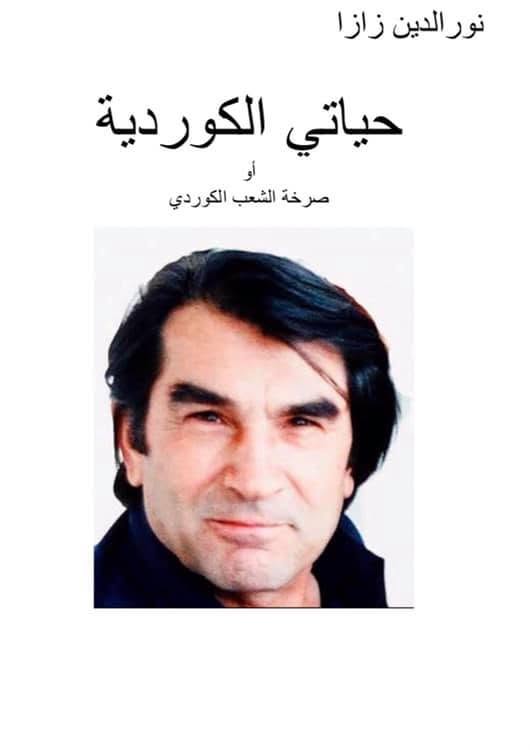
Zaza was not satisfied with political and cultural activity alone; he realized the importance of leaving a written testimony of his era for future generations. Among his most prominent works is his book “Ma vie de Kurde” (My Kurdish Life), published in French in the early 1980s. The book is considered one of the most important texts Zaza left behind regarding his life, political experience, and the Kurdish cause, and its importance lies in transcending the boundaries of a personal autobiography. It is a testimony of a generation that lived through the major transformations experienced by the Kurdish movement in the first and second halves of the twentieth century—from the stage of societies and cultural activity to the stage of political and party organization, and from prisons and persecutions to European exiles.
In the book, Zaza recalls milestones from his childhood, the experience of exile, studies, political activity, his relationship with the Kurdish cultural scene, the founding of the Kurdish Democratic Party in Syria, and then the years of imprisonment and persecution. Thus, the individual biography becomes a collective document; when Zaza writes about himself, he simultaneously writes about an entire generation that lived the Kurdish situation in a time when the Kurds had no state to protect their existence, nor a stable political space to express their rights. Zaza also left behind other literary and cultural works, writing and translating in Kurdish, French, and Arabic, and contributing to introducing Kurdish literature and culture to European circles.
The Final Years.. and Passing
In his final years, Noureddin Zaza remained faithful to the cause that accompanied him since his youth. He had covered a long distance between Maden, Damascus, Beirut, and Lausanne; between school and university, between the party and prison, and between the homeland and exile. Yet, exile did not turn into a rupture with his identity; instead, it became a space to continue writing and bringing awareness to the Kurdish cause. Zaza developed cancer in his final years and passed away on October 7, 1988, in the Swiss city of Lausanne at the age of sixty-nine, where he was buried. The man who spent a large portion of his life far from his homeland departed, but he never left the cause he carried with him wherever he went.
Noureddin Zaza.. When a Biography Becomes the Memory of a People
Noureddin Zaza was not a military commander, nor did he possess authority or a state, nor was his life stable. However, he was one of the intellectuals who realized early on that the survival of peoples does not depend on power alone, but requires knowledge, awareness, culture, organization, and the ability to express oneself. The significance of his experience lies in combining within his personality the intellectual, the politician, the academic, the writer, and the activist. He carried the Kurdish cause from the experience of childhood and exile to the university, from the university to cultural activity, from cultural activity to political organization, from the party to prison and European exile, and then transferred a portion of this experience into writing so it would remain a witness to his time.
In Conclusion, We Can Say
It is true that Dr. Noureddin Zaza passed away physically, but he remained as thought and ideas in books, memory, institutions, and in the path of the Syrian Kurdish political movement. Zaza lived in an era when Kurdish identity was under political and cultural siege, so he chose to make knowledge, language, writing, and political organization his tools of confrontation. When the doors of the homeland were closed before him, he did not abandon his cause; rather, he carried it with him into exile. And when the space for politics narrowed, the space for writing expanded. For this reason, revisiting the biography of Noureddin Zaza is a retrieval of a phase in the history of the Kurdish movement, with all the hopes, sacrifices, divisions, persecutions, and exiles it contained.
Ronahi Newspaper
Note: This text is translated from the original Arabic version… Read the Arabic version:Click here