Whether you’re walking through a major Western city, browsing social media, or on a university campus today, you can’t miss it. Stencilled on brick walls, plastered on light poles, draped from balconies, or blasted through megaphones, the slogan is everywhere: “Free Palestine!” It’s become the go-to move for self-proclaimed activists and armchair moralists to virtue-signal their support for Palestinians’ right to statehood, self-determination, and fundamental human dignity.
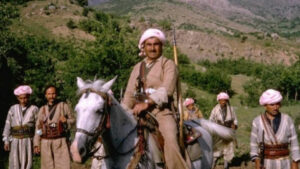
What you won’t see or hear during your walk or campus visit are flags, painted signs, or chanted slogans for the Kurds; that’s assuming you’re even aware they’re stateless as well. While Western outrage rallies in support of Palestinian self-determination, over 40 million Kurds remain the largest ethnic group without a country of their own. Spread across Turkey, Iran, Iraq, and Syria, they’ve spent more than a century fighting for the same rights as Palestinians: basic human rights and a homeland.
Why does the Palestinian plight provoke wall-to-wall outrage across the West, while the Kurds are treated as a geopolitical footnote?
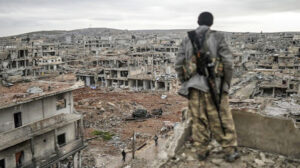
It’s certainly not for lack of human suffering. After the Ottoman Empire collapsed, the 1920 Treaty of Sèvres promised the Kurds a state of their own, only for Western powers to renege three years later, carving up their homeland into four pieces to satisfy newly drawn borders, without consulting a single Kurd. What followed was a century of horror: Saddam Hussein’s chemical attacks in Halabja, brutal military campaigns and language bans in Turkey, execution squads in Iran, and forced displacement in Syria.
None of this horror moves the Western conscience. The silence isn’t accidental; it’s a calculated blend of geopolitical self-interest, media-driven algorithms, and an open secret: antisemitism rebranded as moral virtue.
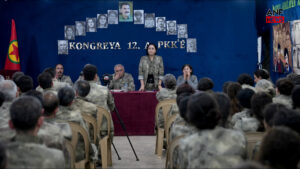
Let’s start with the geopolitical game: NATO’s convenience. Turkey, a key NATO ally guarding Europe’s southern flank, treats any hint of Kurdish self-rule as a threat that must be crushed. When Western armies needed ground forces to fight the Islamic State in Syria, they armed Kurdish fighters and praised them as heroic defenders of democracy. Kurdish men and women died by the thousands doing the West’s dirty work. But once ISIS was defeated, Western leaders discreetly withdrew their support, effectively turning their backs on the Kurds and handing the keys back to Turkey.
Western outrage, as much as it may be virtue-signalling, is easy when there’s no invoice attached. Condemning Israel carries almost no real cost; it’s a low-risk, high-reward exercise in self-righteousness. Championing the Kurds, however, requires calling out allies, rattling NATO, and challenging borders drawn by Western powers. The sobering truth for the Kurds: they’re useful on the battlefield but invisible at the negotiating table.
Second, the Kurdish struggle doesn’t fit the cartoonish contrasts that pass for “Western activism.” Today’s protest culture thrives on oversimplified, black-and-white formulas: oppressor versus oppressed, white colonizer versus indigenous victim. Western media tends to narrate the Palestinian cause through this framework—casting Israel as a colonial outpost rather than a sovereign nation, a narrative that’s then echoed on red carpets, social feeds, and concert stages. It’s a convenient, off-the-rack story that requires neither fine distinctions nor historical literacy.
Applying an ‘anti-colonial’ lens to the Kurds’ struggle quickly falls apart. The states oppressing the Kurds—Turks, Persians, and Arabs—are not ‘Western colonizers.’ They’re native Middle Eastern groups whose right to govern is rarely challenged. Without the fuel of a Western proxy to blame, the outrage simply fails to ignite. Acknowledging that Middle Eastern regimes can be brutal imperialists would undermine the story the Western outrage system depends on.
The double standard is baked into the global diplomatic system. International law treats Palestinians as a population under foreign occupation, granting them the legal right to break away and build their own nation. The Kurds, however, are classified as “national minorities” trapped within existing sovereign borders. Under international doctrine, Kurds are entitled only to local cultural rights, not to full independence. Sovereign nations guard this legal loophole religiously, not out of principle but out of fear of encouraging their own minority groups to secede.
Recent history is littered with this hypocrisy. Spain still refuses to recognize Kosovo out of fear for Catalonia; Canada’s Supreme Court legally restricted Quebec to internal autonomy in 1998; and when 93 percent of Iraqi Kurds voted for independence in 2017, neighbouring regimes immediately deployed tanks to crush the vote. Protecting lines drawn on a map will always matter more to politicians than human beings’ freedom to self-determination.
Third, 21st-century journalism has an undeniable self-interest: manufacturing rage-driven narratives to keep the lights on. The Israeli-Palestinian conflict is media crack—reliable, high-octane engagement for newsrooms and algorithms alike. We saw this circus explode when American rapper Macklemore shouted, “Free Palestine!” on stage while opening for Ed Sheeran. After venue owners allegedly pressured Sheeran to drop Macklemore, Sheeran’s entire lineup—including his long-time backing band, Beoga, and openers such as Finneas—quit the tour in protest.
Seeing a clear monetization opportunity, Macklemore immediately announced his “Free Palestine Tour,” revealing everything you need to know about the rapper’s moral compass. (Yes, I’m aware that Macklemore is calling it a “charitable tour.”) The media eagerly turned the fallout into a viral feeding frenzy, amplifying every tweet, boycott, celebrity stance, and drop in Sheeran’s concert attendance and Instagram followers as social proof of collective outrage.
Beneath newsrooms serving their self-interests lies a demographic reality. Advocacy for Palestinian self-determination commands a built-in global network of nearly two billion Muslims, whose shared identity drives emotional investment across every time zone. It’s a ready-made, transnational megaphone. No such global alliance exists for the Kurds. Because their struggle is ethnic and regional rather than pan-religious, the Kurdish cause attracts no international bloc, no global movement, and no sympathy on the world stage, much as nobody outside Britons and ethnic Irish genuinely cared about the Northern Ireland conflict.
Here’s where trading in comforting lies needs to stop, and an uncomfortable truth needs to be recognized: the core divide between pro-Palestinian advocacy and the Kurdish fight for self-determination boils down to a simple formula: who pays the price for statehood and who’s allowed to monopolize the world’s sympathy.
If Israel bequeaths an independent Palestine, Jews pay the price. If Turkey, Syria, Iraq, and Iran bequeath an independent Kurdistan, Muslims pay the price. That’s the entire equation. Western performative outrage explodes in the first scenario because demanding sacrifices from others costs nothing, but evaporates in the second because holding Muslim-majority regimes accountable disrupts their neat, selective anti-colonial script.
This divide exposes the selective morality that governs public commentary. While antisemitism remains an undeniable reality, anti-Israel sentiment provides a sanitized front for age-old prejudices. In a politically correct Western society, echoing overt anti-Jewish conspiracy theories, such as “Jews control the banks” or “Jews start wars for profit,” rightly invites condemnation. Disguising those same attitudes as “anti-Zionist critique,” however, earns applause in self-identified progressive circles. Israel has simply become a socially permissible surrogate for targeting Jews.
The Kurdish fight carries no repackaged malice to propel its narrative into the global spotlight. It’s a localized struggle against neighbouring Muslim states. For governments in Ankara, Damascus, Baghdad, and Tehran, surrendering territory for a Kurdish homeland would mean relinquishing land under Muslim control, a zero-sum compromise no regional power is willing to make. Furthermore, Kurds in Iraqi Kurdistan and Rojava have established notably secular, modernized systems centred on pluralism and women’s rights. To traditionalist regimes, supporting Kurdish statehood means watching a progressive, egalitarian model thrive at the expense of traditional religious authority.
The final diplomatic nail in the coffin is a matter of regional perception: the Kurds are seen across the Middle East as far too cozy with Israel. In a region where anti-Israel animus is an entry requirement for political legitimacy, any group labelled friendly to the Jewish state is instantly radioactive to surrounding regimes and to Western ideological echo chambers.
Universal values such as self-determination, anti-imperialism, and basic human dignity lose meaning when applied selectively. Deciding who deserves a state based on geopolitical convenience, media hype, or hidden bias destroys the very concept of justice. Loudly demanding freedom for one group while looking away from forty million Kurds isn’t moral courage. It is performative solidarity rooted in double standards.
It’s time for Western governments, cultural icons, media pundits, and street-level marchers to hold their proclaimed moral convictions to a consistent standard. If “Free Palestine!” is the defining rallying cry of today’s selective moral crusade, then moral consistency demands that the uncomfortable question be asked: Why not also “Free Kurdistan!”?
______________________________________________________________
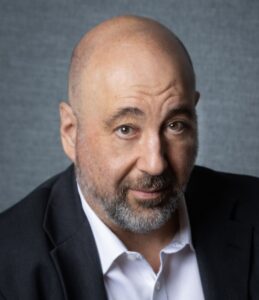
Nick Kossovan, a self-described connoisseur of human psychology, writes about what’s on his mind from Toronto. You can follow Nick on Twitter and Instagram @NKossovan.