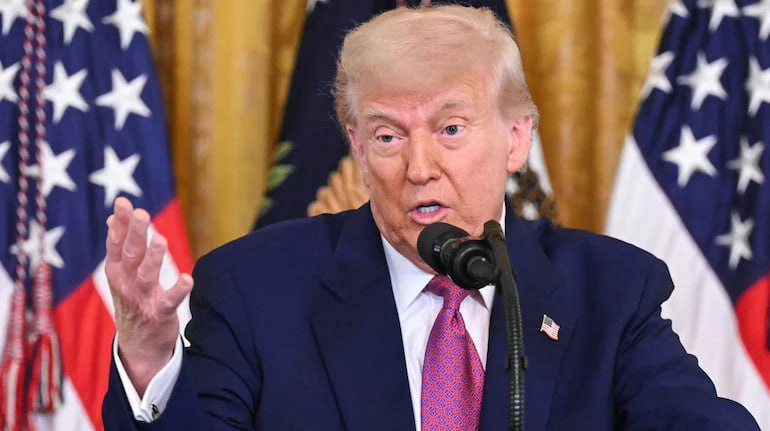
President Trump is considering sending federal troops to Chicago to address rising crime rates, sparking fierce opposition from local leaders who call it an overreach of authority.
Debate intensifies over federal intervention in city crime — Washington Post / Fair use for news reporting
Updated: Aug 25, 2025 — 10:00 AM ET
Key Points
Trump has signaled plans to deploy National Guard to cities like Chicago to combat violence.
Local officials, including Chicago’s mayor, denounce the move as unconstitutional and unnecessary.
Pentagon preparations for deployment have been underway for weeks.
Democrats accuse Trump of fabricating a crisis for political gain.
The proposal expands on similar actions in Washington D.C.
What’s Happening
Over the past few days, President Trump has escalated his rhetoric on urban crime, specifically targeting Chicago by suggesting the dispatch of federalized National Guard units. This comes after he federalized police in the capital, aiming to extend similar measures to other Democratic-led cities experiencing high violence rates. Reports indicate that military planners have been coordinating potential operations, including troop movements from Republican states.
Chicago’s leadership has pushed back strongly, with the mayor labeling the threat as uncoordinated and harmful. State governors have also voiced concerns, stating that such actions bypass local authority and could lead to unnecessary confrontations.
The timing aligns with broader administration efforts to address what they describe as lawlessness in major urban areas, though critics argue crime statistics do not justify military involvement.
Context & Why It Matters
This development reflects Trump’s ongoing emphasis on law and order, a hallmark of his presidency. By threatening federal intervention, the administration seeks to demonstrate decisive action against crime, potentially appealing to his base ahead of midterms. However, it raises constitutional questions about federal overreach into state matters, echoing historical tensions like those during civil rights eras.
The move could exacerbate divisions between red and blue states, with legal challenges likely if implemented. It also highlights disparities in how crime is addressed across the country, potentially affecting public safety perceptions and electoral strategies. If troops are deployed, it might set a precedent for future federal involvement in local policing, altering the balance of power.
Experts note that while crime in Chicago remains a concern, local initiatives have shown progress, making federal troops a controversial solution that could inflame rather than resolve issues.
This report synthesizes multiple sources. Narrative is paraphrased; quotes are limited and attributed.
FBI Raids Home of Former Trump Adviser John Bolton in Security Probe
Federal agents searched John Bolton’s properties as part of an investigation into classified materials, reigniting debates on political motivations.
Raid underscores ongoing national security inquiries — Getty Images / Fair use for news reporting
Updated: Aug 25, 2025 — 11:00 AM ET
Key Points
FBI executed searches at Bolton’s home and office for classified documents.
Bolton, a vocal Trump critic, is the latest in a series of investigations targeting former officials.
The probe stems from concerns over mishandled sensitive information.
Reactions highlight fears of weaponized justice against political opponents.
Vice President Vance defended the action as necessary for security.
What’s Happening
Federal investigators conducted raids on the residence and workplace of John Bolton, who served as national security adviser under Trump but later became a critic. The operations focused on recovering potentially classified records, with agents removing items for analysis. This action is part of a broader effort led by the Justice Department to address leaks and improper handling of government secrets.
Bolton has cooperated previously but maintains no wrongdoing. The timing, following his public criticisms and book publications, has fueled speculation about retaliatory motives.
Officials emphasize the raid is based on evidence provided by intelligence agencies, not political directives.
Context & Why It Matters
Bolton’s fallout with Trump dates back to policy disagreements and his dismissal. His memoirs revealed internal administration dynamics, drawing ire from Trump supporters. This raid fits into a pattern of scrutinizing former aides who have spoken out, raising questions about impartiality in law enforcement.
The incident could impact public trust in institutions, especially amid claims of politicization. It also underscores tensions within the Republican Party, as figures like Vance support the probe while others see it as vengeance. Broader implications include potential chilling effects on whistleblowers and the handling of classified info in future administrations.
Analysts suggest this may encourage more secure practices but warn against using federal power for personal grudges.
This report synthesizes multiple sources. Narrative is paraphrased; quotes are limited and attributed.
Trump Pushes Republican States for Redistricting to Secure House Majority
President Trump urges GOP-controlled legislatures to redraw congressional maps, aiming for long-term Republican dominance in the House.
Redistricting battles heat up nationwide — Yahoo News / Fair use for news reporting
Updated: Aug 25, 2025 — 12:00 PM ET
Key Points
Trump advocates for aggressive redistricting in states like Texas and Indiana.
Democrats threaten countermeasures in blue states if GOP proceeds.
Texas has already approved new maps favoring Republicans.
The strategy could lock in GOP House control for decades.
Legal and political challenges are expected from both sides.
What’s Happening
President Trump is actively encouraging Republican-led states to revise their congressional boundaries to maximize party gains. This push has gained momentum in Texas, where lawmakers recently passed revised maps that could add several GOP seats. Similar efforts are underway in other states, with Trump applying pressure on hesitant legislators.
Democratic leaders have responded by preparing their own redistricting plans in states they control, such as California, to counterbalance potential losses. The rapid pace of these changes has led to accusations of gerrymandering from both parties.
This wave of redistricting follows the 2020 census but is accelerated by political calculations ahead of upcoming elections.
Context & Why It Matters
Redistricting typically occurs every decade, but Trump’s involvement marks a more partisan approach, aiming to solidify Republican power amid shifting demographics. By targeting battleground states, the GOP seeks to insulate itself from voter swings, potentially ensuring majority status for years.
This tactic raises concerns about fair representation and could lead to increased polarization. Courts may intervene if maps are deemed excessively biased, as seen in past cycles. The outcome could reshape Congress, affecting policy on issues like taxes, healthcare, and immigration.
Observers warn that an arms race in gerrymandering undermines democracy, prompting calls for federal reforms that have so far stalled.
This report synthesizes multiple sources. Narrative is paraphrased; quotes are limited and attributed.
Democrats Grapple with Widespread Voter Registration Losses
New data reveals a significant shift as millions of voters move away from the Democratic Party, posing challenges for future elections.
Party affiliations in flux across states — NYT / Fair use for news reporting
Updated: Aug 25, 2025 — 1:00 PM ET
Key Points
Democrats have lost ground in all 30 states tracking party registration.
Over 4.5 million voters have swung toward Republicans since 2020.
Shifts are pronounced among Latinos and younger demographics.
Party leaders express alarm over the trend’s implications.
Recovery could take years, impacting midterm strategies.
What’s Happening
Recent analyses show the Democratic Party experiencing unprecedented declines in registered voters across the nation. In states that monitor affiliations, Republicans have gained substantially, reversing previous trends. This erosion is evident in battlegrounds and traditional strongholds alike.
Experts attribute the changes to dissatisfaction with economic policies, cultural issues, and leadership. The data, covering the period since the last presidential cycle, indicates a net loss that could hinder mobilization efforts.
Democratic officials are now focusing on outreach programs to stem the tide and regain support.
Context & Why It Matters
The voter shift comes amid broader political realignments following the 2024 election. Factors like inflation, border concerns, and social debates have influenced registrations, particularly among key groups. This crisis could weaken Democratic prospects in upcoming contests, forcing a reevaluation of platforms.
A sustained decline might alter the electoral landscape, giving Republicans an edge in close races. It also highlights the fluidity of voter loyalty in a polarized environment, prompting both parties to adapt. Long-term, it underscores the need for inclusive policies to maintain diverse coalitions.
Commentators suggest targeted campaigns could reverse the trend, but time is critical.
This report synthesizes multiple sources. Narrative is paraphrased; quotes are limited and attributed.
US Sees First Immigrant Population Drop in Decades Under Trump Policies
Strict immigration measures have led to a notable decline in the foreign-born population, impacting labor markets and demographics.
Shift in population dynamics raises economic concerns — Pew Research / Fair use for news reporting
Updated: Aug 25, 2025 — 2:00 PM ET
Key Points
Immigrant numbers fell by 1.5 million in early 2025.
First decline since the 1960s, attributed to deportations and border controls.
Labor force lost over 750,000 workers due to the drop.
Aging US population exacerbates workforce shortages.
Experts predict continued impacts on economy and society.
What’s Happening
The United States has experienced a reversal in immigration growth, with the foreign-born count decreasing significantly this year. Data from research centers show a reduction from historic highs, driven by enhanced enforcement and reduced entries. This marks a departure from decades of expansion.
Administration actions, including mass removals and stricter visa processes, have contributed to the trend. While some hail it as a success in controlling borders, others highlight unintended consequences.
The decline is most pronounced in unauthorized categories, but legal immigration has also slowed.
Context & Why It Matters
Trump’s focus on immigration reform has reshaped inflows, fulfilling campaign promises but sparking debates on humanitarian and economic fronts. With an aging native workforce, immigrants have traditionally filled gaps in various sectors.
This shift could hinder growth, as businesses report labor shortages. It also affects cultural diversity and family reunifications. Long-term, it may influence electoral maps and policy priorities, with calls for balanced approaches.
Studies suggest the trend might persist, requiring adjustments in workforce planning.