By: Barzo Mahmoud
Saussure states: “It is difficult to determine on what basis the distinction between a language and a dialect rests. Often, a dialect is named a language by virtue of producing literature, and the issue of mutual intelligibility plays a role in this as well, as when we say of people who cannot understand one another that they speak different languages.” He further adds that languages that diverge only to a slight degree are termed regional dialects, but we must not give this word a precise, rigid meaning. Between regional dialects and languages, the difference is one of quantity, not of nature.
Undoubtedly, language goes through developmental stages, each playing its own specific role. A language may undergo a regressive stage due to factors outside the linguistic scope, whether political, economic, or social. The evolution of the Kurdish language from its ancient phase—which represents the initial stages of its genesis, beginning with the Median language, which perhaps also developed in the cradle of the languages of the peoples and tribes of Kurdistan, from Gutium, Subartu, and Lullubi to the Hurrians and Mitannis, and finally the Median language—evolved into the phase of local dialects. These dialects crystallized in their phonetic and grammatical forms since the Kurds embraced Islam, i.e., since the seventh century AD, until reaching their current state. Today, it branches into four main dialects that adopt phonetic, morphological, and syntactic forms that differ in some aspects and correspond in others, a matter that necessitates linguistic study of both their surface and deep structures—that is, from within linguistic laws.
As is well known in linguistics, all languages have been subject to the law of evolution throughout their long history. Linguists believe that there are two influential factors in language: “a factor of unification and stability, and a factor of differentiation and change.” Some argue that the nature of the terrain often intervenes, causing one of these two factors to override the other. In regions where nature is infertile and poor, the inhabitants are forced to move to improve their economic situation. This leads to contact and mixing among the inhabitants of different regions, resulting in the stability of the language and a lack of proliferation of local dialects. Conversely, if nature is fertile, people remain in their settlements due to the absence of a need to move, which causes these isolated human units to adopt diverse linguistic paths, leading to the emergence of several dialects that diverge from one another as time progresses. For the first reason, it is noted that the language of the Eskimos has not been subject to evolution and change; for the second reason, it is noted that the French language split into different dialects to the extent that one senses linguistic differences when moving from one village to another.
Language, as a social entity, is prone to evolution and change due to external factors on one hand, and internal factors on the other. Here, the linguist Saussure points to “the existing relations between language and political history, as major historical events, such as the Roman conquests, exerted an boundless influence on numerous linguistic facts. Colonialism, which is considered merely a form of conquest, transfers a language to different environments, leading to changes within it.” He adds: “The internal politics of states is no less important for the life of languages; some governments, like Switzerland, accept the co-existence of several languages, while others, like France, aspire to linguistic unity.”
From here, we observe that the Kurdish language, throughout its long history, suffered from internal and external factors that affected its linguistic unity. This led to the emergence of different dialects, making it difficult for a Northern speaker to understand everything a Southern speaker says. The social, political, and geographical situation of Kurdistan—as reflected in the plurality of feudal entities during the Ottoman era—and the fertile nature of the Kurdistan region, along with its rugged topography in many areas, helped the emergence of isolated social units. This occurred alongside the convergence of foreign powers to control the resources and wealth of Kurdistan, which led to the first partition of Kurdistan between the Safavid Empire and the Ottoman Sultan in 1514 at the Battle of Chaldiran. The second partition of the section that was under Ottoman rule among several countries came after World War I as a result of the Sykes-Picot Agreement. All these factors prevented the establishment of an independent Kurdish state with a centralized authority that could enable it to develop its national language to perform its civilizational and scientific role among human societies on this globe. Instead, Kurdistan became divided parts among several countries, and the Kurds became social entities living with non-Kurdish societies, forced to learn a language other than their own—the language of each of these countries: Arabic, Persian, and Turkish. In addition to the aforementioned factors, the religious-linguistic influence and the impact of the Arabic language on the Kurdish language must also be taken into account since the Kurds entered Islam in the seventh century AD—meaning approximately fourteen centuries ago—as we see Kurdish clerics using religious words and expressions from the Arabic language, the language of the Holy Quran.
These combined factors made the Kurds live in a state of social, psychological, political, economic, and linguistic dependency, under which they were supposed to forget their national language. Despite all this, we find that the majority of the Kurdish people still speak their language to this day; in fact, they take pride in it. In my belief, this is due to several reasons: among them are the psychology of the Kurdish individual, their mountain-like resilience, and their national pride, in addition to the mountainous nature of Kurdistan, which preserved its national language and historical authenticity in the face of other languages. It is worth noting that Kurdistan has not witnessed colonial settlement since the Kurds entered Islam, at least, and this is considered one of the positive factors that helped the Kurds protect their language from extinction for a long time. Although the factors for the survival and continuity of the Kurdish language are the same factors for the survival of these dialects, they nonetheless protected them from annihilation. Unifying the Kurdish language into a single form for all Kurds is a national and historical task, and a major responsibility that falls upon the shoulders of linguists in the first place, and intellectuals and interested parties in the second place, to play their historical role away from postponement and procrastination for subjective reasons and narrow factional interests.
It is worth mentioning that Dr. Abdul Wahid al-Wafi asserts that the primary reason for a single language branching into dialects and languages is the expansion of the language into different, vast regions and its use by large groups and various sects of people. However, this primary cause does not lead directly to language branching; rather, it provides opportunities for the emergence of other factors that lead to this result, the most important of which are attributed to:
-
Social and political factors
-
Social and psychological factors
-
Geographical factors
-
Popular factors
-
Physical-physiological factors
Under the influence of these factors, speakers of a single language split into distinct groups, whereby the language of each group develops a trajectory that differs in terms of its evolution, phonetic shifts, and semantic changes from others. If we contemplate the structure of the Sorani and Kurmanji dialects, we notice that divergence exists at phonetic, morphological, and syntactic levels, in addition to vocabulary differences and the presence of terminological chaos on both sides, as follows:
| Type of Linguistic Difference | Sorani | Kurmanji |
| Phonetic | baw, dill | bav, dil |
| Morphological |
namey min kurî min keçî min |
nameya min kurê min keça min |
| Syntactic | xwardim |
min xwar min navê |
| Morpho-syntactic | kitêbekem | kitêba min |
Linguists emphasize that a comprehensive study of a language necessitates studying the place and its language by linking the languages of this region to other factors that influence it, such as geography, history, politics, production, economy, cultural activity, religion, and even art, music, and literature. This study is superior to conducting a linguistic study in a vacuum. Hence, we cannot isolate the Kurdish language from other factors that must have influenced its linguistic structure in one way or another.
The Absence of Writing
Some may argue that the delayed appearance of writing in Kurdish accelerated these ongoing changes in the linguistic structure, helped the emergence of this dialectal diversity, and consolidated the differences between its dialects. In this regard, the linguist Saussure states: “The belief prevails that a language deviates more rapidly in the absence of writing, and nothing is more erroneous than that. Writing can—and this is under certain circumstances—limit the speed of language changes. Conversely, the preservation of language is not harmed if writing is absent. The Lithuanian language, which is still used to this day in East Prussia and part of Russia, was not known in written documents until 1540, but it nonetheless presents as a whole a picture of Proto-Indo-European with the same fidelity that Latin presents for the third century BC. This alone is sufficient to demonstrate how independent language is from writing.”
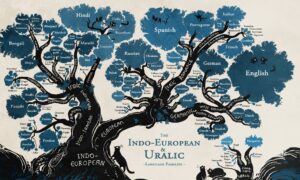
However, the situation for the Kurdish language at present raises numerous fears regarding the issue of writing, as long as Kurds practice writing in two different dialects, if not three or four dialects, and additionally, each dialect develops in an isolated manner independent of the other. This will lead—sooner or later—to the formation of two independent languages from each other, as was the case with the Latin dialects, which now represent five independent languages: French, Italian, Portuguese, Romanian, and Spanish, because each developed within its independent entity inside specific geographical borders. Here, I emphasize that if the Kurds, especially their intellectual class, do not reach a single agreement and a unified opinion to find a unified national language—a common written language among all intellectuals of all dialects—the fate of the Kurdish language will be definitive division, and consequently, the Kurd will become a speaker of two languages at best.
The Language of Writing – The Written Language
Be that as it may, the spoken language undergoes change while the written language tends toward stagnation and adherence to traditions. Mario Pei believes that the written form of a language—especially if the language is widespread—plays an important role in disrupting the current of change that overtakes spoken language rapidly. If left to itself, spoken language is subject to natural, innate changes that drift it away from the center, expressing itself rapidly over time and appearing in the form of dialects across history. (The Latin language, which began to appear in Rome and after its spread across most parts of Southwestern Europe, transformed into numerous dialects that soon became French and Spanish languages, and these in turn split into different dialects; and seventeenth-century English, with its multiple dialects, did not only evolve into the different twentieth-century dialects on its own soil, but also gave way to forms of American English, which in turn split into regional dialects).
The linguist Saussure emphasizes the importance of the role of writing in the life of language, stating: “The written form of words, as a continuous, stable object, is more capable than sound of shaping the unity of language over time.” He adds: “Literary language increases the importance of writing undeservedly, as it has its dictionaries and grammar rules. Furthermore, education in school takes place only according to the book and its methodology. Above all, it appears as though language is organized by law, but the law in this case is itself a written rule subject to strict usage: it is orthography, and this is what endows writing with primary importance.”
The Danger of Dialectal Plurality
If matters remain as they are, the four Kurdish dialects will transform either into four languages, or into two Kurdish languages: Kurmanji and Sorani at best. As for the other dialects, they will become extinct little by little, such that Kurmanji will override Zazaki, and Sorani will override Hewrami and other dialects. History demonstrates this issue clearly to us through the current experience of the five Latin languages, which were originally dialects of a single language, but as a result of the division occurring among these dialects, each developed independently and in isolation from the other to the point that they transformed into independent languages separate from their sisters. In truth, if we look at the grammatical structure of the Kurdish dialects, we notice that the difference existing between Zazaki and the other dialects reaches the level of clear independence, such that Zazaki can be considered an independent language descending from Kurdish. Despite the aspects of proximity and compatibility among many linguistic elements in the two main dialects, we simultaneously face a linguistic dilemma related to the glaring difference between them, particularly regarding some aspects of the syntactic structure of the Kurdish sentence between Sorani, which distances itself from the ergative case, and Kurmanji, which adheres to the rules of the ergative case.
The Necessity of a Common Language
Mario Pei stresses the necessity of a common language instead of numerous and different dialects that hinder understanding between humans: “For it is doubtful that two Frenchmen, one from the north and the other from the south, can understand each other easily. In China, where its written language is considered complex, its connection with the spoken language is severed in a manner that hinders the understanding of Chinese people of different dialects with one another.” Nevertheless, the nation needs a single written and spoken language because the means of communication in this era have developed astonishingly, where communication is no longer confined to the written press and radio, but television and the internet cover the globe, providing audio-visual communication.
In truth, I am an advocate of displacing Kurdish dialects from the world of writing in all its forms (from the press to books, letters… etc.). These dialects are nothing but a stumbling block before the progress and prosperity of Kurdish culture, and the process of unifying scientific capacities among the Kurds cannot be achieved except through using a unified Kurdish language utilized in writing, media, and journalism. I see no justification for those who procrastinate on placing solutions for this issue indefinitely, except that they are incapable of addressing this matter, or they operate from narrow subjective and selfish interests and poor judgment, especially if those holding the power of decision-making are among those ignorant and incapacitated individuals connected to political parties through their opportunistic mouthpieces.
The Kurds are the people in greatest need of a unified national language, but this issue is supposed to be deliberated, studied, and addressed by specialized committees possessing academic capabilities or specialized and practical experience in the linguistic field and linguistics. This is because an issue like this cannot be handled by politicians; otherwise, the case will become a subject of sterile debate that will not lead to the desired outcome, but rather we will face approaches born from the womb of dialectal and factional chauvinism. As for linguists, even if they agree in the end on a single dialect, this agreement must come after scientific study, exhaustive discussion, and wide debate. The issue will take several stages until it reaches this end.
On the other side of the matter, we must take into consideration the structure of the committees, especially at the final approval stage. That is, the committee cannot be composed of members belonging to a single dialect, or be dominated by a single orientation. It is supposed to task the genuine professionals to deliberate this sensitive and grand matter professionally and with a high sense of historical responsibility, and not by introducing a handful of pretenders or those falsely counted among Kurdish linguistic studies. In addition to this, a mechanism must be found that helps the workflow move toward the positive side and enables the committees to study the matter in a scientific, comprehensive, and integrated manner from all dimensions of the issue.
-
Ferdinand de Saussure, Course in General Linguistics, translated [into Arabic] by Youssef Ghazi, p. 246 and p. 233.
-
Harry L. Shapiro, translated [into Arabic] by Abdul Karim Mahfoud, Damascus, 1987, a chapter from the book Language and Writing by its author Harry Hoijer from the University of California, Los Angeles.
-
Ibrahim Al-Samarrai, Historical Linguistic Evolution, p. 21 and beyond.
-
Ibid.
-
Course in General Linguistics, p. 40, translated [into Arabic] by Youssef Ghazi.
-
Mario Pei, The Bases of Linguistics, translated and annotated [into Arabic] by Dr. Ahmed Mukhtar.
-
Ferdinand de Saussure, Course in General Linguistics, translated [into Arabic] by Youssef Ghazi, p. 41.
-
Ibid.
-
Mario Pei, The Bases of Linguistics, translated and annotated [into Arabic] by Dr. Ahmed Mukhtar, p. 62.
-
October – 2007