The full American withdrawal from Iraq, completed on September 30, 2026, has brought back an old-new question regarding ISIS’s ability to exploit any potential security vacuum. However, it is important to emphasize that the organization has not returned to its 2014 state; it has lost control over the territories it once called the “Caliphate,” and its military capabilities have significantly declined. Nevertheless, its cells remain capable of executing limited attacks and exploiting security gaps.
In recent years, ISIS in Iraq has increasingly shifted from a model of controlling cities and territory to guerrilla warfare and cellular operations. Its remnants are concentrated in rugged, desert, and mountainous areas, particularly in parts of Anbar, Saladin, and Kirkuk provinces, as well as scattered regions across northern Iraq. This pattern grants the organization the ability to hide and reorganize its networks away from urban centers.
Iraqi operations during 2025 and 2026 have demonstrated that security forces are still capable of reaching the organization’s leaders and operatives. In March 2025, a joint U.S.-Iraqi strike in Anbar resulted in the death of Abdullah Makki Muslih al-Rifai, known as “Abu Khadija,” whom U.S. Central Command described as one of the organization’s top global leaders. Iraqi forces also executed other operations against ISIS cells in Kirkuk, Saladin, and western regions of the country.
On September 27, 2026, the Iraqi Counter-Terrorism Service announced an engagement with three ISIS operatives in the Altun Kupri sub-district, northwest of Kirkuk, resulting in the death of two who were wearing explosive belts and the arrest of the third. Sources reported that the clash took place inside an inhabited area and also resulted in civilian casualties and injuries among Counter-Terrorism Service personnel.
More importantly, Altun Kupri had previously witnessed a series of movements linked to ISIS cells; in July, an organization member was killed during a Counter-Terrorism Service operation, followed by Iraqi airstrikes targeting suspected hideouts used by the organization in the surrounding area. Additionally, an attack occurred in September on a Popular Mobilization Forces checkpoint in the sub-district, resulting in the death of one member and the injury of another.
However, the American withdrawal alters the counter-terrorism environment more than it changes the military balance of power immediately. U.S. forces provided Iraqi forces with vital capabilities in intelligence, reconnaissance, logistical support, and coordination. On the other hand, Iraqi forces have made significant strides toward operating independently, demonstrating in 2025 their ability to manage airstrike operations and targeting without direct support from U.S. forces.
Recent reports indicate that ISIS attempted to exploit the moment of withdrawal to demonstrate that it remains capable of movement, amid information regarding plans by the organization’s cells to execute attacks coinciding with the departure of U.S. forces. This reflects a propaganda and security strategy rather than evidence of the organization returning to its former strength.
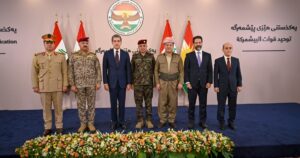
In the coming stage, ISIS will likely attempt to maintain its presence through limited attacks, targeting security forces, assassinations, extortion, and rebuilding local networks, rather than attempting to control vast areas. The success of this strategy will be tied to the ability of Baghdad and Erbil to sustain security cooperation, information sharing, and preventing the emergence of soft zones that the organization could exploit.
Thus, the American withdrawal does not mean ISIS has returned to the forefront, but it places Iraq before a new test: Can its security institutions maintain continuous pressure on the organization without direct U.S. military support? The answer to this question will determine whether ISIS will remain a mere low-level insurgency, or if it will manage to exploit any political and security instability to rebuild its capabilities.
Note: This text is translated from the original Arabic version… Read the Arabic version:Click here