For centuries, the banners of Kurdish conflict have changed while Kurdistan continued to pay the price: leaderships contending for authority, strength drained internally, and enemies exploiting the division. From tribe and principality to sect and loyalty to empires, and then to party and ideology, the tools of conflict have shifted while the logic of monopolizing power remained.
O party leaders, when you make the defeat of your partner a priority over wresting your people’s rights, you are obstructing liberation—no matter how excessively you raise its slogans. Whenever your responsibility is brought up, each of you points at the other, as if the opponent’s mistake erases one’s own, and as if Kurdistan can wait until you finish exonerating yourselves!
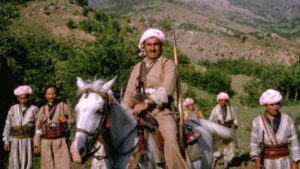
In the tribal and emirate era, competition revolved around land, pastures, taxation, and leadership status. Groups possessed the capacity to protect their domains, but they did not unify those capabilities into a Kurdistani decision that protects everyone. When the emir began viewing his Kurdish neighbor as a rival to his power, external forces were able to enter through the door of allying with him against his partner in land and destiny.
Then sect intertwined with political conflict, and divisions expanded within the Ottoman-Safavid rivalry. Local dispute became part of an imperial equation: one faction draws strength from one state, while the other responds by taking refuge under its rival. The conflict moved from the borders of leadership to the borders of empire, yet the price remained Kurdish: the division of the land, the depletion of the population, and the linking of decision-making to external interests.
With the establishment of modern states, the tools of polarization changed. Security apparatuses, borders, civil service jobs, and privileges entered into the crafting of loyalties. Authorities learned how to reward the collaborator, isolate the dissenter, and exploit group rivalries. They became capable of empowering one faction, intimidating another, and turning their mutual need for protection into a means of controlling them both. Thus, certain internal rivalries shifted into alignments serving the states that share control over Kurdistan.
Parties arrived with the promise of transcending the tribe and sect to build a modern national consciousness. However, a segment of them transferred the old fanaticism into the organization: the commander replaced the leader, and party obedience became the standard for patriotism. Slogans of socialism, nationalism, conservatism, and political Islam were raised, only to be reduced at times into tools for classifying and excluding the other Kurd. The language of rivalry changed, while monopolizing representation and power remained its ultimate goal.
In the current ideological phase, the dispute has broadened to encompass the very meaning of liberation: the nation-state, federalism, autonomy, and democratic confederalism. These are choices worth discussing, but turning them into conditions for recognizing the patriotism of the other renders the people hostage to the party project. It becomes required for the organization to triumph first, and for Kurdistan to wait until its competitors are defeated; thus, energies are expended on bringing down the partner far more than on wresting rights.
Here lies the shallow consciousness of some party leaders: they confuse tactical skill in party maneuvering with the ability to construct a national strategy. They know how to weaken a rival, monopolize a decision, and mobilize a public, but they fail to turn this capability into a force that protects Kurdistan. Mastering party deceit does not make a statesman, and spreading hostility to prove leadership exposes its political poverty. What is painful is that a segment of followers is led behind them, believing they are defending Kurdistan, while their strength is drained in attacking other Kurds. Blind loyalty transforms into a service to the enemies of Kurdistan; the followers accomplish for them what they desire, and then call it a national struggle.
When rivalry turns into infighting, political repression, or summoning foreign support against a Kurdish party, the old equation repeats itself with new tools. What was a conflict between two emirates becomes a conflict between two parties; what was protection from a sultan becomes allegiance to a state or a security apparatus. The organization advances within Kurdistan, while Kurdistan’s ability to confront those who control it regresses.
Some will object that confronting the outside requires “cleansing the inside” first. But a cleansing that means eliminating the rival postpones liberation indefinitely; the outside constantly feeds disputes and grants each side a justification to continue its internal war. Criticizing repression, corruption, and dependency is a necessity; however, turning criticism into stripping the partner of their right to operate and exist reproduces the very tyranny we claim to fight. Treason accusations do not become national consciousness simply because they are uttered by a Kurd.
Exiting this trajectory requires a binding decision: preventing infighting and relying on forces hostile to Kurdish rights, guaranteeing political, sectarian, and linguistic pluralism, subjecting arms and funds to accountability, and building shared institutions that protect people and manage disagreements. Unity of creed is not a prerequisite for unifying interest; what is required is for parties to compete in serving Kurdistan, and to lose the right to obstruct it in order to protect their influence. Their commitment is measured by the capacity, rights, and institutions they build—not by the slogans they raise.
Kurdistan is precious, but a consciousness that places the party, sect, or leadership above it is incapable of carrying the responsibility of its liberation. We will not reach the goal through exhausted strength and disabled tools; liberation will never become a practical project as long as each side wants Kurdistan tailored to the measure of its own power, and accepts losing it when it does not belong to them alone.
United States of America
13/10/2026 AD
Note: This text is translated from the original Arabic version… Read the Arabic version:Click here