A report on the massacre of Kurdish civilians by the Syrian Arab Army and Arab tribal fighters in the village of Kharab Ashak in the countryside of Kobani
Text of a report addressed to international human rights organizations affiliated with the United Nations “Violations of International Humanitarian Law Against Kurdish Civilians in Southeast Kobani – Syria”
Executive Summary
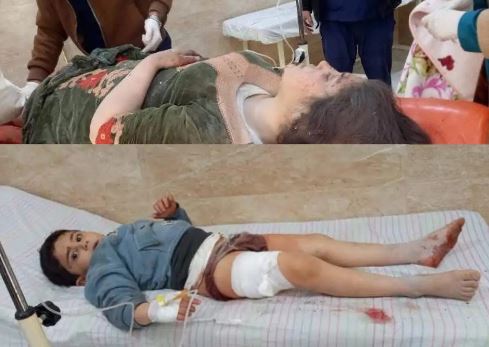
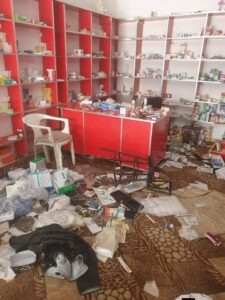
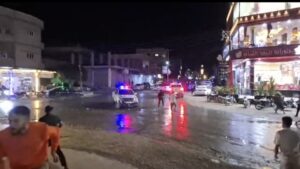
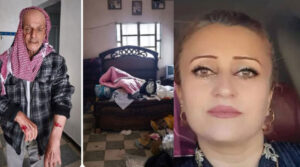
Report documenting the massacre with photos and videos:
The Geostrategic Organization for Kurdish Civil Society
The Geostrategic Studies Network Team
This report documents two serious, simultaneous incidents that occurred in the southeast of the city of Kobani in northern Syria, resulting in the killing and injury of Kurdish civilians, including children, women, and an elderly person. Available information indicates that these incidents may constitute grave violations of international humanitarian law and may amount to war crimes, warranting the opening of an independent and impartial international investigation.
First Massacre: Kharab Ashk Village
According to information collected from local sources, medical staff, and representatives of the local community, forces affiliated with the government of Ahmad al-Sharaa (al-Jolani), including units of the Syrian Arab Army and allied tribal armed groups, carried out an attack on the village of Kharab Ashk, located southeast of the city of Kobani.
The attack resulted in 12 civilian casualties, including both fatalities and wounded, the majority of whom were children and women. A number of the injured remain in critical condition. The same sources reported that communications with the village were cut off during the attack, hampering rescue operations and medical evacuation.
Reported names of those killed:
Fatima Othman
Jamila Ahmed Othman
Solaf Rasho Bozan Kedro
Jaafar Mohammed Sheikh Bozan (child)
A young girl (daughter of Mohammed Sheikh Bozan)
Reported names of those injured:
Sherehan Haj Mahmoud – 32 years old
Fatima Haj Mahmoud – 17 years old
Masoud Sheikh Bozan – 5 years old
Nisreen Mustafa – approximately 25 years old
Mohammed Sheikh Bozan – 35 years old
Rasho Bozan Kedro – 65 years old
Preliminary information indicates that all victims were civilians, with no evidence of their direct participation in hostilities.
Second Crime: Sharabani Village
At approximately the same time, the Kurdish village of Sharabani, located about five kilometers east of Kharab Ashk, was subjected to artillery shelling that targeted a civilian home.
According to documented information, the shelling completely destroyed the house and killed an elderly Kurdish woman named:
Salwa Hajm Mahmoud (also known as Salwa Ibrahim Aisha)
Sources reported that the victim had refused to leave her home, and no military objective was recorded in the vicinity of the shelling site.
Legal Assessment
Based on the information currently available, the two incidents raise serious concerns regarding:
The principle of distinction between civilians and combatants;
The principle of proportionality in the use of force;
The obligation to take all feasible precautions to protect civilians, in accordance with international humanitarian law.
If confirmed, the described acts may constitute war crimes under the Geneva Conventions and customary international humanitarian law.
Responsibility and Effective Control
The occurrence of the two incidents within the same time frame and geographic area indicates a pattern of conduct rather than isolated events. These attacks took place despite statements by Damascus authorities indicating communication with Kurdish forces and the Syrian Democratic Forces (SDF), and the announcement of a fifteen-day truce.
The continuation of hostilities during this period raises serious questions about the ability of Damascus authorities to exercise effective control over armed groups affiliated with or allied to them, and casts doubt on the implementation and credibility of the announced ceasefire arrangements.
Recommendations
In light of the above, this report recommends:
Establishing an independent and impartial international investigative mechanism to examine the events in Kharab Ashk and Sharabani;
Ensuring safe, secure, and unimpeded humanitarian and medical access to the affected areas;
Taking concrete steps to ensure accountability and prevent impunity through national or international mechanisms;
Strengthening measures to protect civilians in the city of Kobani and its countryside;
Continuing public monitoring and documentation by relevant United Nations human rights mechanisms.
Conclusion
The incidents documented in this report reflect grave risks facing the civilian population in southeast Kobani and underscore the urgent need for strict compliance with international humanitarian law. Failure to address these violations will reinforce a climate of impunity and further exacerbate civilian suffering.