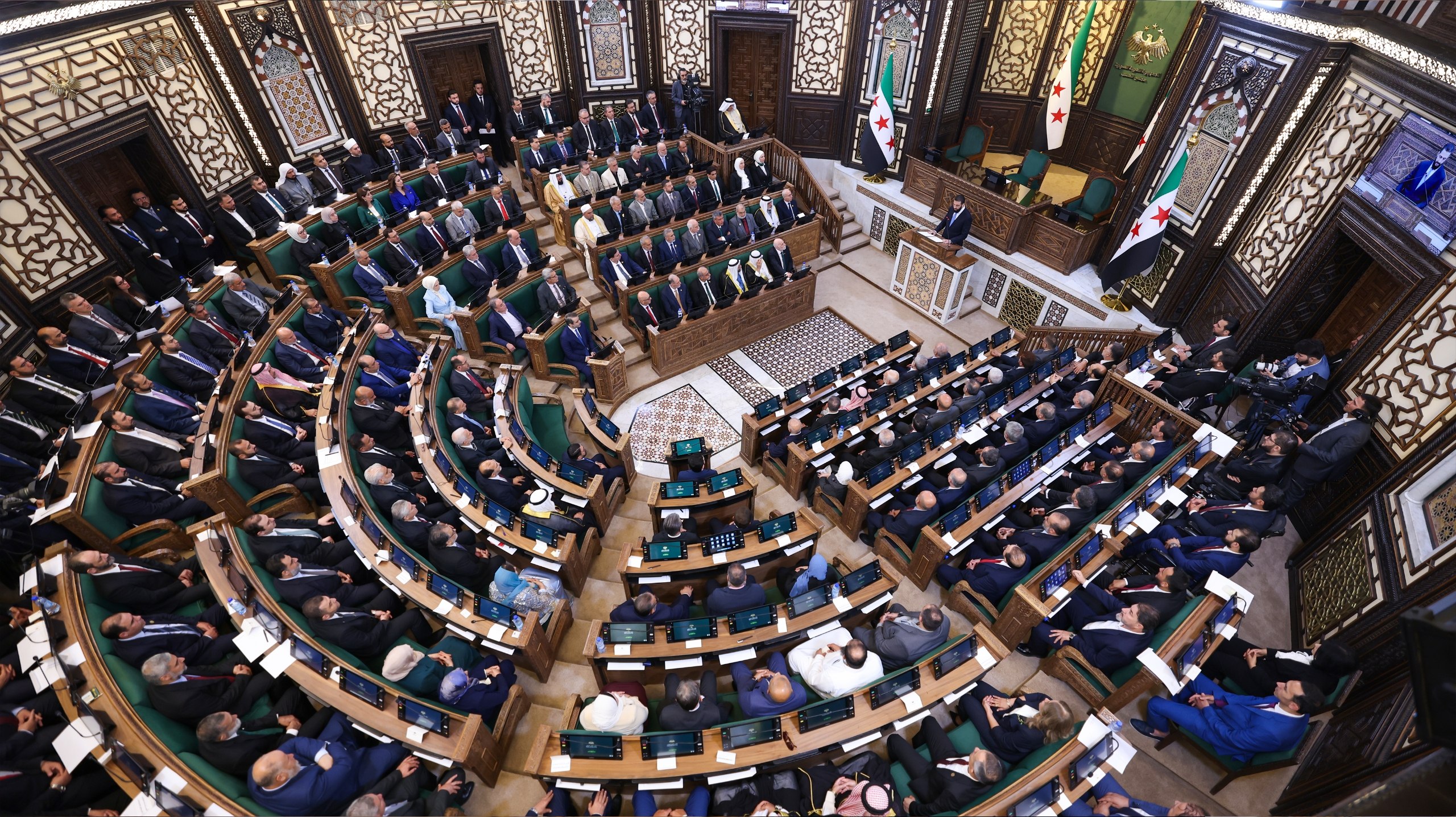
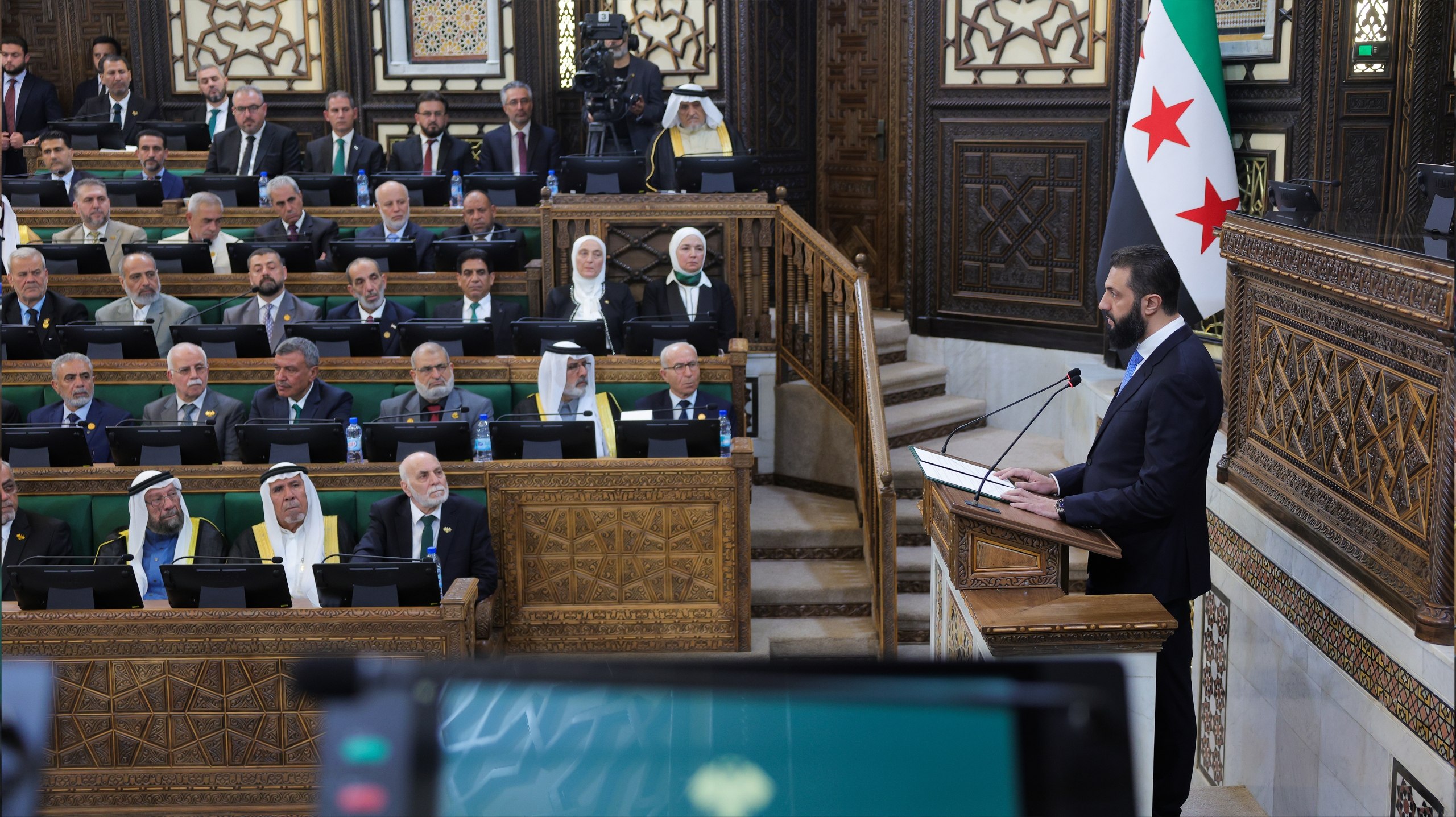
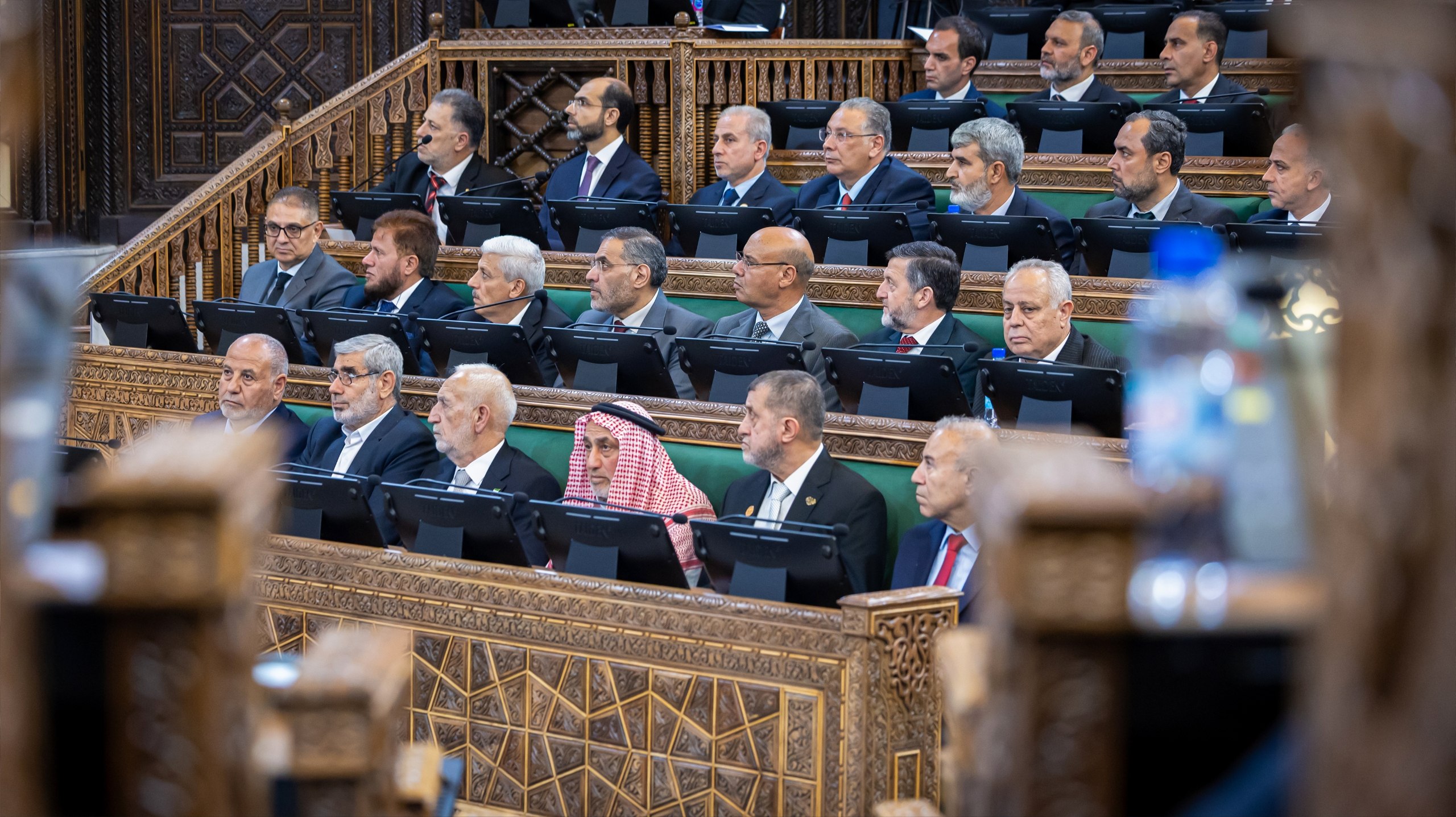
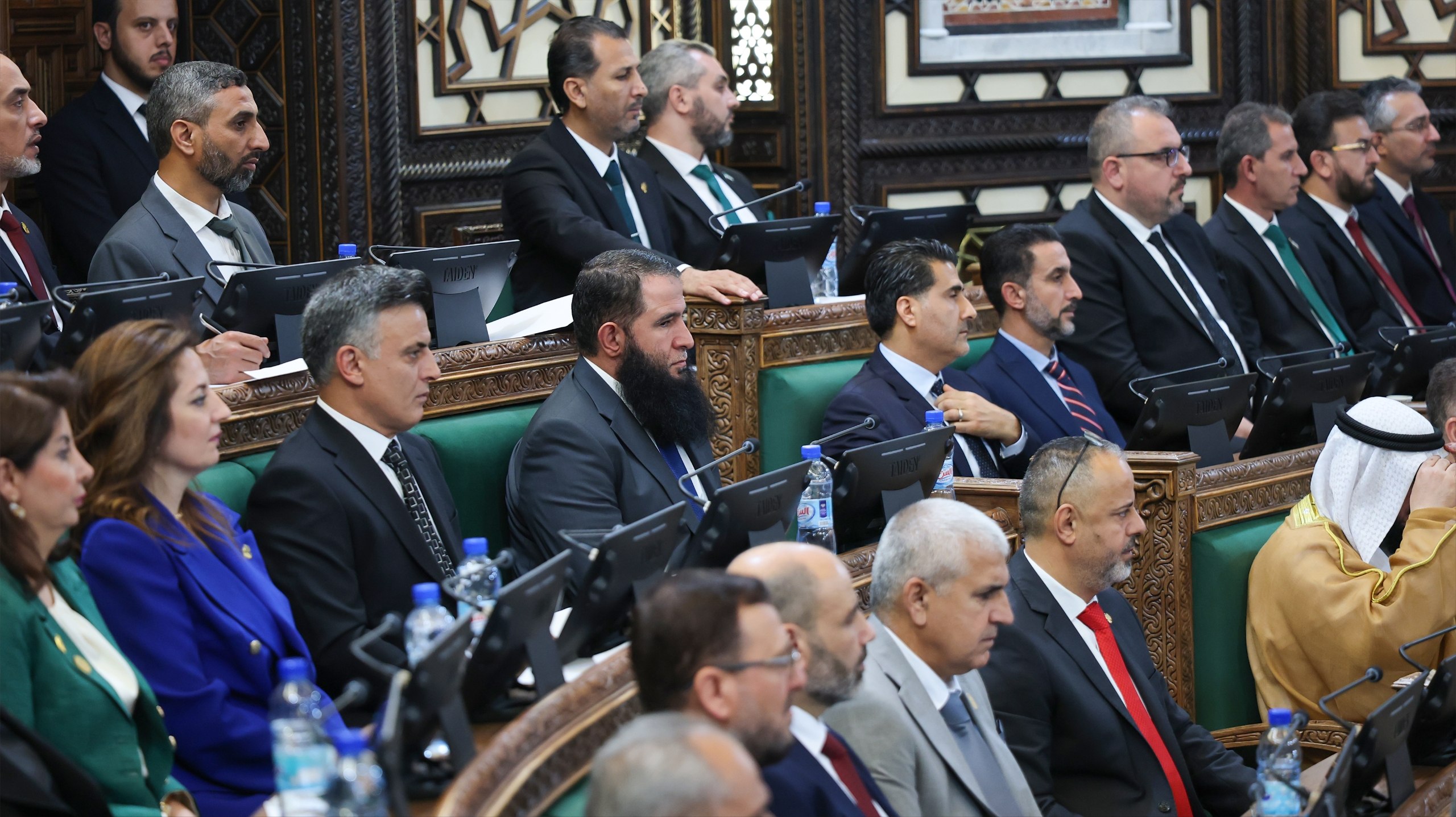
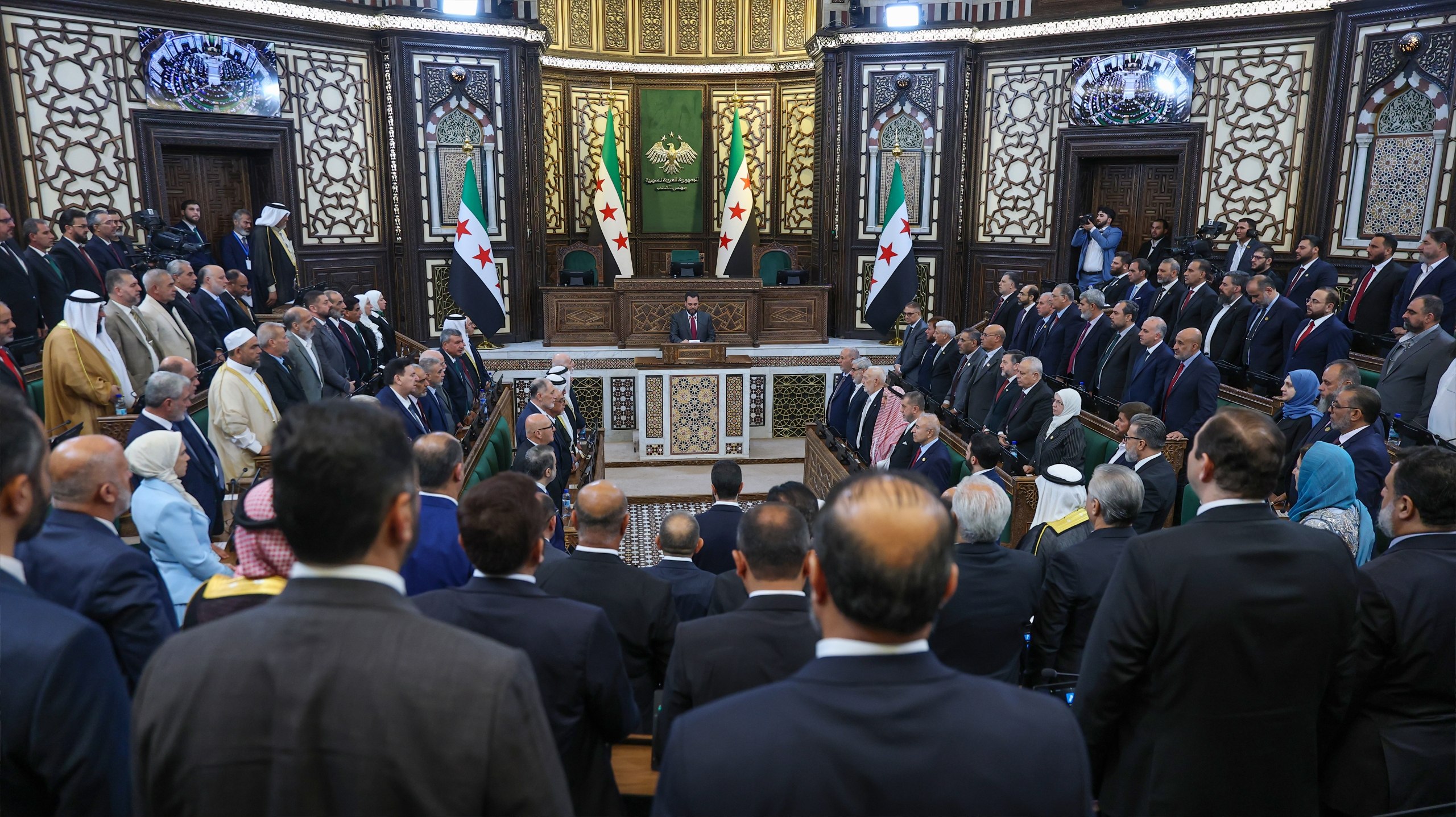
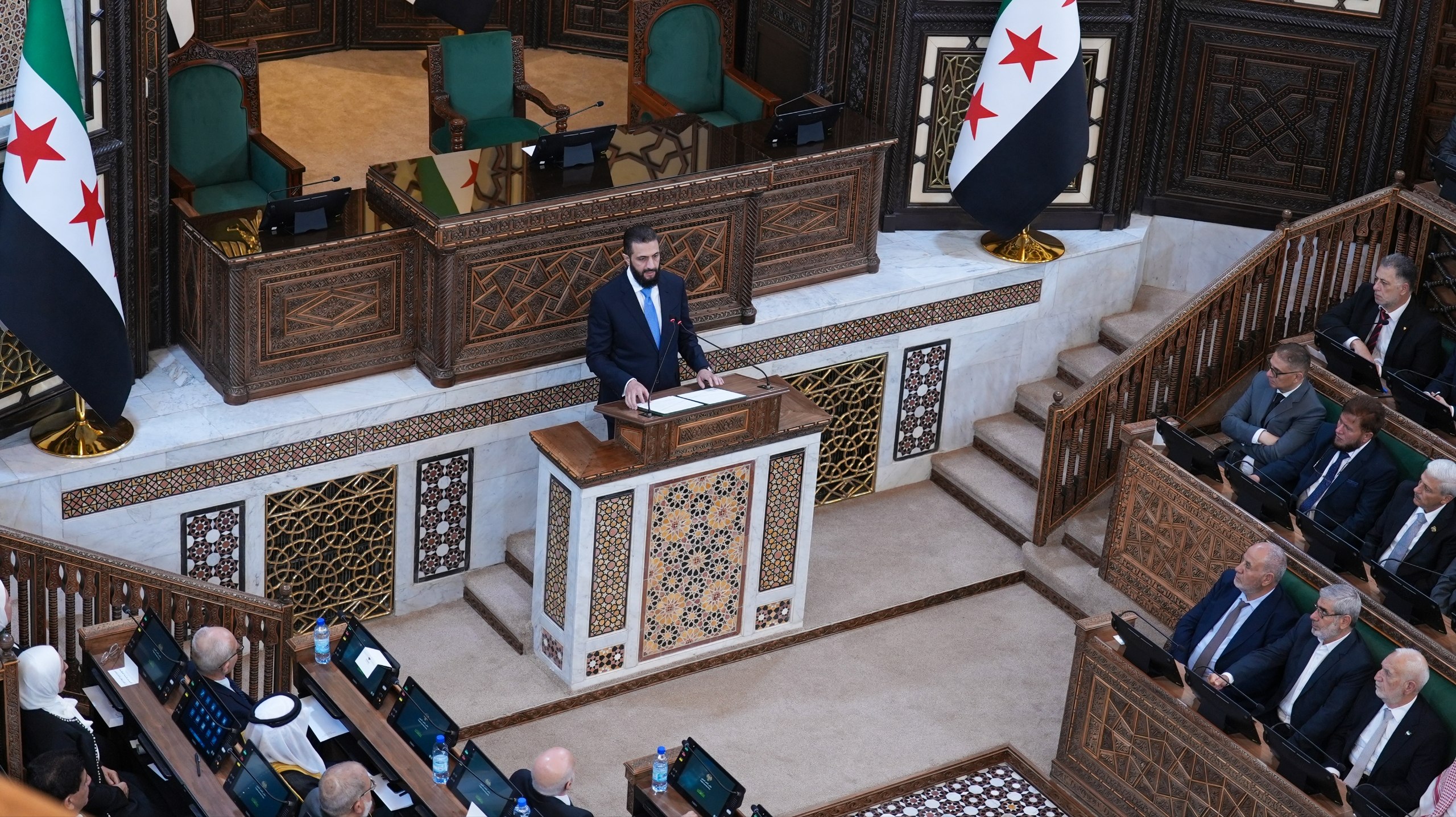
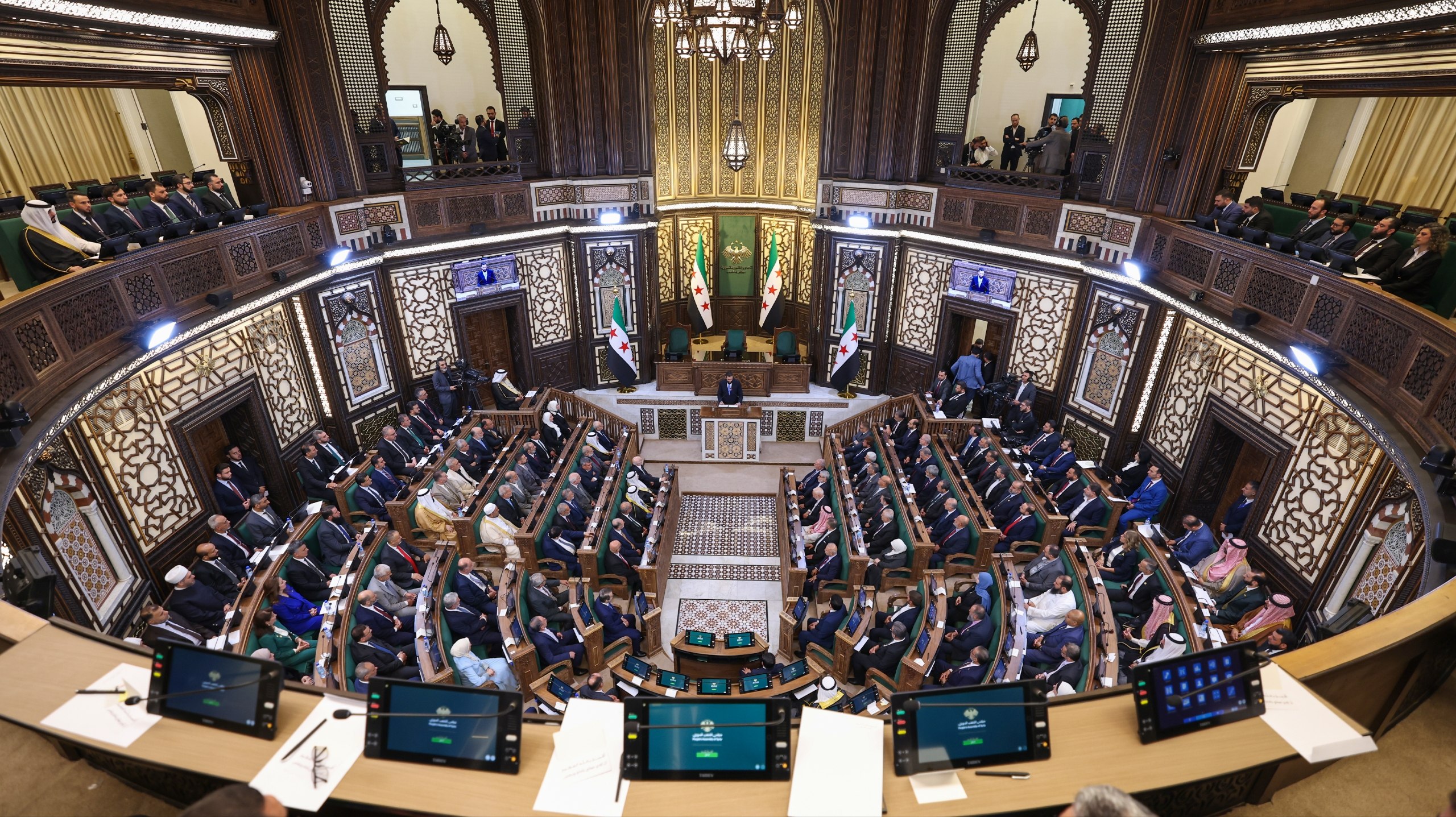
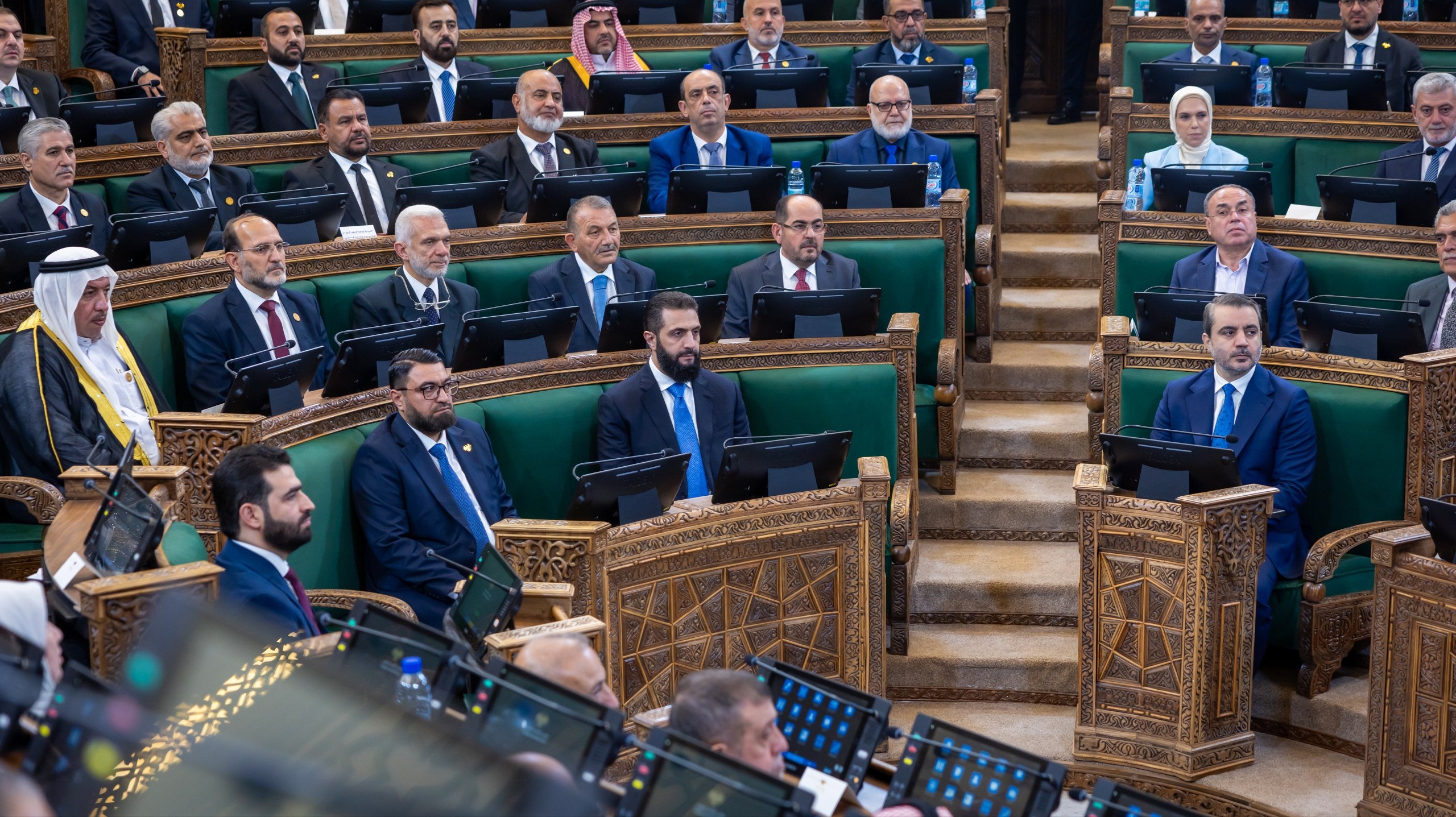
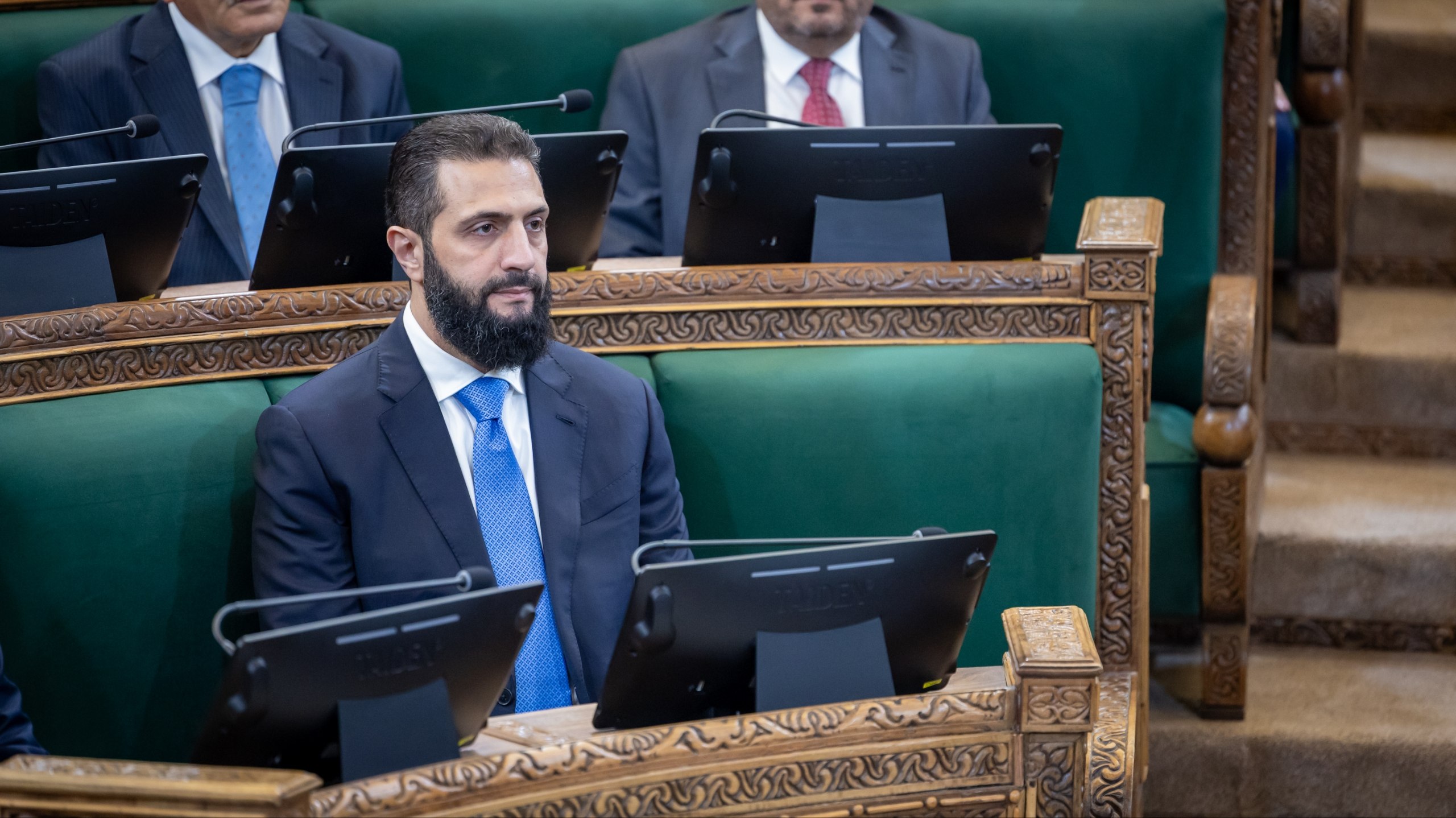
The first session of Syria’s People’s Assembly convened in Damascus on Sunday in the presence of Ahmad al-Sharaa, Head of the Transitional Authority in Syria, Mohammad Taha al-Ahmad, Chairman of the Higher Committee for People’s Assembly Elections, along with several ministers and members of parliament, marking the official start of the Assembly’s constitutional duties amid continuing debate over its formation and the representation of Syria’s various communities.
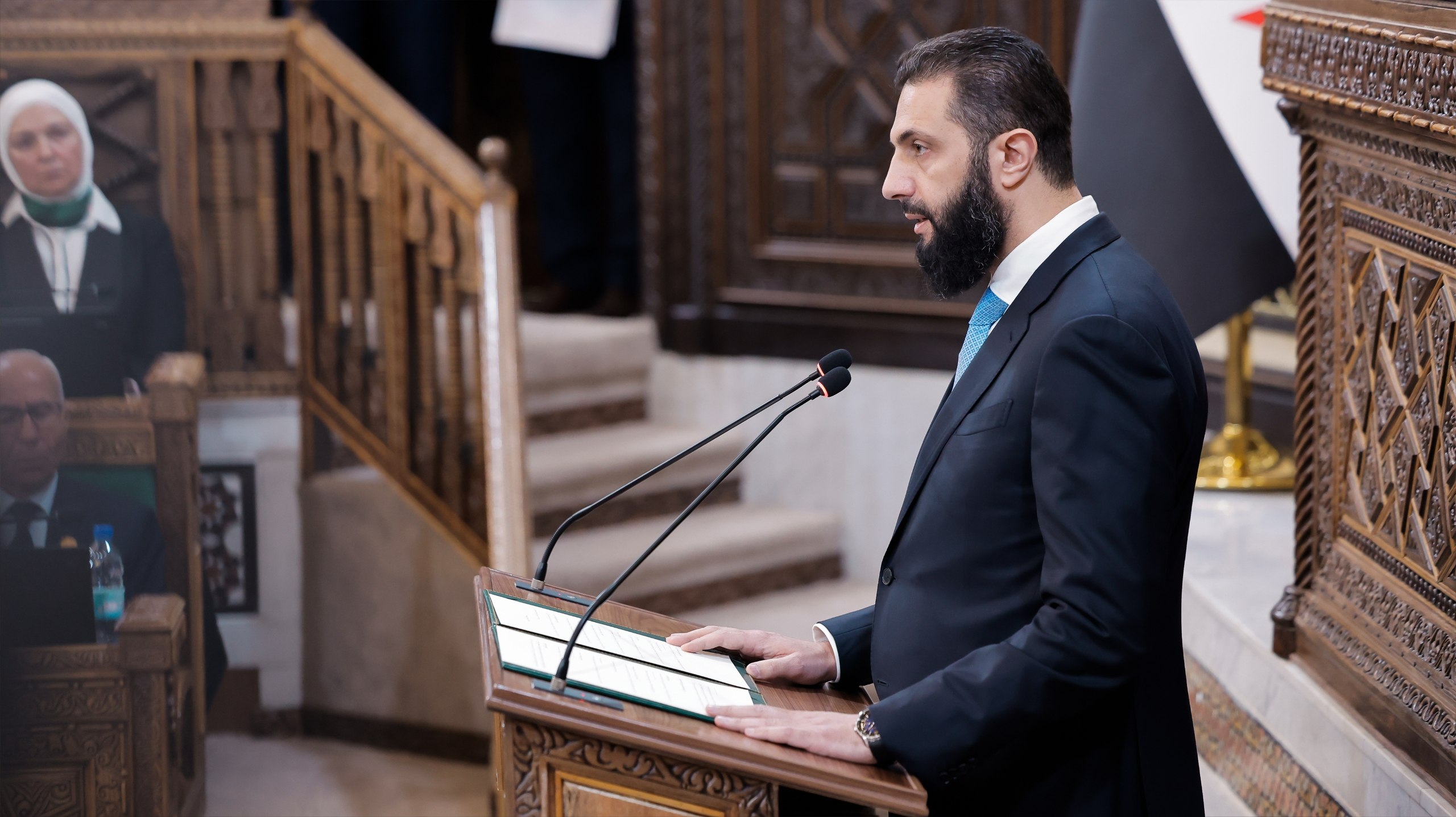
According to a statement issued by the Syrian Presidency, members of the People’s Assembly took the constitutional oath in the presence of Ahmad al-Sharaa, who addressed the Assembly, saying that Syria is “writing a new chapter in its history today that reflects its civilization, values, and heritage, creating a new chapter in the building of modern Syria.” He stressed that the country faces “a great responsibility” after years of authoritarian rule, war, and destruction, and that the coming phase requires prioritizing the national interest, working in a spirit of teamwork, making service to the people the objective of every policy, and making state-building the standard for every decision.
Al-Sharaa added that, following the “liberation of the homeland and the restoration of its freedom,” Syria is entering a phase of consolidating state institutions on the principles of responsibility and competence. He emphasized that rebuilding the economy, improving public services, creating an attractive investment environment, generating employment opportunities, and increasing production are national responsibilities shared by all state institutions, foremost among them the People’s Assembly, through legislation that keeps pace with the reconstruction phase and meets the aspirations of Syrians. He also called on Assembly members to serve as a model of responsibility and competence and to contribute to strengthening a culture of dialogue, the rule of law, and respect for state institutions.
During the session, Assembly members elected MP Abdul Hamid Aqeel al-Awak as Speaker of the People’s Assembly after he secured 99 votes, defeating fellow candidates Muayyad Hayel al-Qablaawi and Mohammad Ramez Koraj. All 206 members attended the inaugural session, with no absences recorded.
For his part, Mohammad Taha al-Ahmad, Chairman of the Higher Committee for People’s Assembly Elections, described the inaugural session as “a historic turning point” in Syria’s history. He stated that the elections covered 13 governorates and 57 electoral districts, with more than 500 candidates competing, while an electoral body of more than 6,800 members selected the Assembly members. He said the process marks the beginning of a new phase of national action and embodies the will of Syrians to build state institutions.
The formation of the People’s Assembly, including the additional one-third of members whose list was announced on July 1, is based on the temporary electoral system as a transitional constitutional mechanism intended to ensure the continued functioning of the legislative institution under the country’s exceptional circumstances until a permanent constitution is adopted and new parliamentary elections are held. Under the Constitutional Declaration, a higher committee formed by the Head of the Transitional Authority in Syria supervises the election of two-thirds of the Assembly’s members, while the remaining one-third is appointed to ensure fair representation and competence.
Meanwhile, the Assembly’s formation continues to face objections from Kurdish political groups. In a statement issued on May 25, twenty-one Kurdish political parties and movements rejected the mechanism used to form the People’s Assembly and allocate its seats, stating that they had boycotted the process because they believe that “the mechanisms adopted do not reflect the will of the Kurdish people and the region’s components, nor do they establish a genuine democratic political process.” The statement added that the selected individuals “represent only themselves,” arguing that what took place reflects the continuation of exclusion and marginalization and contradicts the principles of democracy, justice, and genuine national partnership.
The statement also accused those overseeing the electoral process of continuing demographic change policies, referring to the appointment of individuals from the “Ghamr Arabs” to electoral committees, including the appointment of one of them as the representative of the Serekaniye region. The signatory parties called for a genuine Syrian national conference involving the true representatives of all Syrian communities to develop a roadmap for the transitional period, alongside the formation of a committee to draft a new constitution, describing it as a national priority.
In the same context, Aldar Khalil, a senior official in the Democratic Union Party (PYD), said the boycott of the parliamentary elections in al-Hasakah Governorate resulted from “a clear political assessment” of the nature of the current phase and the way the electoral process was managed. He argued that participation in any election should be linked to genuine and fair representation for all components of Syrian society and to the existence of a parliament with genuine legislative and oversight independence that reflects the will of the Syrian people.
Khalil stated that the number of seats allocated to al-Hasakah Governorate and to the Kurdish people does not reflect either the demographic reality or the Kurds’ historical and political presence in Syria. He also criticized the division of the governorate into separate electoral districts, arguing that this resulted in representation being distributed according to ethnic and regional considerations rather than strengthening the principles of citizenship and national partnership. He further argued that, in his assessment, the Assembly was formed under this mechanism in order to quickly reactivate the legislative institution to facilitate upcoming legal and political processes. He warned that a parliament lacking genuine representation of Kurds, Druze, Syriacs, and Assyrians, while what he described as the marginalization of Alawite Arabs continues, would not be capable of fulfilling its legislative and oversight responsibilities effectively.
According to the announced figures, the new Syrian People’s Assembly consists of 207 seats, including 137 filled through elections and 70 filled through direct appointments by Ahmad al-Sharaa, Head of the Transitional Authority in Syria. The Assembly includes 11 Kurdish members, two of whom—Abdul Hakim Bashar and Mustafa Abdi—were appointed directly, while the remaining members won their seats through various electoral districts. Kurdish lawmakers therefore account for approximately 4.07% of the Assembly’s total membership, raising questions about the level of representation afforded to Syria’s second-largest ethnic community within the country’s legislative authority during the next phase.
Note: This text is translated from the original Arabic version… Read the Arabic version:Click here