The renowned Russian professor Vladimir Minorsky explains in his study for his book entitled Studies in Caucasian History that after Napoleon was fairly praised by his enemies as a hero, Saladin similarly became a symbol for the liberation of Jerusalem and the land of Islam. The matter was not limited to that; rather, he became a great historical figure through his liberation and unification of the entire Middle East.
As for the origin of Saladin’s family, evidence shows that his family does not belong to the Rawadid Kurds; rather, they descend from the origins of the large Kurdish Hadhabani tribe. This great Hadhabani tribe spread and ruled during its golden age across many regions stretching from southern Kurdistan to the region of Azerbaijan and its surroundings. However, when the Seljuks arrived and destroyed that region, Shadhi, Saladin’s grandfather, accompanied by his two sons, Asad al-Din Shirkuh and Najm al-Din Ayyub (along with a number of their close relatives), was forced to leave Baghdad and head to Tikrit. Prior to that, a man named Mujahid al-Din Bahruz ibn ‘Abdullah al-Ghiyathi—a white Mamluk who was highly respected at court and was later freed—had become the head of administration there.
Shadhi was an elderly man advanced in age, so he fell ill in the council of Bahruz, then packed his belongings with his sons and some of his close relatives and headed to Baghdad to meet their friend Bahruz. After a warm reception, Bahruz sent them to the city of Tikrit, which was a fortified citadel, and appointed Shadhi to the position of Dezhdar (castle commander), meaning its governor. After his death, this position fell to his eldest son, Najm al-Din Ayyub, while his brother Shirkuh became the commander of the military forces.
In the year 1137, when Shirkuh killed a man affiliated with the Caliph, Bahruz abandoned Najm al-Din Ayyub and said to him: “I can no longer defend you, and you must leave this citadel.” On the very night that Mujahid al-Din Bahruz issued his order to expel Najm al-Din Ayyub and his family from Tikrit, Saladin was born in the Tikrit Citadel. In return for the assistance that Ayyub had provided to Imad al-Din Zengi at a time when Mas’ud and Muhammad ibn Shasha were fighting against the Caliph, and Imad al-Din Zengi had been left alone and passed through Tikrit heading toward Najm al-Din, they turned this time toward Mosul and took refuge with Imad al-Din Zengi. He, in turn, welcomed them warmly, granted them land and property, and included them among the senior commanders. Later, when Zengi headed to the Levant and took control of Baalbek, he appointed Najm al-Din al-Ayyubi as its governor, so he moved there with his family and children from Mosul. According to sources, Yusuf Saladin was two years old at that time.
Saladin spent his childhood in Baalbek from the age of two until the age of 9–10 years, and at the age of seven, he began his studies in the Great Mosque of Baalbek—most of whose foundations were built on ancient temples. Prior to reading and writing, he received his upbringing there, where he memorized some verses of the Holy Quran, and then began learning Arabic reading, writing, and grammar, as well as the art of calligraphy. There, he spoke Kurdish with his family and spoke Arabic in the mosque, but with the beginning of his military life in the army of Nur al-Din Mahmud Zengi, he learned the Turkish language.
// Excerpts from the book:
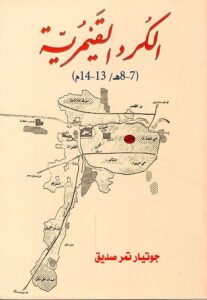
History of the Kurdish State
Source: Al-Ta’akhi
Note: This text is translated from the original Arabic version… Read the Arabic version:Click here