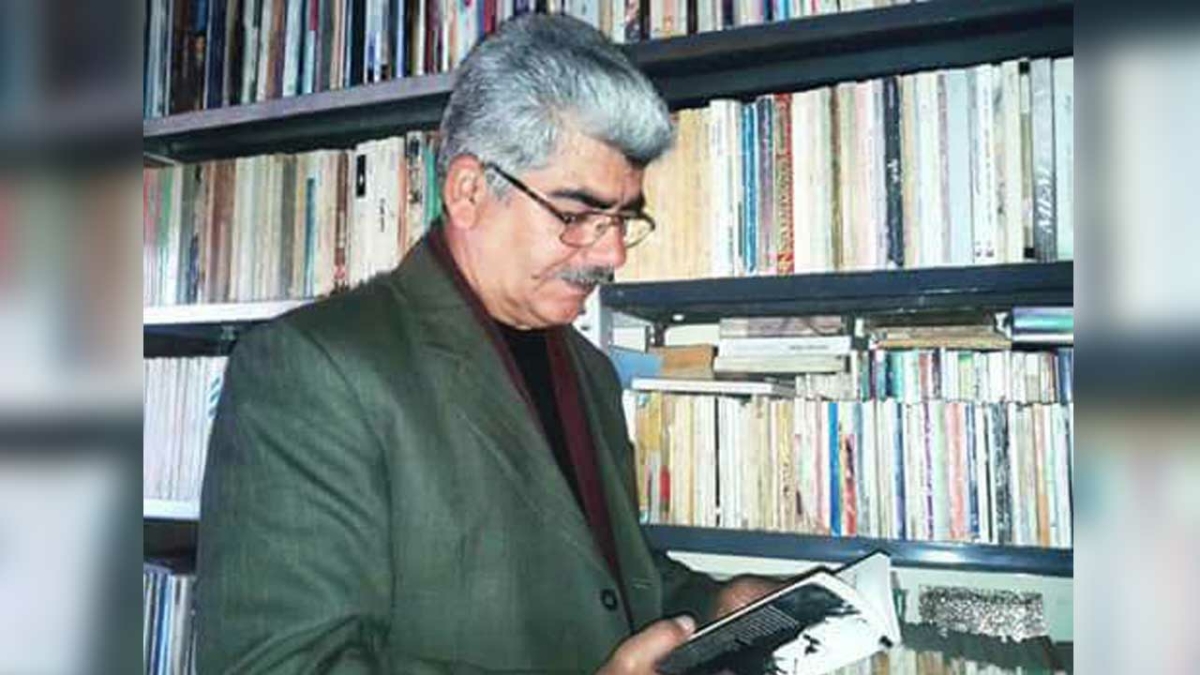
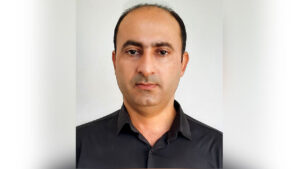
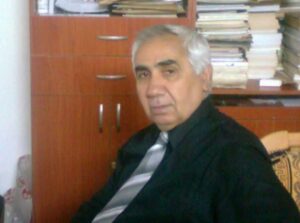
A story that began with a book compiled and edited by Dr. Ahmad Rezan and Mulla Saeed Dundar
Sometimes we do not choose the figures we write about; they are the ones who find their way to us.
I was sitting reading the book: “Sheikh Muhammad Issa… The Biography of a Scholar and a Fighter.” I was following the biography of the Sheikh—the scholar and fighter—and between the pages, an Assyrian name caught my attention, mentioned by the Sheikh with striking appreciation and respect.
The name was not just a name. Behind it was a man. Behind the man was a book. And behind the book was a stance.
I stopped. I re-read the paragraph once, twice, three times. I asked myself: Who is this man? What did he write? And why did Sheikh Muhammad Issa mention him with such esteem?
I began to search. From name to name, and from page to page, I started discovering a personality who was not present in my memory as he ought to have been.
It is Youssef Malek.
The Chaldean-Assyrian writer, journalist, and thinker who was not content with merely writing about the cause of his own people, but also made his pen a platform to defend the Kurdish cause and the rights of the Kurds.
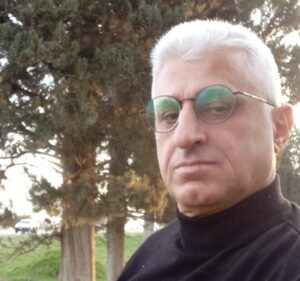
However, the surprise was not here. The surprise was that while searching for Youssef Malek, I discovered I was not the first to reach him. My friend and writer Dlawar Zanki had preceded me, having written a dedicated article titled: “Youssef Malek: An Icon of Chaldo-Assyrian Thought and Politics (1899–1959).” In that article, Dlawar provided an extensive biography of the man, pausing at his relationship with the Kurdish cause, his writings about it, his connections with Kurdish figures, and his book “Kurdistan or the Land of the Kurds.”
Thus, I found myself before four names that should not be separated in this story:
Ahmad Rezan and Mulla Saeed Dundar… who pointed out the name.
Youssef Malek… who deserved my pause.
And Dlawar Zanki… who preceded me in doing him justice and writing about him.
Here I learned another lesson from writing: it is not always important to be the first to arrive. What matters is knowing the worth of whom you have reached.
Who is Youssef Malek?
Youssef Jajou Francis Malek was born in Baghdad on March 28, 1899, to a Chaldean Catholic family from the Tel Keppe (Tel Kaif) district in the Nineveh Governorate. He received his education at Saint Joseph College in Beirut and mastered Arabic, French, English, and Turkish.
He worked as a translator for the British Army during World War I and was offered the position of District Governor (Qaimaqam) of Sheikhan, which he declined, preferring struggle over privileges. He moved from Baghdad to Aleppo, where he attended a Kurdish-Assyrian conference in 1931, before settling in Beirut, where he began his journalistic and intellectual activity.
He maintained ties with several prominent Kurdish figures, including Jeladet Bedir Khan, Kamuran Bedir Khan, and Roshan Bedir Khan, and wrote about the Kurdish cause in both Arabic and foreign press.
Youssef Malek was not Kurdish. This specifically is one of the points that makes his biography worth pausing over.
He was a Chaldean-Assyrian carrying the cause, memory, and wounds of his people, yet he did not believe that loyalty to his people required him to close his eyes to the rights of others. On the contrary, his pen expanded to encompass the Kurdish cause just as it did the Assyrian cause.
“Kurdistan or the Land of the Kurds”… A Book from Outside the Kurdish Home
In 1945, in Beirut, Youssef Malek published his book:
“Kurdistan or the Land of the Kurds: A Political Study Dealing with Kurdish Independence Demands”
The book is recorded in French bibliographic catalogs and was published by Sader Rihani Press in 1945.
We are not talking about a passing article written out of momentary sympathy, but a complete book dedicated to the Kurdish cause. For him, the issue was a political and intellectual matter worthy of research, documentation, and defense.
Malek concluded his book with words that continue to resonate today, as if written for our current time:
“O sons of Kurdistan! Whether you are Christians or Muslims, Kurdistan is a sacred trust in your necks, inherited from your ancestors. Preserve this heritage so that you and your descendants may preserve everything precious in life within the framework of Kurdistan. Long live Kurdistan, free and unrestricted under its tri-colored flag, symbolizing nature, life, and purity.”
These words alone suffice to understand the man. He addresses not only Kurds, but Christians and Muslims together, placing “Kurdistan” above all sub-affiliations. He describes the Kurdish flag with its three colors as symbolizing “nature, life, and purity,” as though blessing the symbol that would later flutter in the skies of Kurdistan.
In his book, Malek shows clear alignment with Kurdish rights, criticizing British policy that suppressed the Kurdish uprising against the Iraqis, emphasizing that “Britain should have supported the vision of an independent Kurdistan instead of supporting Faisal at any cost, solely to protect its oil interests in Iraq.”
From Simele to Kurdistan: The Man Who Carried Two Wounds
Youssef Malek lived at a time when the Assyrian cause was burdened with wounds. He wrote about the Simele massacre of 1933, in which thousands of Assyrians were killed, leaving behind several works on the subject, including:
“The British Betrayal of the Assyrians”
“Simele: The Graveyard of Duped Giants”
Here lies the beautiful human paradox: the man carrying the tragedy of his own people did not allow that tragedy to become a wall separating him from others. He could have said: These are our wounds, and this is our cause; let others search for theirs.
But he did not. Instead, he saw the oppression of different peoples as a single issue of principle: injustice is injustice, regardless of the victim’s name.
This is the difference between carrying an identity and becoming a captive to it.
A Stance that Defines the Man: Returning the Medals
One of the most telling incidents revealing Youssef Malek’s character is his return of three British medals in 1956 in protest against British policy in Cyprus, linking his action to the principle of freedom for all peoples and their right to self-determination.
He did not write only when writing carried no cost. He was ready to pay the price for his position.
This makes calling him a “brave pen” more than just a literary phrase. A free pen is measured not by what it writes when safe, but by what it refuses to stay silent about when silence would be far more comfortable.
The Relationship with the Kurdish Cause: Beyond a Single Book
The book “Kurdistan or the Land of the Kurds” was not the only work revealing Youssef Malek’s dedication to Kurdistan. In his list of publications appears also the book “In Memory of Prince Jeladet Bedir Khan,” co-authored with attorney Mansour Chalita to commemorate the Kurdish prince.
Thus, we are before an intellectual and cultural relationship that was not born of a fleeting stance, but was a natural extension of a broader humanistic vision.
Why Youssef Malek Now?
Because we live in a region that has not yet learned how to make its diversity a source of strength. Nationalism still too often turns into a wall, sectarianism into a trench, and memory into a weapon.
For this reason, Youssef Malek’s biography raises a different question: Can a person remain faithful to their identity without turning it into hostility toward others?
Youssef Malek offers a historical model worthy of study. He was Assyrian, carrying the cause of his people, yet he wrote about the Kurds, defended their rights, connected with their prominent figures, and dedicated a book to their cause.
This does not mean Kurdish-Assyrian history was devoid of disagreements or wounds, nor should we rewrite history in that manner. Quite the contrary—the value of Youssef Malek lies in presenting an example that a person can carry their own memory without erasing the memory of the other.
From Ahmad Rezan and Mulla Saeed Dundar to Youssef Malek… and from Youssef Malek to Dlawar Zanki
Returning now to the beginning of the story, I find it was no random coincidence.
I was reading the book by Dr. Ahmad Rezan and Mulla Saeed Dundar about Sheikh Muhammad Issa. I paused at the name Youssef Malek. I searched for him. I discovered his book on Kurdistan. I traced his biography. I found Dlawar Zanki’s article. I read Dlawar’s piece, only to discover that the man I was looking for had already been written about years before me.
And here the circle completed itself:
Ahmad Rezan and Mulla Saeed led me to the name.
Youssef Malek led me to the story.
And Dlawar Zanki led me to a memory that preceded me.
Is this not one of the most beautiful secrets of reading? A book does not always give you what you are looking for; sometimes it gives you what you did not know you were searching for.
A Word… to Dlawar Zanki
Because this article began with a confession, I want it to end with one.
My brother and friend, Dlawar Zanki:
When I began searching for Youssef Malek, I did not know you had reached this man before me. When I found your article about him, I did not feel that you had closed the door in my face. On the contrary, I felt you opened it wider.
You wrote about him before me, documented his biography, and conveyed details, stances, and documents that deserve to remain present.
Today, I come not to repeat what you wrote, nor to claim a priority that is not mine. I come to say: I read what you wrote, and my admiration for the man only grew.
This, in my view, is writing when it is a mission rather than a competition—for one of us to write about a figure, and then another comes to re-present him to a new generation; for voices to gather around the truth, rather than competing over who owns it.
Conclusion: From a Book to a Man… and from a Man to a Memory
At first, I was reading the book by Dr. Ahmad Rezan and Mulla Saeed Dundar. I did not know that a single page would lead me to Youssef Malek. Nor did I know that searching for Youssef Malek would lead me to Dlawar Zanki’s article.
But now I know one thing: some books do not end when we close them. Their pages remain open in our memory, leading us to names, names leading us to men, men leading us to friends, and friends sometimes leading us to a history we were ignorant of.
Thus, a book becomes more than a book, research becomes more than research, and writing becomes more than writing.
As for Youssef Malek, he stepped out from the pages of a book I read into a broader space in my memory. He emerged as an Assyrian carrying the cause of his people, a writer who stood beside the Kurdish cause, and a human being who realized that justice does not need to bear your nationality to be just.
Perhaps this is the most important message he left us: to carry the wound of your people without letting its pain blind you to the wounds of others.
As for me, I did not discover Youssef Malek; I was merely late in reaching him. The credit for arriving goes, first, to that name mentioned in the book by Dr. Ahmad Rezan and Mulla Saeed, and then to everyone who saved this name from oblivion, foremost among them my friend and fellow writer Dlawar Zanki.
Memory does not belong to the one who reaches it first.
Memory is a trust handed down from generation to generation.
And Youssef Malek is one of those whose names deserve never to fall from memory.
October 8, 2026
Note: This text is translated from the original Arabic version… Read the Arabic version:Click here