August 3, 2026, marks the twelfth anniversary of the genocide committed by the terrorist organization “ISIS” against the Yazidi community in Sinjar (Shingal), northern Iraq. This stands as one of the most heinous crimes witnessed in the twenty-first century, following the group’s large-scale assault on the region on August 3, 2014, which involved mass killings, kidnappings, sexual slavery, and forced displacement targeting the very existence of the Yazidi population systematically.
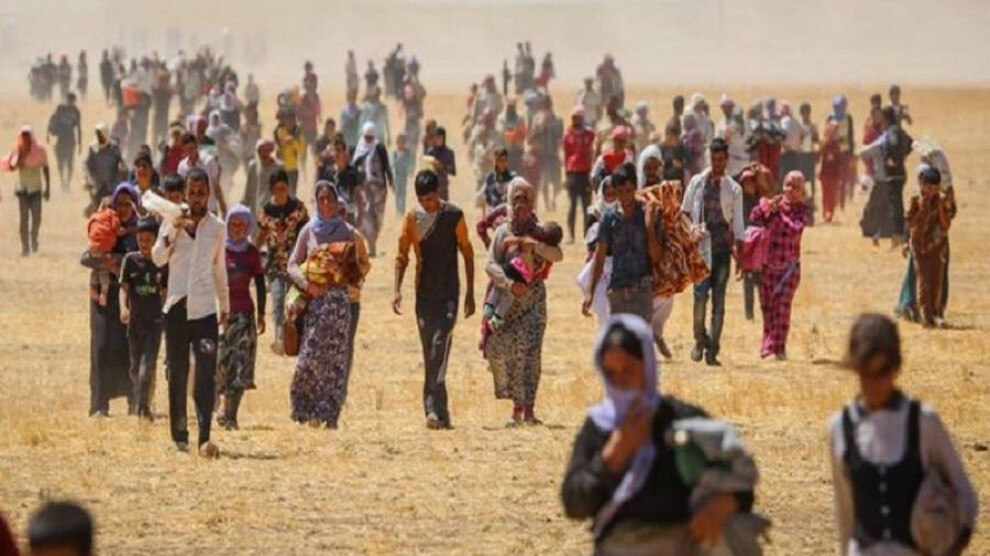
The attack began in the early hours of dawn when ISIS fighters swept through the Sinjar district and its surrounding villages, forcing tens of thousands of civilians to flee toward Mount Sinjar to escape death. Thousands of men, women, and children were besieged on the mountain for days under harsh humanitarian conditions, suffering from a severe lack of water, food, and medicine. Eventually, a humanitarian corridor was opened through Syrian territory, assisting in the evacuation of tens of thousands of trapped civilians to safer areas in northeastern Syria and subsequently to the Kurdistan Region of Iraq.
During the attack, the group executed mass killings of men and boys while kidnapping thousands of women and children. Women and girls were subjected to sexual slavery and sold in slave markets, while children were separated from their families and forcibly recruited after undergoing brainwashing. The United Nations deemed these violations to constitute genocide, crimes against humanity, and war crimes against the Yazidis.
Figures Documenting the Scale of the Genocide
Estimates by international and Yazidi organizations indicate that the attack resulted in:
The killing of approximately 5,000 Yazidis.
The kidnapping of between 6,400 and 6,800 people, mostly women and children.
The displacement of around 400,000 residents of Sinjar.
The discovery of dozens of mass graves across various areas of the district.
The ongoing disappearance of nearly 2,600 people to this day, despite twelve years having passed since the crime.
Military Operations and the Liberation of Sinjar
Following months of ISIS control over the district, military operations were launched with the support of the International Coalition, alongside Iraqi and Kurdish forces. These operations culminated on November 13, 2015, with the announcement of the liberation of Sinjar city from the group’s grip. However, widespread destruction left by the battles, combined with security and political complexities, prevented the majority of displaced persons from returning to their homes for many years.
International Recognition of the Genocide
The Yazidi cause received widespread international recognition. In 2016, the Independent International Commission of Inquiry on the Syrian Arab Republic, affiliated with the United Nations, concluded that ISIS had committed genocide against the Yazidis, emphasizing that the crime was and remains ongoing regarding the abducted individuals. Furthermore, several countries and parliaments—including the United States, Germany, and France—recognized that the crimes committed against the Yazidis amount to genocide. Recent years have also witnessed trials and convictions of several group members on charges of genocide and crimes against humanity.
Twelve years after the attack, thousands of Yazidis continue to live in displacement camps, while families of the missing persist in seeking the fate of their loved ones. Human rights organizations and survivors demand revealing the fate of the abducted, holding all those responsible for the crimes accountable, accelerating the reconstruction of Sinjar, securing the necessary conditions for the residents’ return, and guaranteeing that the atrocities inflicted upon the Yazidi community will never be repeated.
Note: This text is translated from the original Arabic version… Read the Arabic version:Click here