Reports reveal a Damascus meeting discussed targeting the Kurdish movement and reviving old vendettas, amid demands to uncover the crime’s details and hold those involved accountable.
The repercussions of the martyrdom of Kurdish serviceman Siban in Al-Hasakah Governorate continue to unfold, amid new details that the Syrian Observatory for Human Rights (SOHR) said it obtained. These details indicate that the crime was not the result of a passing tribal dispute, but rather came in the context of an organized political plan aimed—according to this information—at igniting an Arab-Kurdish conflict and suffocating the Kurdish movement and its demands.
According to the information obtained by SOHR, a meeting was held days ago in the Al-Mazzeh area of Damascus, attended by a representative of Turkish intelligence and representatives of the transitional government. The discussion focused on how to strike demonstrations and activities linked to Kurdish demands, particularly those concerning the Kurdish language and the right to education in the mother tongue.
According to the same data, the name of the martyr Siban was not mentioned during the meeting; however, the attendees reached an option based on reviving vendettas between Arabs and Kurds, considering it a tool to generate widespread societal tension that could be politically exploited.
Information indicates that choosing the Al-Baggara tribe to carry out the crime was not accidental, but was based on old calculations dating back decades. According to SOHR, these were used as a pretext to launch a bloody path serving political goals that have nothing to do with vendettas or tribal customs.
The initial assessment of the crime, according to the reported information, concludes that what occurred was not an individual act or a purely tribal matter, but rather the execution of a political decision made by official entities. This underscores the necessity of distinguishing between the direct perpetrators who committed the crime and the planners and instigators.
According to SOHR, Turkish intelligence and the transitional government bear the greatest and most dangerous responsibility, as they are—according to this information—the two parties that contributed to creating the environment, managing the incitement, and directing the path toward killing.
These developments come, according to the same source, after the failure of the same parties to ignite a direct clash between Arabs and Kurds, as well as the failure of attempts to establish war tents some time ago. Consequently, according to the information, they shifted to more dangerous methods based on reviving old vendettas and dragging society into a fabricated confrontation aimed at stifling Kurdish demands.
In this context, according to the information obtained by SOHR, the silence of the transitional government thus far stands out—especially since the martyr Siban was one of its military personnel integrated into the Syrian Ministry of Defense within the Al-Hasakah Regiment. This makes commenting on the crime politically costly and reveals, according to the source, the extent of overlap between the parties that planned it and the parties supposed to protect their personnel.
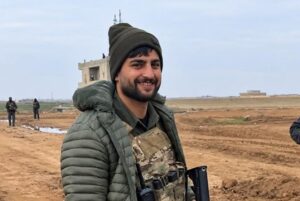
Siban, known as Sami Sheikhmous Hasso, was a fighter in the Al-Hasakah Brigade. He was kidnapped before his body was found murdered in the Al-Hasakah countryside. On September 11, 2026, the Internal Security Command in Al-Hasakah Governorate announced that it had identified the primary suspect in the case following security tracking and documentation of the kidnapping operation, confirming that investigations are ongoing ahead of referring the accused to the judiciary.
The case of Siban’s killing comes at a sensitive phase in the trajectory of relations between Damascus and Kurdish forces in northern and eastern Syria, following a series of agreements aimed at integrating the region’s civil and military institutions into Syrian state institutions. On March 10, 2025, Syrian Transitional President Ahmed Al-Sharaa and Syrian Democratic Forces (SDF) Commander Mazloum Abdi signed an agreement providing for the integration of civil and military institutions in northeastern Syria into state structures, along with recognizing Kurds as a part of the state, guaranteeing their political and civil rights, and rejecting hate speech and attempts to sow discord among the components of Syrian society.
In January 2026, the integration process moved to a more detailed phase with an agreement providing for the full and gradual integration of military and security forces affiliated with the SDF into the Ministries of Defense and Interior, in addition to integrating civil institutions into state structures. The specific understandings regarding Al-Hasakah included mechanisms for integrating the region and its institutions.
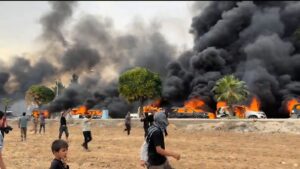
In this context, the murder of Siban acquires a particular sensitivity, as he was a fighter in the Al-Hasakah Brigade following the integration of military formations. The crime has sparked protests in Kurdish areas amid calls for an investigation and holding those responsible accountable.
Note: This text is translated from the original Arabic version… Read the Arabic version:Click here