Local sources report that landowners are being prevented from accessing, plowing, and cultivating their properties, while the Syrian Observatory for Human Rights calls for an investigation and for holding those responsible accountable.
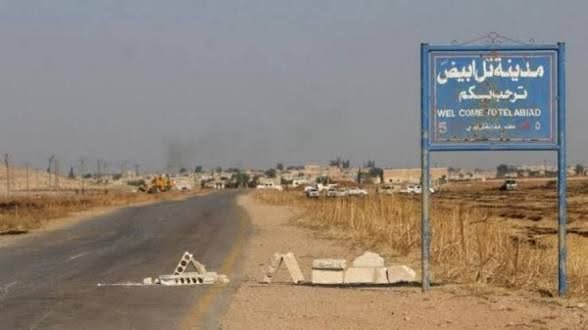
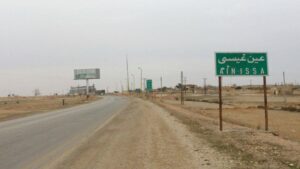
Raqqa – Complaints from residents in the countryside of Ain Issa and Tell Abyad (Girê Spî) are escalating regarding the seizure of agricultural lands belonging to Kurdish citizens. Faction-affiliated groups face accusations of preventing owners from accessing and utilizing their properties, coinciding with statements from local sources regarding facilitation provided by members of “General Security.”
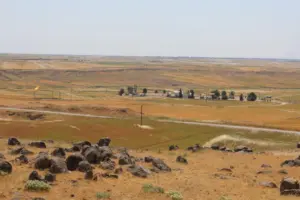
According to local sources reporting to the Syrian Observatory for Human Rights (SOHR), the seizures are concentrated in the villages of Jalka, Tinah, Rummanah, and Jahjah Yabis, located near the M4 international highway along the separation line between the Ain Issa and Tell Abyad areas. Faction-affiliated groups have taken control of agricultural areas and barred the owners from reaching them, subsequently plowing and cultivating the land to profit from its yield.
Sources state that these practices occur under security conditions that complicate the ability of landowners to access their properties or demand their rights. Meanwhile, residents reported that members of “General Security” provided facilitation, raising concerns that these land seizures may become a permanent reality that is difficult to reverse.
In a testimony obtained by the Observatory, a local resident described attempts to block civilians from reaching their villages and properties. He noted that shots were fired into the air over the heads of individuals attempting to reach their homes in certain villages, forcing them to retreat out of fear for their lives.
Landowner Detained After Demanding Land Reclamation
In a separate incident, a local source reported that members previously affiliated with the Al-Amshat faction, along with another group, seized agricultural land in the village of Kendal, in the Tell Abyad region, and began plowing it.
According to the source, the landowner attempted to file a complaint to reclaim his right to use his property. However, he was detained for a day before being released, without successfully recovering his land, according to the same account.
These events bring the issue of property rights in northern Syria back to the forefront, particularly in areas that experienced military operations and widespread displacement during the war years. Human Rights Watch previously documented violations affecting housing, land, and property rights in regions including Tell Abyad and Ras al-Ayn (Serê Kaniyê), citing looting and illegal seizures of property following Operation “Peace Spring” in 2019.
Additionally, a 2020 United Nations report documented that areas including Afrin, Ras al-Ayn, and Tell Abyad witnessed land and property seizures, as well as forced evictions, as part of violations impacting civilians in areas under the control of Turkish forces and affiliated factions.
In the same context, the organization “Syrians for Truth and Justice” pointed out that the takeover of Tell Abyad and Ras al-Ayn following Operation “Peace Spring” in 2019 was accompanied by violations, including property seizures and the displacement of owners—particularly among the Kurdish population. The organization stated that the continuation of these practices obstructs the return of displaced persons to their areas.
Ongoing Complaints Regarding Agricultural Lands
These recent developments follow previous complaints regarding the seizure of agricultural lands in the countryside of Tell Abyad. On August 6, 2026, SOHR reported that armed individuals seized approximately 300 hectares of agricultural land belonging to several Kurdish farmers in the village locally known as “Qarat Sharaf,” west of Kuma Zad village in the western countryside of Tell Abyad. Reports indicated that landowners were threatened at gunpoint and prevented from reaching their fields.
At the time, the Observatory noted that the majority of Kurdish residents in the area had been displaced from their villages since 2019 following Operation “Peace Spring” and the Turkish incursion supported by the aforementioned armed factions. According to the report, this has prevented many residents from returning to their properties and agricultural lands to date.
On June 2, 2026, SOHR also reported ongoing violations against the residents of the Kurdish village of “Tirbeh” in the Tell Abyad countryside. The report highlighted the seizure and theft of property, destruction of homes, and the cutting down of over 500 olive trees and grapevines belonging to local residents, alongside the continued exploitation of agricultural lands belonging to residents displaced since 2019.
Incidents of Robbery and Kidnapping Targeting Kurdish Civilians
Parallel to property issues, the region and its surroundings have recently witnessed security incidents targeting Kurdish civilians.
On September 4, 2026, a Kurdish citizen from the city of Kobani was robbed and had his car stolen by unidentified individuals in Raqqa. The perpetrators fled to an unknown destination, and no information was available regarding the fate of the vehicle or the identity of the perpetrators.
According to available data, this incident comes amid reports of ongoing armed robberies and muggings targeting civilians and their property across various parts of Raqqa. Residents express growing fear over the recurrence of these incidents and the rise of security instability, alongside mounting calls to increase security presence, track down perpetrators, and put an end to robberies affecting citizens.
On August 14, SOHR reported that unidentified gunmen on a motorcycle pursued a car belonging to a Kurdish citizen working in livestock trading while he was driving on a road in the western countryside of Tell Abyad. This followed the reopening of the road to civilian traffic after recent events.
On September 3, 2026, an armed group in a security vehicle bearing “General Security” logos kidnapped a Kurdish man and his son, originally from the village of “Jarn” in the western countryside of Tell Abyad, as they crossed the road connecting Raqqa and Aleppo.
Sources from SOHR reported that the kidnappers contacted the family of the two men, demanding a ransom of $25,000 for their release. Uncertainty remains regarding the identity of the kidnappers, as it is unclear whether the group belongs to General Security or is a gang posing as security personnel to carry out kidnapping and extortion.
On August 30, an armed group kidnapped a 19-year-old man after intercepting a car he was traveling in with two friends in the Al-Mahmoudiyah neighborhood of Afrin. His fate and the location to which he was taken remain unknown.
Demands for Investigation and Protection of Property Rights
Local residents maintain that depriving the indigenous population of their agricultural lands is not solely a matter of property rights, but also directly impacts the livelihoods of families relying on farming. This exacerbates economic and living pressures, raising concerns that more residents may be forced to leave their areas.
The context of this issue shows that property rights in Tell Abyad, Girê Spî, and Ras al-Ayn (Serê Kaniyê) have been tied to displacement and return for years. Human rights reports have concluded that the seizure of homes, lands, and property in northern Syria has obstructed the return of displaced residents, particularly Kurds, with the majority of documented cases receiving neither restitution nor compensation for their property.
The Syrian Observatory for Human Rights has called on decision-makers to initiate a serious and independent investigation into the property and land seizures, as well as the violations and allegations reported by residents. SOHR demanded that those responsible be held accountable and that steps be taken to restore rights and properties to their lawful owners.
Furthermore, SOHR stressed the necessity of protecting civilians, ensuring their right to access their homes, lands, and livelihoods without facing threats, intimidation, or restrictions, and bringing an end to all practices aimed at imposing a new reality on the population and depriving them of their rights and property.
Note: This text is translated from the original Arabic version… Read the Arabic version:Click here