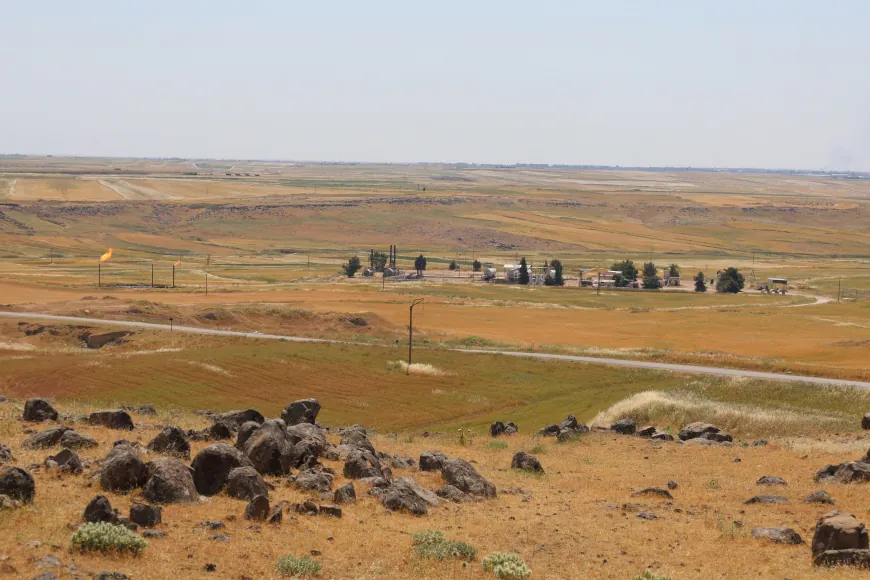
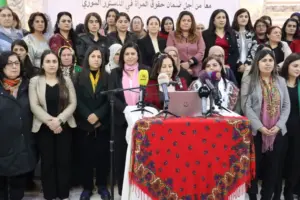
Owners of agricultural lands in the Aliyan region, within the countryside of Jil Agha, have renewed their demands to reclaim their lands, of which they were deprived under the previous Ba'ath Party policies. They consider the drafting of a new Syrian constitution as an opportunity to end the effects of Legislative Decree No. (93) and restore rights to their rightful owners, alongside completing the resolution of the status of those stripped of their Syrian citizenship.
Society and Life
Owners of agricultural lands in the Aliyan region in the countryside of Jil Agha within the Jazira region (Western Kurdistan/Rojava) continue to demand the restoration of their lands, which were confiscated during the rule of the defunct Ba'ath Party as part of the "Arab Belt" project. These lands were granted to families relocated from the Tabqa and Raqqa regions following the construction of the Euphrates Dam, who came to be known in the area as the "Al-Ghamr" (the flooded), in reference to their lands being submerged by the waters of the Euphrates River.
The residents emphasize that reclaiming their lands is part of restoring rights they have been deprived of for decades. They demand an end to the implementation of Legislative Decree No. (93) and the adoption of a new Syrian constitution based on the principles of justice and equality that guarantees the rights of all components.
Policies that Began with the Exceptional Census
The residents point out that their suffering dates back to the exceptional census conducted in the Hasakah Governorate on October 5, 1962, which led to a large number of Kurdish citizens being stripped of their Syrian citizenship, before being followed by other policies that included the confiscation of agricultural lands within the "Arab Belt" project.
According to the residents, Legislative Decree No. (93) was implemented, leading to the relocation of families from areas submerged by the waters of the Euphrates Dam in Tabqa and Raqqa to Kurdish villages in the Jazira region, granting them agricultural lands that belonged to the indigenous inhabitants of the area.
Demands to Complete the Restoration of Rights
The residents believe that the fall of the Ba'ath regime opened the door to addressing unresolved issues. They note that the issuance of Decree No. (13) regarding the restoration of citizenship to those stripped of it represents an important step; however, they emphasize that the issue of agricultural lands still requires a legal and constitutional solution that returns rights to their owners.
The landowners demand the cancellation of the legal effects of Decree (93), an end to the settlement issue resulting from the "Arab Belt" project, and the return of the lands to their original owners.
Aliyan.. One of the Worst-Affected Areas
The Aliyan region, known for its fertile soil and its location within the first stability zone—making it the most suitable for agriculture in Syria—is considered one of the areas most affected by the "Arab Belt" project. Residents state that hundreds of hectares of agricultural land were confiscated across 14 villages, including: Kishk, Alat Qaws, Kandak Shallah, Sikarka, Musa Kora, Nabi Sadi, Ataba, Qastaban, Kharab Rash, Qashto, Dayrona Qalanka, Tawakal, in addition to Mashouq, Kil Hasnak, and Kardim.
According to the figures relied upon by the residents, some villages lost hundreds of hectares, while the confiscated areas exceeded one thousand hectares in others.
"We Lost Both Land and Citizenship"
Ibrahim Darwish (65 years old), from the village of Tawakal, says that he lost about 30 hectares of his land after the implementation of the project. He adds that the damage was not limited to the land but also included being stripped of his Syrian citizenship.
He explained that this impacted his social and economic life, forcing him to migrate in search of work to support his family. He noted that for years, they were unable to claim their rights due to the loss of documents proving their citizenship. He added that the current phase must witness
the return of lands to their owners and the termination of all decisions resulting from the "Arab Belt" project.
"The New Constitution Must Restore Rights"
For his part, Jamal Sheikhi, from the village of Kishk, stated that he lost about 15 hectares of his land. He considers that the "Arab Belt" project aimed to alter the demographic composition of the region by stripping the Kurdish population of their lands and identity, forcing them into migration.
He pointed out that the fall of the Ba'ath regime has not yet ended the effects of those policies because the lands remain outside the control of their owners. He called for expediting the preparation of a new constitution that restores rights to their owners and guarantees equality among all Syrian components. He added that any constitution that does not address these issues will not achieve the desired justice for the affected individuals.
"Our Right Does Not Come at Anyone's Expense"
In turn, Basel Darwish, who lost 13 hectares of his land, stated that their demands do not target the rights of any other party, but rather aim to reclaim their rights that were stolen from them during the rule of the Ba'ath Party.
He stressed the necessity of ending the implementation of the decree that granted lands to the "Al-Ghamr" and restoring rights to their owners within a legal and constitutional framework that achieves justice and equality among all Syrians.
Background of the Project
The "Arab Belt" project was based on a proposal submitted by the chauvinist nationalist officer, Muhammad Talab Hilal. It called for the creation of a strip of Arab settlements along the border strip with Northern Kurdistan in an area known as the "Tenth Line" in the Jazira region, by settling the "Al-Ghamr" families among Kurdish villages and granting them agricultural lands that belonged to the inhabitants of the region.
The objective of the project was to alter the demographic structure of the region and strip the Kurdish population of their lands. This resulted in social and economic consequences that persist to this day, prompting the Kurds to demand that this file be closed permanently within any future political or constitutional settlement.
ANHA
Note: This text is translated from the original Arabic version. Read the Arabic version:Click here