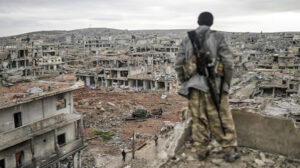
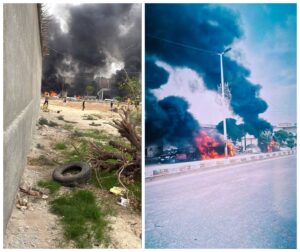
Seven years of displacement have not satisfied the aggressors; they wanted to humiliate the Kurds at the very threshold of their homes as well. The homeowners and landowners returned with their title deeds, only to be met with stones, threats, and fires, in a continuation of the Turkish–ISIS scheme aimed at uprooting them. It is a second crime committed to protect the outcomes of the first: people were driven out by force, and today the goal is to prevent them from returning through intimidation. It is also a message of incitement to the Ghamr settlers to resist any decision that restores Kurdish properties to their rightful owners, making the protection of seizure a fait accompli imposed through violence.
The assault during the attempt to reclaim property reveals something far beyond unchecked hatred. The return of a homeowner means the collapse of the pretext for seizing it, and the return of a family means the restoration of a social presence that was weakened by displacement. Therefore, the targeted car becomes more than burned property; it is the means of access, and burning it sends a message to other displaced persons that returning will cost them their security, their money, and perhaps their lives.
The objective is to transform temporary displacement into a permanent absence. The Kurd is first driven to leave his land, then left away from it for years, and after that, the realities imposed during his absence are used to block his return. With the passage of time, the intention is for the rightful owner to become a petitioner for mercy, for the usurper to become the master of the status quo, and for return to be seen as a threat to stability. Thus, the crime is inverted into a rule, and the victim is asked to respect it.
The use of the name of the Syrian Democratic Forces (SDF) in the assaults on families precisely serves this process: national identity is turned into a political suspicion, and that suspicion is then converted into authorization for collective punishment. It is no longer required to prove an act against an individual; it is enough to be a returning Kurd to be questioned about loyalty instead of having one’s property returned. A ready-made accusation erases the distinction between civilian and fighter, between child and commander, opening the path to targeting everyone.
As for the threat of deportation to Qandil, it exposes what the SDF pretext attempts to conceal. The one making the threat denies the Kurd’s belonging to his city and assumes the authority to define his homeland. The intention is to sever the connection between the people and their land: the Kurd is permitted to be a refugee elsewhere, but forbidden from being a homeowner in Girê Spî. This is racism in its clearest form, no matter how its perpetrators attempt to market it as a security stance.
These practices serve to perpetuate the transformations that followed the Turkish intervention in 2019 and the control established by the factions allied with Ankara, along with the accompanying displacement and property disputes. Here lies the political and security responsibility of Turkey: influence built by force of arms cannot be separated from the fate of the population harmed by it. Any power that preserves the results of uprooting or provides cover to its beneficiaries participates in perpetuating it, even if it does not issue the command for every single assault.
What is most dangerous is leaving the enforcement of this prohibition to civilian groups, and then presenting it as a dispute among residents. In this manner, the conflict is shifted from the responsibility of authority to a civil feud, placing the homeowner in direct confrontation with the occupant, while the party obligated to restore rights retreats into the role of a mediator. Authority must not mediate between an aggressor and his victim over how much the victim should concede; its duty is to stop the aggression and enforce the right. If the crime results in no punishment and no real protection for the return, impunity turns into encouragement for its repetition.
This trajectory threatens Western Kurdistan with more than the loss of properties. Emptying regions of their inhabitants and hindering their return weakens their ability to organize their lives, represent themselves, and demand their rights. Furthermore, the demographic map created by displacement might be used as an argument against them in any future settlement. The geography from which its rightful owners are expelled today may be presented tomorrow at the negotiation table as though they were never there. Therefore, protecting the return is part of protecting the political future of the Kurdish people.
The forces that drag segments of the Arab community and ISIS cells into these assaults, under Turkish dictation, are promoting malicious propaganda that dresses the crime in the attire of a “popular stance.” The aggressors do not represent the Arab tribes; they exploit their names to cover the seizure of Kurdish properties and prevent their return, sowing an enmity that serves those who wish to subjugate the region through fear and division. Prominent figures and social forces must name the crime, condemn its perpetrators, and isolate them; silence leaves them the platform and allows them to hijack the voice of an entire community.
Likewise, the Kurdish movement is required to do more than issue statements of condemnation. A unified dossier covering property and violations, tracking instigators and perpetrators, and political pressure making the protection of returnees a standard for any understanding are necessary. Party competition over the narrative of events, coupled with the absence of joint action, leaves the aggressors to practically determine who returns and who remains displaced.
What happened in Girê Spî is a racist assault on a people’s right to remain, and an attempt to solidify uprooting through fire. Land will not become ownerless simply because its owners were forced into absence, nor will plunder turn into ownership because the thief threatened the owner. Return is a right to be enforced, not a permission to be awaited from aggressors.
Western Kurdistan will not be erased by assaults, nor by Turkey’s plans, nor by attempts to seek revenge for ISIS at the expense of a people who confronted its terror. Its Kurdistani identity will not be canceled by the displacement of its children or the prevention of their return; it will remain their land and homeland, and part of a decentralized Syria that accommodates everyone and safeguards the rights of its peoples, without uprooting or guardianship.
United States of America
10/27/2026
Note: This text is translated from the original Arabic version… Read the Arabic version:Click here