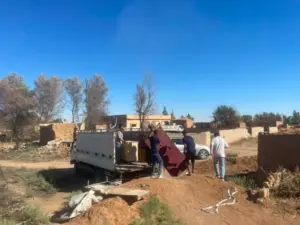
The city of Giri Spi (Tal Abyad) has returned to the forefront of events in (Western Kurdistan) northern Syria, following attacks targeting displaced Kurdish families who attempted to return to their homes and villages in the region. The gravity of what transpired was not limited to burning cars and assaulting civilians; rather, the events reopened the file of displacement and property rights, raising questions regarding the responsibility of the Syrian government, administrative authorities, and security bodies for protecting returnees and guaranteeing their safety. Giri Spi is located in the northern countryside of Raqqa, near the Syrian-Turkish border, acquiring strategic importance due to its border location. The city witnessed a major shift in October 2019, when Turkish forces and factions of the Syrian National Army took control of it during Operation “Peace Spring,” leading to the displacement of large numbers of residents, including Kurdish families who were forced to abandon their homes, lands, and properties. Attacks on Returnees On October 26, 2026, Kurdish families returning to Giri Spi and its countryside were subjected to attacks including beatings, threats, smashing of vehicles, and the burning of several cars, according to media reports and testimonies from the region. The families had traveled to the city to complete return procedures and reclaim their properties after years of displacement. According to accounts reported by media outlets, the return of these families occurred in coordination with the administration of the Giri Spi district and the relevant authorities, while local sources reported that around 100 families, including women and children, were forced to take shelter inside the district directorate building after the attacks escalated. Reports mentioned that certain individuals objected to the return of the families under the pretext of suspecting that the owners of the homes and lands were affiliated with the Syrian Democratic Forces. However, such allegations do not justify attacking civilians or confiscating their rights, nor should they be treated as established facts without evidence and legal procedures. The Internal Security Forces intervened to evacuate the families and secure their exit from the area, while General Security forces moved from the city of Raqqa to contain the tension. The families who were stranded inside the administration building left amid demands for opening a transparent investigation and holding those involved in the attacks accountable. Who Bears Responsibility? The events place the Syrian government before the responsibility of protecting citizens and guaranteeing their rights, while Raqqa Governorate and the Giri Spi district administration bear the responsibility of following up on return procedures, coordinating them, and ensuring the necessary conditions are provided to protect families heading to their areas of origin. As for the Internal Security Forces and General Security, the responsibility falls on them to maintain security, protect civilians, and prevent attacks, each within its respective jurisdiction. The investigation must include the individuals who carried out the attacks, as well as any administrative or security negligence proven to have contributed to putting the families at risk. These administrative and security responsibilities do not imply an assumption of any party’s involvement in the attacks prior to the emergence of the investigation results. The repercussions of the incident extended beyond Giri Spi, as Hasakah and Kobani witnessed protest movements in solidarity with the affected families. This raises fears of expanding tension between Arab and Kurdish components, at a time when the region needs to address the effects of war and displacement, not further division. Return Is a Right, Not a Favor The events of Giri Spi reveal that the return of displaced people cannot be limited to merely permitting them to reach their areas; rather, it requires security and legal guarantees, clear mechanisms for recovering homes and lands, and settling property disputes away from threats and force. Furthermore, the Syrian government is required to take practical steps, starting with holding those responsible for the attacks accountable, and not ending at securing the return of families who were forced to leave. These steps should include protecting property, preventing collective retaliation, and ensuring non-discrimination among citizens based on their national identity or suspected political stances. In the end, the issue of Giri Spi is not merely a passing security incident, but a test of the state’s ability to protect its citizens and restore trust among the population. Stability is not achieved by imposing a fait accompli, but by applying the law and restoring rights to their owners. Every displaced person has the right to return home safely, and it is the duty of the state to protect this right. When a person fears returning to their home after years of absence, addressing the wounds of displacement becomes an urgent necessity that tolerates no delay.
Note: This text is translated from the original Arabic version… Read the Arabic version:Click here