Fears of violations against residents should they return to Mabuja, Slaib Qaran, Kfeifa, Haimer, and Zanuba.
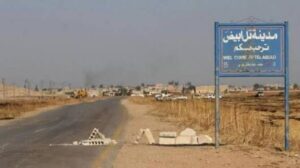
After years of displacement, the return of Kurdish residents to a number of their original villages in the countryside of Girê Spî (Tel Abyad) continues to face security concerns, amid reports of threats aimed at preventing them from returning and fears among the local population of facing violations if they attempt to reclaim their homes and lands.
Local sources informed the Syrian Observatory for Human Rights (SOHR) that Kurdish citizens from several villages in the countryside of the city of Tel Abyad have received threats from armed individuals attempting to block their return to their original areas and villages.
According to reports, these threats targeted residents of the villages of Mabuja, Slaib Qaran, Kfeifa, Haimer, and Zanuba in the Tel Abyad countryside. A number of Kurdish inhabitants have remained displaced from their homes for years, having left the area during the military events of October 2019.
These developments raise renewed concerns among residents regarding the ongoing denial of access to their homes and agricultural lands, as well as the risk of threats and targeting based on their ethnic identity, at a time when the return of displaced persons to their native areas continues to encounter security complications.
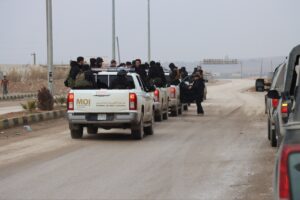
This coincides with the issue of displaced persons resurfacing in northeastern Syria, particularly following the return of batches of displaced persons from Ras al-Ayn (Sere Kaniye) and its countryside after nearly seven years of displacement. The first return convoys departed in August 2026, while another convoy comprising approximately 700 families prepared on September 8 to return to their native areas in the countrysides of Tel Tamer, Zarkan, and Ras al-Ayn (Sere Kaniye).
The Return File: Between Displacement and Property Rights
A key root cause of the complexities surrounding returns to the Tel Abyad and Ras al-Ayn regions traces back to the military events of October 2019, which caused the displacement of large numbers of residents. Subsequent human rights reports documented violations targeting housing, land, and property rights, including the seizure of homes and agricultural lands, as well as the utilization of properties for various purposes.
Furthermore, recent human rights reports indicate that the continued occupation of some homes and lands belonging to displaced persons by individuals with no legal claim to them—alongside the absence of effective mechanisms for property restitution and damage remediation—serves as one of the primary obstacles to a safe, voluntary, and dignified return.
In Ras al-Ayn (Sere Kaniye), the Syrian Observatory for Human Rights documented cases involving the looting of original inhabitants’ property and the offering of real estate belonging to displaced persons for sale.
Recent developments reveal that the return of displaced populations is not merely a matter of securing transport routes; it is equally tied to guaranteeing security, protecting civilians, restoring property rights, providing basic services, and ensuring that returnees can remain in their areas without facing threats or intimidation. Human rights bodies have also documented security risks and concerns that accompanied the first return convoy to Ras al-Ayn (Sere Kaniye) in August 2026.
Meanwhile, local sources reported today, Thursday, September 10, 2026, the arrest of three displaced individuals who had recently returned to the villages of Tel Diyab and Al-Halabiya in the southern countryside of Ras al-Ayn.
Note: This text is translated from the original Arabic version… Read the Arabic version:Click here