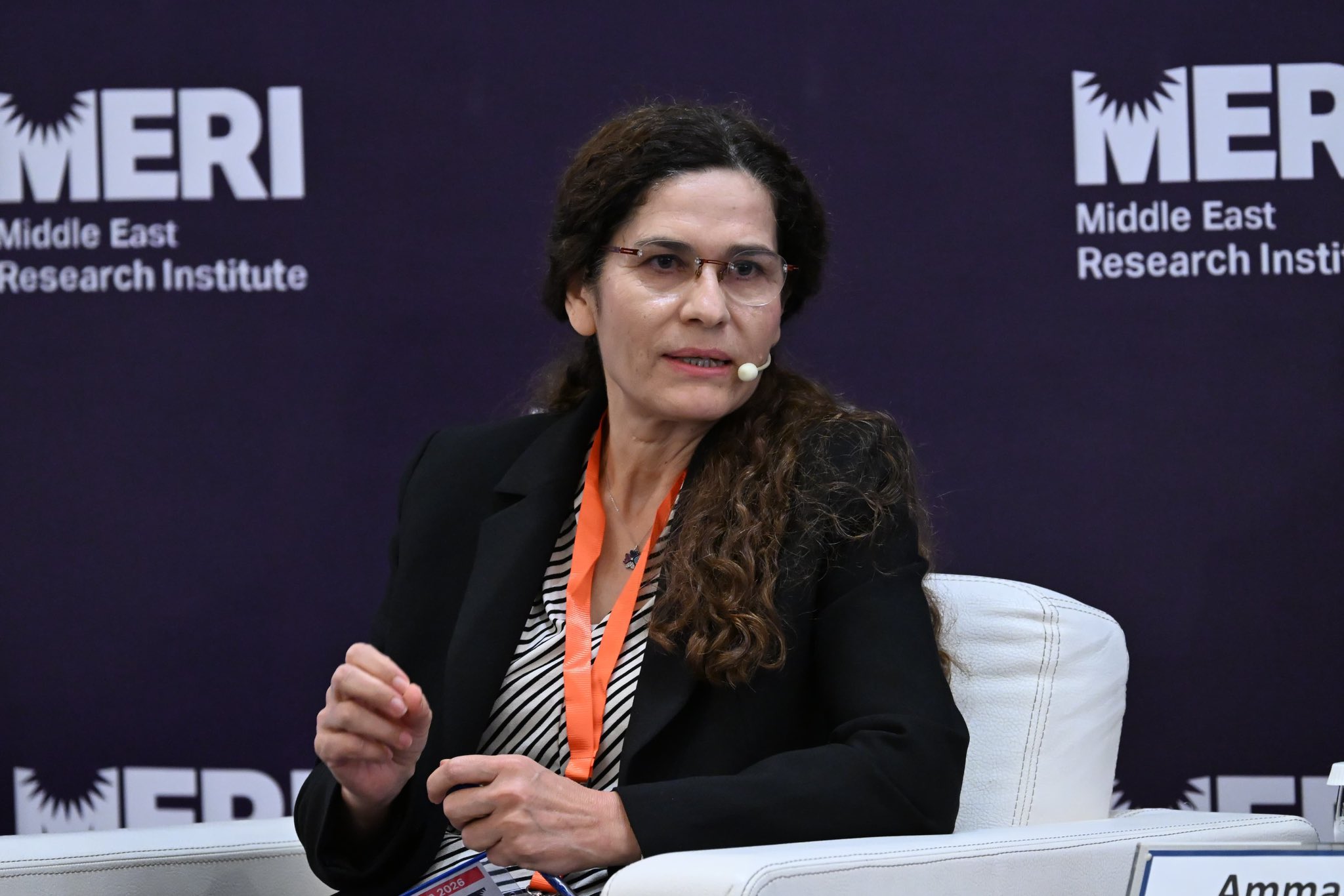
Syrian Kurdish politician Ilham Ahmed confirmed on Monday that the process of integrating the Syrian Democratic Forces (SDF) into the Syrian Army has achieved tangible progress and contributed to establishing a degree of stability, but it remains in the “testing phase.” Meanwhile, she stressed that demanding rights and decentralization does not mean the division of Syria, warning at the same time against a decline in the role of women and the ambiguity surrounding the implementation of Kurdish rights.
Speaking during her participation in the Middle East Research Institute (MERI 2026) forum held in Erbil, Ahmed said that “the Syrian revolution is still in the process of completion,” explaining that “all of Syria is undergoing a building process.”
She added that the integration process between the Syrian Democratic Forces and the Syrian Army, along with the incorporation of factions into the army, “contributed significantly to opening Syrian cities to one another and opening border crossings,” noting that it “has been achieved to a good extent so far” and contributed to “establishing a degree of stability.”
Conversely, Ahmed pointed out that the integration process is still in the testing phase, clarifying that “on the one hand, the integration process achieved accomplishments, but on the other hand, it is still in the testing phase.”
Regarding the role of women, she noted that “the experience of the Autonomous Administration is still present in the minds of all Syrians, as it presented a model regarding women’s participation in public life and created a positive experience.” However, she warned that “despite the integration process that has taken place, there is a decline in the role of women.”
Concerning Kurdish rights, Ahmed stated that the integration process achieved recognition for the Kurdish people within the framework of a issued presidential decree, acknowledging “the presence of the Kurdish people in Syria with their culture and language, and as an authentic part of the Syrian people.”
However, she considered the presidential decree to remain incomplete regarding implementation, particularly concerning the “right to education in the Kurdish language,” emphasizing that “the mechanism for implementing this decree on the ground still requires mechanisms to execute it practically.”
Ahmed continued: “From time to time, and as a result of the lack of clarity in the mechanisms of decisions issued by the Syrian government, we see a kind of chaos and ambiguity in the implementation of these decrees.”
Regarding recent tensions in the country, Ahmed viewed them as “resulting from a mindset of fanaticism and racism that still dominates society, whether by certain currents or external regional currents contributing to undermining stability in Syria.”
In the same context, she stressed that demanding decentralization does not mean dividing Syria, expressing concern over the declining role of women and the ambiguity surrounding the implementation of Kurdish rights.
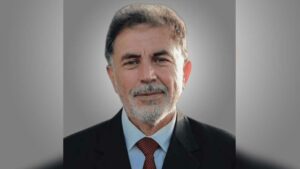
For his part, Najib Ghadbian, advisor to the Minister of Foreign Affairs and Expatriates in Syria, described the integration process between the Syrian Democratic Forces and the transitional government in Syria as “a major achievement,” noting that “there is an improvement in the security situation in the country.”
Ghadbian described the current challenges in his country as “very significant,” adding that “the greatest challenge is economic, particularly fighting poverty and reconstruction.”
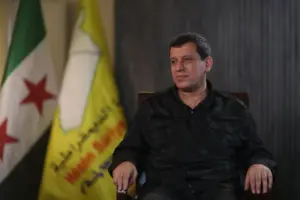
On Sunday, October 11, 2026, Syrian Presidential Advisor Mazloum Abdi and Kurdish politician Ilham Ahmed arrived in Erbil, the capital of the Kurdistan Region of Iraq, to participate in the Middle East Research Institute (MERI) International Forum, which gathers political and diplomatic figures as well as researchers to discuss the region’s most prominent issues and challenges.
The forum’s activities will continue over two days, according to the schedule announced by the Middle East Research Institute (MERI), the organizer of the event.
Note: This text is translated from the original Arabic version… Read the Arabic version:Click here