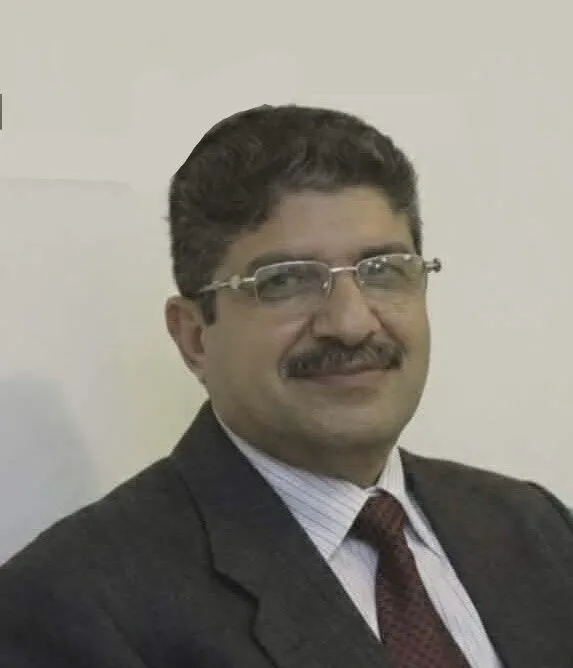
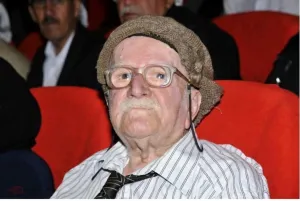
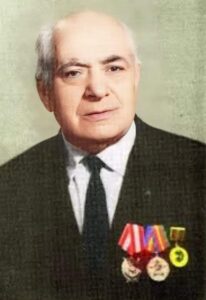
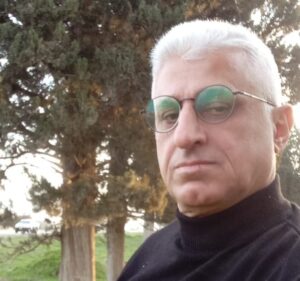
On October 10th marks the anniversary of the passing of the Kurdish historian, geographer, researcher, and translator Karim Zand (1924–2017). He left a lasting imprint on Kurdish culture through his focus on history, geography, authorship, and translation, combining academic knowledge with national belonging in his career, and dedicating his efforts to documenting aspects of Kurdistan’s history and heritage.
Karim Mohammed Salih Salim Zand was born in the city of Sulaymaniyah in 1924, where he completed his primary and secondary education before graduating from the Baghdad Teachers’ Training College in 1944. During his student years, he joined the Hiwa Party, one of the Kurdish nationalist organizations at the time, and connected with a group of students and activists. The activist Salih al-Yousifi was in charge of the students during that phase.
His participation in the experience of the Republic of Kurdistan in Mahabad, which was declared in 1946 under the leadership of Qazi Muhammad, constituted a prominent milestone in his life. He worked in the field of education and contributed to teaching in the Kurdish language, in an experience that reflected the importance of language in building cultural and national identity. Following the fall of the republic in 1947, he left with Mullah Mustafa Barzani and his companions for the Soviet Union, where he continued to expand his knowledge before dedicating a large part of his life to research, authorship, and cultural work.
Karim Zand left behind a diverse intellectual output comprising more than thirty-five books on Kurdish history and geography, in addition to other publications and dozens of articles. This output contributed to enriching the Kurdish library with research materials related to the history, geography, and heritage of the Kurdish people, making his works worthy of study, documentation, and re-presentation to new generations.
Among his works is his translation of the Bible into the Kurdish language, an achievement reflecting his interest in language as a tool for cultural expression and communication between peoples. Translation is not limited to transferring texts from one language to another; rather, it opens the door to cognitive interaction and grants the language broader capacities to encompass intellectual and human output.
His publications received appreciation in cultural circles, and published accounts of his biography indicate that the British writer Jeffrey Archer sent him two letters of appreciation regarding some of his works. He was also honored by the Kurdish Culture Association in the 1970s during the period when activist Salih al-Yousifi headed the association and the Kurdish Writers Union. Zand was awarded the Mullah Mustafa Barzani Medal after the 1991 uprising.
One of the striking details in his biography is a cap he wore for decades; he mentioned in a television interview that it was a gift from Qazi Muhammad, who in turn received it from Abdul Qadir al-Nahri. This story gains its significance from its connection to the memory of the Republic of Kurdistan in Mahabad and its personalities, becoming a personal detail that retains its connection to an important historical stage.
On October 10, 2017, Karim Zand passed away at his home in the city of Sulaymaniyah at the age of ninety-three, following a career that spanned education, national work, research, and authorship.
Remembering Karim Zand goes beyond recalling the biography of a cultural figure; it is an occasion to emphasize the importance of documenting Kurdistan’s history, preserving its heritage, and caring for researchers who have made writing and research a means to safeguard collective memory. Furthermore, republishing his works and studying them represents a necessary step to introduce new generations to his contributions and keep his legacy present in the cultural landscape.
Karim Zand has passed away, but his biography remains a testament to the connection between knowledge and identity, and to the role of the historian and intellectual in preserving the memory of their people. May mercy be upon his soul, appreciation for his intellectual and cultural legacy, and may his works remain present in the memory and library of Kurdistan.
Note: This text is translated from the original Arabic version… Read the Arabic version:Click here