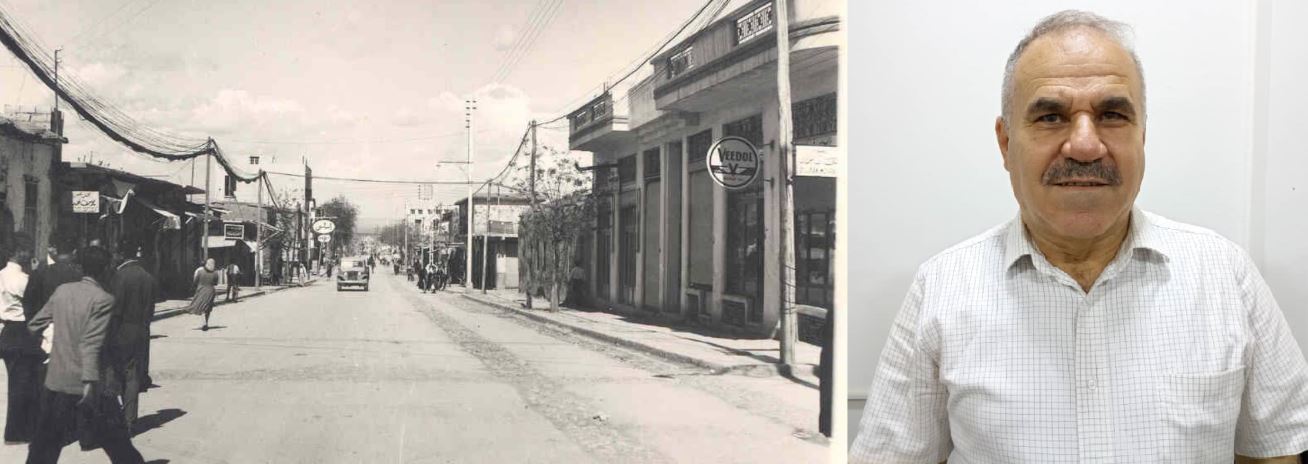
Qamishli is located in northeastern Syria at the intersection of latitude 37.30° north and longitude 41.13° east, at an altitude of 450 meters above sea level. It lies about one kilometer from the Turkish border opposite Nusaybin, and approximately one hundred kilometers from the Iraqi border. It is dominated by a continental climate: hot and dry in summer, and cold and rainy in winter, accompanied by dry, cold northern and northeastern winds, dusty southeastern winds, and humid western winds. Rainfall ranges between 300 and 450 millimeters annually, with temperatures reaching 40 °C in summer and dropping below 10 °C in winter alongside frost waves.
The city constitutes a strategic transportation hub connecting Northern Kurdistan via Nusaybin, Derik to the east, Amuda to the west, and Al-Hasakah to the south. It is traversed by the Berlin–Baghdad railway line, in addition to a train station and an airport dating back to the French Mandate era. It abounds with a rich archaeological heritage; it was built beneath Tell Badan (ancient Nusaybin), and its surroundings are dotted with historical mounds, most notably Tell Mozan (the Hurrian Urkesh), Tell Leilan (the Akkadian and Assyrian), Tell Arabid (the Royal Cemetery), and Tell Brak, reflecting a succession of civilizational legacies.
Flowing through the city is the Jaghjagh River, historically known by the names “Hermas, Hermes, and Macedonius.” It originates in the Bonsra Valley from the springs of “Afa Rash” and “Afa Sby” near the village of Tub Taba, merging after ten kilometers and heading south into Syria. In the past, the river ran in two branches inside the city, and watermills were established along it. It is said that its name was derived from the sound of the millstone’s movement during operation. It served as one of the sources of drinking water and domestic use before being turned into a garbage dump and sewage outfall, subsequently flowing into Al-Hasakah to empty into the Khabur after 124 kilometers. Administratively, Qamishli belongs to Al-Hasakah Governorate and comprises four sub-districts: Qamishli, Amuda, Tirkbespi (Trab al-Saeed), and Tel Hamis. Its central zone encompasses 122 villages and 13 farms, with a central area of 38 km² and an estimated total area of 23,000 km².
Foundation and Initial Nuclei
Qamishli was not born of an isolated historical moment, but was rather an organic extension of historical Nusaybin overlooking the Jaghjagh River. The region’s lands were distributed between two large Kurdish families: the Al-Qaddur Bek family on the eastern bank—with Qaddur Bek having served as a Kurdish Ottoman Kaymakam in Nusaybin—and the Al-Nizam al-Din family as trustees of the endowments of Imam Zayn al-Abidin on the western bank. This gave the city’s spatial formation its early demographic and social dimension and reflected its deep Kurdish roots prior to modern planning. Before Qamishli pulsed with life, its land resembled two lakes blanketed by dense forests of reed, papyrus, cattail, poplar, and willow trees, alongside wilderness areas that served as a refuge for wild boars, snakes, and wolves. In its vicinity were scattered small villages, including Antariyah and Mahmoudiyah to the east, Nafkur, Hemo, and Al-Hilaliyah to the west, and Jarmaz, Halko, and Zenda to the south.
The actual beginning of habitation dates back to 1922, when a man named Hassan, hailing from Nusaybin, constructed a hut on the site located today opposite the Central Bank. In 1925, he converted it into a house, and later into a hotel and restaurant named “Al-Khaymah” (The Tent), becoming the first settlement in Qamishli and establishing its primary civic nucleus. As for the military nucleus, it took shape a year later when the French established their post on Tell Badan following the killing of Captain Rogain in the Battle of Beyandur (August 1923). Prior to that, between 1919 and 1920, Qaddur Bek had built a palace on the eastern bank, around which a neighborhood known as “Al-Qaddur Bek Quarter” quickly arose, thereby completing the city’s foundational landscape with its civic, military, and social nuclei combined.
Official Foundation, Population, and Municipality
The Upper Al-Jazira region witnessed major transformations following the collapse of the Ottoman Empire after World War I, the entry of the French Mandate, and the establishment of the Turkish Republic in 1926. In 1926, the Second Ankara Agreement led to the demarcation of the Syrian-Turkish border, whereby France ceded Nusaybin and parts of Jazirat ibn Umar. The Orient Express railway line, laid by Germany in 1917, became a border partition dividing some families between the two states and splitting the population into “Ban Khat” south of the line and “Sar Khat” to its north.
On August 5, 1926, the French established a permanent base on Tell Badan. On August 20, Officer Tréhet drew up the city’s grid design, which was executed by the engineer Caralambo. They then proceeded on September 24 to plan the city on the right bank of the Jaghjagh River, capitalizing on its strategic location linking Mardin, Aleppo, and Mosul, which earned it the moniker “Little Paris.” With Michel Eldoum proposing the free distribution of land, the authorities encouraged immigration. Refugees consequently flocked from Nusaybin, Mardin, Deir ez-Zor, Aleppo, and Syriac villages, alongside Kurdish tribes, Armenian artisans, Jewish merchants, Syriacs, Arabs, and Circassians. The first three neighborhoods (Al-Qaddur Bek, Al-Bashiriyah, and Al-Wusta) were formed in 1926. Their buildings evolved from mudbrick to concrete, and the population jumped from 9,400 inhabitants in 1943 to 50,000 in 1960, then to 93,000 in 1981, reaching more than 300,000 inhabitants today in the city center, and over 150,000 in the neighboring villages.
In 1927, the Qamishli Municipality was formed pursuant to Decree No. 698 issued on July 25 by the Head of the State of Syria, Ahmad Nami. It was headed in its initial phase by Abdul Razzaq Agha al-Kouzi, who drained the swamps, lit the alleys, repaired roads, and established a public park. Michel Doum subsequently assumed the presidency between 1930 and 1940; he was born in Mardin and held Syrian and French decorations. In 1932, 3,572 square meters of roads were paved and a park was established. On January 24, 1935, the town’s boundaries were officially demarcated, and the municipal building was rebuilt in 1935 alongside its connection to the railway line and the improvement of the region’s routes. On December 15, 1937, it was classified among major city municipalities as its population exceeded ten thousand inhabitants.
Economic Resources, Income, and Standard of Living
Agriculture constitutes the foundational pillar of Qamishli’s economy, leading Syrian production reliant on winter rainfall and summer artificial irrigation, featuring crops of wheat, barley, lentils, chickpeas, and cotton. It witnessed a renaissance in the 1950s through land reclamation and the importation of modern machinery. Its strategic location on the Aleppo–Mosul line, which the railway reached in 1928, enhanced its commercial role. Its market encompassed approximately 450 shops, mostly owned by Jews, Armenians, and Syriacs. “Ezra Market” (the Jewish Market) for fabrics and spices, alongside the Turkish Market, flourished with active trade exchanges with Turkey via Nusaybin and Iraq via Tel Kujer, which attracted merchants and workers and elevated the income of a broad segment of the population.
Industry, meanwhile, remains limited to handicrafts and consumer goods such as plastics, tissues, and repair workshops. Despite the discovery of oil and gas fields since the 1970s, the city did not benefit from their revenues, which went to the ruling family under the slogan “oil in safe hands.” Government employment remained limited compared to the dominance of agriculture, trade, and services, keeping the residents’ livelihoods vulnerable to fluctuations, especially during periods of drought or market turmoil, and generating a clear disparity in income levels. With the beginning of the 1970s, displacement from the city toward the interior began as a result of deliberate neglect policies and the economic and social targeting of Kurds, culminating in the issuance of Decree 49 of 2008, which restricted property ownership in border areas. Displacement subsequently turned into emigration abroad with the outbreak of the Syrian Revolution.
Infrastructure and Services
Qamishli suffers from a comprehensive deterioration in its infrastructure and services as a result of accumulated government neglect, political conflict, funding turbulence, the absence of strategic vision, and haphazard expansion, which has negatively reflected on the quality of life for residents across the sectors of roads, water, electricity, health, and education, turning the city into congested concrete blocks devoid of green spaces. Main and secondary streets, despite the replacement of the French iron bridge with a concrete one in the 1960s, have become filled with potholes and cracks exacerbated by the pooling of rainwater due to clogged drainage networks.
The water crisis is considered the most severe; the city relies on four sources and 13 wells, including the Al-Hilaliyah (Nafkur) station with 52 wells providing 75-80% of the requirement at a rate of 50,000 m³ daily; the Sefan Dam in Derik with a capacity of 48 million m³ supplying 19,200 m³ via a 475-km pipeline; the Al-Oweija station with 11 wells producing 8,520 m³; and the Jaghjagh station with 6 wells of limited production. The total reaches approximately 70,000 m³ daily, distributed in turns every 24 hours. However, neighborhoods across the city suffer from severe shortages due to decaying pipes, wastage, power outages, and declining dam water levels, forcing residents to purchase contaminated tanker water at prices reaching $150 per month. Untreated wastewater from the Jaghjagh River is also used to irrigate vegetables in the south, threatening chronic diseases such as cancer, hepatitis, and heavy metal soil contamination. Sewage networks established in the 1960s have not been renewed, causing wastewater pooling, the spread of foul odors, and epidemic diseases.
Electricity entered the city in 1939 pursuant to Decree No. 298 via a contract between the municipality and Abdul Qadir Haj Ali Bek. It is currently supplied from the national grid via the Al-Suwaidiya gas power plant (230 kV) and the Euphrates and Tishreen dams, after which the voltage is stepped down via southern and northern transformer substations. However, frequent breakdowns and lack of maintenance have reduced supply to one hour a day before improving to 8 hours, failing to meet requirements especially in summer, prompting locals to resort to generators and solar energy amid financial burdens and environmental pollution.
The health sector has collapsed; the new national hospital was cordoned off by the security apparatus of the former regime, rendering access to it nearly impossible, especially for young men wanted for military service and those pursued by security forces. Its operational rate did not exceed 15% after the Autonomous Administration took control due to the cutoff of financial aid, while the old hospital was transformed into a military base and then a refugee shelter center. There are more than ten private hospitals, but their services are limited and prices exorbitant; the cost of a night in intensive care reaches two million Syrian pounds and the total bill exceeds $600, making healthcare a luxury affordable to only a few. Furthermore, the Heart and Eye Hospital, with its limited capacity, fails to meet the region’s needs.
Education was historically affected by cultural marginalization policies, and the crisis was exacerbated when the Autonomous Administration forces closed state schools first, followed by private schools that refused to adopt their alternative curriculum. This restricted families’ choices and forced many students to drop out of school, while the city lacks any government university or institute, forcing youth to travel to other provinces. The French chessboard planning imparted beauty to the city, but the absence of modern zoning plans and construction oversight led to the distortion of the urban landscape, the disappearance of sidewalks and public spaces, increased traffic congestion, and the aggravation of drainage and ventilation problems, leaving Qamishli as a model of a city that rose economically in the past but collapsed in terms of services in the present.
The Political and Cultural Landscape and Memory
Qamishli is considered the political and cultural capital of the Kurdish movement in Syria and the primary center for all its parties, by virtue of its strategic location as a link between Iraqi Kurdistan and Turkish Kurdistan via the Semalka and Nusaybin border crossings. The former Syrian regime controlled it for decades through its security apparatus stationed in the city and the Ba’ath Party, practicing discrimination against the Kurds. Subsequently, the hegemony of the Democratic Union Party (PYD) continued with the establishment of the “Autonomous Administration.” In April 2025, however, the “Unity of Ranks Conference” was held with the participation of 27 parties, international support, and the presence of a representative of President Masoud Barzani, resulting in demands for a federal system in Syria and recognition of the national rights of the Kurds.
Culturally, Qamishli was and remains a diverse cultural beacon; cinema entered it in the 1920s, and its historical halls and cafes (Kourpis, Nejmeh, Kowy) emerged, alongside the newspapers Al-Khaboor and Sawt Al-Jazeera, the central newspapers of Kurdish parties, and local bulletins, most notably Al-Shams (ROJ). It birthed Kurdish and non-Kurdish artistic pioneers such as Mohamed Sheikho, Saeed Youssef, Salah Rasoul, Adnan Saeed, Adel Hazni, Rifat Dari, Ciwan Haco, Sipan, Youssef Chalabi, Taybo, Aram Tigran, Jan Karat, and Garabed Khacho; alongside writers, poets, and intellectuals such as Selim Barakat, Razo Osi, Cigerxwîn, Farhad Ajmo, Mulla Nuri Hesari, Mulla Ahmad Ballo, and Kelesh among the Kurds, and Munir Eissa Shamoun, Ahmad Suleiman Al-Khelif, Fayza Al-Qadiri, Yasar Al-Habib, Youssef Abdel Ahad, Hawas Al-Ali, Faraj Al-Hussein, Ali Jumaa Al-Kaoud, and Abdel Salam Al-Abousi, among others.
Kurdish folkloric troupes such as “Narin,” “Khani,” and “Khalat” were formed in the late 1970s and early 1980s, followed later by the “Media” troupe, moving Nowruz celebrations from secrecy to the open, in theaters and nature. Between 2000 and 2011, the city witnessed a prominent Kurdish cultural movement manifested in the establishment of cultural and educational forums and committees. These included the Jaladat Badirkhan Cultural Forum, established at the turn of the millennium as a platform for dialogue that demanded cultural rights such as the recognition of the Kurdish language; “Kojka Qamashlo Cultural,” established in 2006, which organized enlightenment sessions discussing historical and linguistic topics, as well as folkloric and poetry sessions; the Kurdish Publications Committee, which organized literary and commemorative activities; the Kurdish Language Teaching Committee, established on July 15, 2003, which prepared a curriculum for teaching the Kurdish language and issued publications under the name “ZIMAN/Language,” graduating numerous students; and the Kurdish Poetry Festival, held to commemorate the poet Cigerxwîn, whose first edition was launched in 1993 and continues to this day.
Alongside this cultural activism, Qamishli witnessed bloody political events that left deep marks on collective memory as a reaction against marginalization and repression policies. On March 21, 1986, the young man Suleiman Adi was martyred by Syrian security gunfire in Damascus during a demonstration demanding permission to celebrate Nowruz, and his funeral procession in Qamishli turned into massive demonstrations that led to the pursuit of Kurdish activists. On March 12, 2004, the “Qamishli Uprising” erupted following a football match between the “Jihad” and “Al-Fotuwa” teams, escalating into widespread protests that resulted in the martyrdom and wounding of dozens, marking a major turning point in the relationship between the Kurds and the regime, whose apparatus incited certain elements from Arab tribes against the Kurds and assisted them in looting shops in the city market. During Nowruz 2008, security forces opened fire on celebrants, leading to the martyrdom of three people and the injury of five others. Prior to that, on May 10, 2005, Sheikh Mohammad Maashouq al-Khaznawi was abducted, and twenty days later his body was found in Deir ez-Zor bearing marks of severe torture, sparking a wave of anger and protests denouncing the crime and demanding the punishment of the criminals.
Qamishli, the Syrian Revolution, and Geopolitical Transformations
Qamishli did not remain insulated from the popular movement that swept Syria with the outbreak of the revolution in March 2011; rather, it participated effectively in peaceful demonstrations, highlighted by the protests of August 2011 and the assassination of the Kurdish opposition figure Meshaal Tammo on October 7, 2011, which triggered a massive wave of anger extending to Amuda, where the statue of Hafez al-Assad was brought down in defiance of the authority. On February 13, 2012, Nasr al-Din Barhak, a member of the Political Bureau of the Kurdistan Democratic Party – Syria, was severely wounded in an ambush on the Tel Brak road east of the city; he was transferred to Qamishli hospitals and then to Aleppo, where he was martyred from his wounds on the 22nd of the month, and was buried in a majestic procession that became a landmark in the journey of the Kurdish struggle. With the revolution turning into an armed conflict, the city entered a complex struggle for influence. On September 30, 2012, a car bomb exploded in the security square, followed by successive shelling operations up to 2016.
The city reflected the complexities of the revolution through multiple administrations and military presences. Two administrations (the Regime, the PYD) took shape alongside four military forces: regime forces, the National Defense, Sutoro, and PYD forces, in addition to Russian forces and International Coalition forces. This division turned the city into a theater of complex balances that prevented any single party from taking sole control, persisting until the collapse of the Assad regime in December 2024, whereupon the city came entirely under the control of the “Autonomous Administration.” On July 27, 2016, ISIS carried out a truck-bomb attack in the Western Neighborhood claiming the lives of 53 people, in one of the deadliest attacks witnessed in Qamishli. On December 15, 2024, Israeli bombardment targeted the Qamishli airport and the 54th Brigade, destroying its military infrastructure.
On January 26, 2026, Russia began withdrawing its forces from the airport, and on January 29, 2026, the “Autonomous Administration” and the Syrian Interim Government signed an agreement representing the beginning of a transition of power, embodied in the entry of internal security forces into the city and the government’s takeover of its airport following the Russian withdrawal, while the files of oil and border crossing management were left open for subsequent negotiations. This came in the wake of the March 10, 2025 agreement sponsored by the United States, the implementation of which stumbled due to disagreements over governance and military integration mechanisms amid Turkish pressures and a gradual American withdrawal. However, actual implementation faces obstacles; in August 2026, popular protests escalated in rejection of fuel price hikes and the deteriorating living conditions, alongside tribal movements reflecting tension with the Arab component. Furthermore, administrative duality disrupted services, confused residents, and multiplied exchange rates. Thus, owing to its strategic importance as the key to controlling Syrian Kurdistan, Qamishli transformed into an arena of local and regional conflict marked by successive military control, bloody attacks, geopolitical shifts, and fragile agreements, remaining one of the Syrian cities most affected by the vicissitudes of war.
Recommendations and Horizons of the Second Century
Despite the neglect and conflicts Qamishli suffered during its first century, it transformed from a small town on the Aleppo–Mosul railway line into a prominent center in northeastern Syria. Peaceful coexistence among its components—Kurds, Arabs, Assyrians, Armenians, and others—remained a unique feature reflected in its multiple names: Al-Qamishli, Qamishlo, Al-Qamishliyah, and their interpretations between (“Gamêş lê” meaning “it has water buffalo”) and (“Qamîş lê” meaning “it has reeds”), or (“Qam shli” meaning “it rose and settled”), or (“Bayt Zalin”). This legacy of diversity and resilience today warrants clear priorities: renewing infrastructure, securing energy, rehabilitating health and education, protecting cultural and historical diversity, and combating corruption. In its second century, Qamishli aspires to be a model for multicultural cities and a center for creativity and sustainable development within the framework of equal citizenship, serving as a home for everyone and a renewed dream.
Sources and References
Primary Sources: The author’s personal archive and memory (interviews, field notes, private documents).
Books: Koni Rosh, The History of Qamishli: A Study in its Social and Urban Genesis and Development; Koni Rosh, Qamishli: A Study in Urban Geography; Ibrahim Mahmoud, Rhythms of a City; Sabr Darwish, Cities in the Syrian Revolution; Amin Anis Madiwayeh, Qamishli 1925–1958; Mohammed Jamal Barout, The Modern Historical Formation of the Syrian Jazira; Muhannad Al-Kateh, Glimpses of the Modern History of the Syrian Jazira.
In Kurdish: Sami Mulla Ahmad Nami, Dîmenin ji dîroka winda; Faris Othman, Qamişlo.. Sed Sal Ji Dîrok Û Bîranînan.
Periodicals and Documents: Syriaoz magazine (Qamishli Centenary File); periodicals of Kurdish parties; Decree 49 (2008); statements of the Kurdish National Council (2016–2025); reports of international human rights organizations; Al Jazeera Net; Independent Arabia.
ynkurdistan.org
Note: This text is translated from the original Arabic version. Read the Arabic version:Click here