Injuries and damage among Kurdish residents around the Al-Hamama roundabout, and the tearing down of the “Peace Square” sign in three languages, amid warnings of escalating inflammatory rhetoric and calls for self-restraint and avoiding friction.
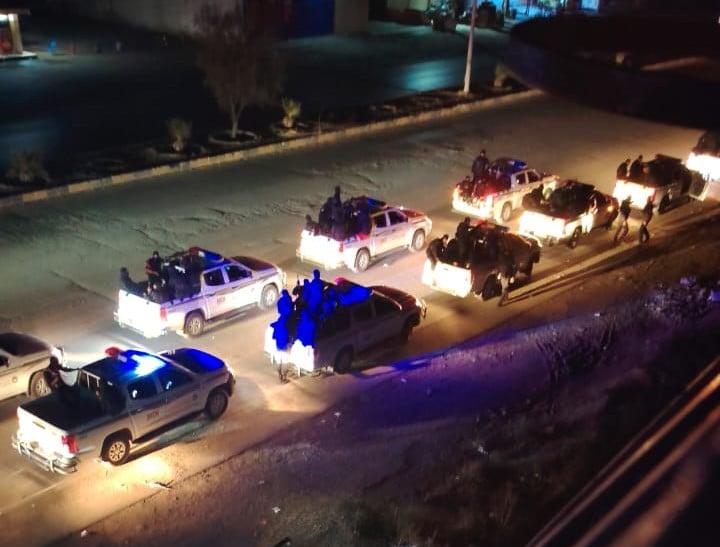
Al-Hasakah city in northern Syria witnessed mounting security tensions on the evening of Thursday, October 8, 2026, coinciding with a gathering of Kurdish youth in several of the city’s squares. This occurred amidst a deployment of General Security forces belonging to the central government and heavy gunfire into the air to disperse those gathered, according to the Syrian Observatory for Human Rights (SOHR).
SOHR stated that a number of Kurdish residents were injured while present in the vicinity of the Al-Hamama roundabout, while damage was caused to civilian property as a result of the shooting.
The escalation followed tensions in the Al-Mufti neighborhood after protesters gathered to demand their rights. This involved an attack on a General Security vehicle and an attempted assault on its personnel by one of the demonstrators, which prompted the forces to intervene to forcibly disperse the protesters, using rifle butts to strike a number of the demonstrators’ vehicles.
Following this, security reinforcements—estimated at around 10 vehicles loaded with personnel and weapons—arrived in the neighborhood amid a state of alert and tension, before the Internal Security Forces partially withdrew from the area in an attempt to contain the escalation and calm the situation.
This coincided with restrictions imposed on movement in and out of the Ghuwayran neighborhood, and the closure of the Al-Bayrouti Bridge and the market in central Al-Hasakah city. Meanwhile, precise information regarding the full reasons for these measures or the final toll of injuries and damage was not immediately available.
Tearing Down the “Peace Square” Sign and Rising Concerns
In another development, demonstrating youth tore down the “Peace Square” sign in central Al-Hasakah, which features the square’s name in Kurdish, Arabic, and Syriac. This occurred in the presence of security personnel stationed at the location, according to information obtained by the Syrian Observatory for Human Rights.
SOHR noted that the tearing of the sign took place during a gathering of several young men, coinciding with acts of rioting, the removal of Kurdish symbols, and the chanting of provocative slogans. SOHR considered these actions to have sparked resentment in local circles, who viewed them as an infringement on the symbols of cultural and ethnic pluralism that characterize Al-Hasakah Governorate.
It added that its activists monitored the presence of security personnel at the scene during these acts without clear intervention to stop the tearing of the sign or to prevent the targeting of symbols. This raised questions regarding the responsibility of relevant authorities to protect public property and prevent practices that escalate friction among the region’s components.
Warnings Against Inflammatory Rhetoric
These developments come at a time when SOHR reports an increase in incitement speeches coinciding with movement in the Ghuwayran neighborhood, including statements issued by Qusay Al-Shammari, whom SOHR noted had previously documented making incitement speeches against Kurds.
Al-Shammari appeared in a video clip inside a shop displaying various iron tools, examining them and asking about their quality and prices, before announcing the donation of a number of them to the residents of Ghuwayran in conjunction with Friday’s movements, saying: “Rejoice with ten, people of Ghuwayran.”
SOHR considers that the coincidence of such speeches and actions with rioting and the targeting of Kurdish symbols in Al-Hasakah constitutes a concerning sign that must be addressed seriously to prevent any slide into violence or clash between the region’s components. At the same time, SOHR emphasized that a direct connection between Al-Shammari’s incitement and the incident of tearing down the Peace Square sign cannot be confirmed unless proven by evidence.
Published reports from May 2026 had attributed to Qusay Al-Shammari incitement speech against Kurds and calls to use violence against them—something SOHR believes warrants investigation and legal action, holding accountable anyone whose involvement in inciting violence is proven, regardless of their affiliation or position.
The Syrian Observatory for Human Rights warned against turning protests and the expression of political positions into a platform for ethnic incitement or the targeting of the symbols and languages of any Syrian component. It stressed that political disagreement cannot justify infringing upon the cultural or linguistic identity of Kurds, Arabs, Syriacs, or any other components of Syrian society.
It emphasized that the presence of Kurdish, Arabic, and Syriac on a single sign in the heart of Al-Hasakah reflects historical and societal diversity that should be protected, not targeted, and that protecting this diversity is a primary responsibility falling upon the authorities and security entities tasked with maintaining order.
SOHR demanded that competent authorities investigate the incident of tearing down the sign as well as the acts of rioting, hold those responsible accountable according to the law, counter incitement and hate speech regardless of its source, and prevent any attempt to drag Al-Hasakah into ethnic tensions or civil confrontations.
Field Movements and Fears of Broader Escalation
In a related context, the Syrian Observatory for Human Rights warned of rapid field and security developments in Al-Hasakah Governorate, pointing to exclusive and reliable information it obtained regarding field movements and a state of alert, amid fears that conditions could slide toward a security escalation that might be difficult to contain.
SOHR explained that the continuation of tension alongside the rise of incitement and exclusionary rhetoric would increase friction and push parties toward a confrontation that threatens civilian security and civil peace in the governorate.
SOHR refrained at the current time from publishing additional details regarding the sources of information or the locations and directions of movements, given the sensitivity of the situation on the ground and to avoid publishing data that might contribute to increasing tension or endangering lives.
It noted that these developments come in light of a climate that has witnessed an increase in exclusionary and incitement rhetoric against Kurdish citizens in Al-Hasakah over the past period. SOHR recalled that on September 29, it had warned of the danger of turning political and security disputes into a conflict between the governorate’s components, calling on responsible authorities to curb incitement speeches and work to protect all components without discrimination.
Furthermore, SOHR posed questions to Syrian authorities regarding the continuation of incitement and threat rhetoric without clear accountability measures, and whether some agitators enjoy immunity that prevents the law from being enforced against them.
Concerns Over the Path to Calm and Integration
SOHR expressed fears over the impact of any field escalation on the path of understandings and integration in the region, noting that on September 29, it documented calls in Al-Hasakah rejecting the integration process. These calls were accompanied by exclusionary rhetoric targeting Kurdish citizens, coinciding with ongoing understandings regarding the future of civil, military, and security institutions in the region.
SOHR affirmed that pushing Kurdish citizens or the General Security elements deployed in the area toward a confrontation would have severe repercussions for all residents of Al-Hasakah, potentially threatening the steps achieved toward calm and integration, and pushing the region once again into a cycle of violence.
It called on all parties to exercise the highest degree of self-restraint, refrain from being drawn into provocations or incitement rhetoric, and demanded that Syrian authorities fulfill their responsibilities to prevent incitement and threats, investigate calls for violence, and hold those responsible accountable under the law.
It stressed that accountability must apply to everyone without exception, and that no individual should enjoy immunity before the law due to their affiliation or loyalty, warning that any double standards in handling incitement speech would undermine trust and threaten civil peace.
Kurdish Calls for Calm and Avoiding Friction
Amid the state of tension and mobilization, activists and local residents urged Kurdish youth in Al-Hasakah city to exercise the utmost awareness and calm, stay away from squares and streets, and return to their homes and neighborhoods to avoid any friction or escalation that could exacerbate existing tensions in the city.
Those issuing the calls urged avoiding being drawn into provocations or engaging in confrontations, ensuring no pretext is given to those seeking to broaden the scope of tension, while maintaining the security of neighborhoods and property and cooperating with relevant authorities to control the situation.
The Syrian Observatory for Human Rights emphasized the importance of self-restraint, prioritizing the language of calm, protecting civilians and property, and avoiding any escalation that could turn current tensions into clashes threatening civil peace, security, and stability in Al-Hasakah Governorate.
Al-Hasakah city remains in a highly sensitive security situation amid ongoing security deployments and intermittent gunfire across several locations, alongside warnings that continued incitement rhetoric and field tensions could complicate efforts to contain the situation and jeopardize the path toward calm and dialogue in the governorate.
Note: This text is translated from the original Arabic version… Read the Arabic version:Click here