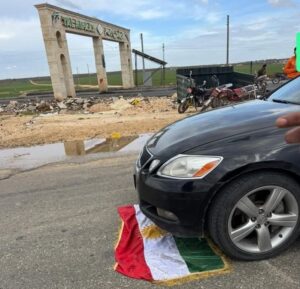
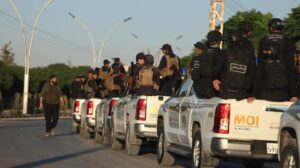
Security forces prevented crowds originating from the Guwayran neighborhood from advancing toward majority-Kurdish neighborhoods, while attacks on members of the Internal Security Forces and the removal of the Lawyers Syndicate building sign were recorded, amid fears of expanding tensions in the city.
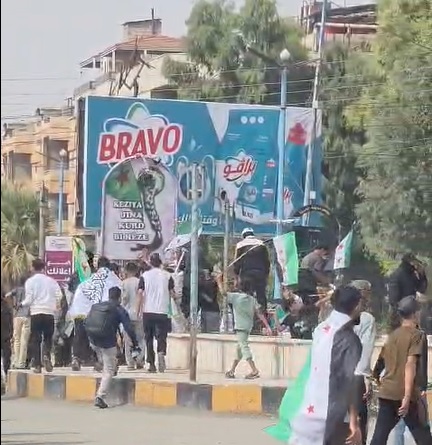
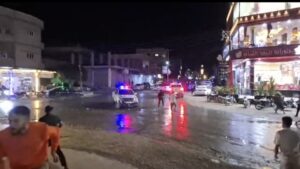
On October 9, 2026, the city of Hasakah witnessed rapid field developments coinciding with the movement of crowds of protesters from the majority-Arab Guwayran neighborhood, accompanied by a security alert and strict measures to curb the movement of these crowds toward majority-Kurdish neighborhoods.
According to the Syrian Observatory, the protesters—”the crowds that emerged from the Guwayran neighborhood”—reached the vicinity of the Assyrian Church roundabout in the Tal Hajar neighborhood before security forces blocked their advance. General security forces subsequently forced them to fall back as part of measures aimed at preventing their approach to majority-Kurdish neighborhoods and avoiding friction among residents.
According to video footage, those crowds also attempted to tear down a image panel depicting the braid of a female Kurdish fighter, which has become a Kurdish symbol across all parts of Kurdistan.
In this context, citizens in Hasakah called on government forces to control the protesters and prevent violations and attacks, amid fears that the scope of tension might expand and impact relations among the city’s components.
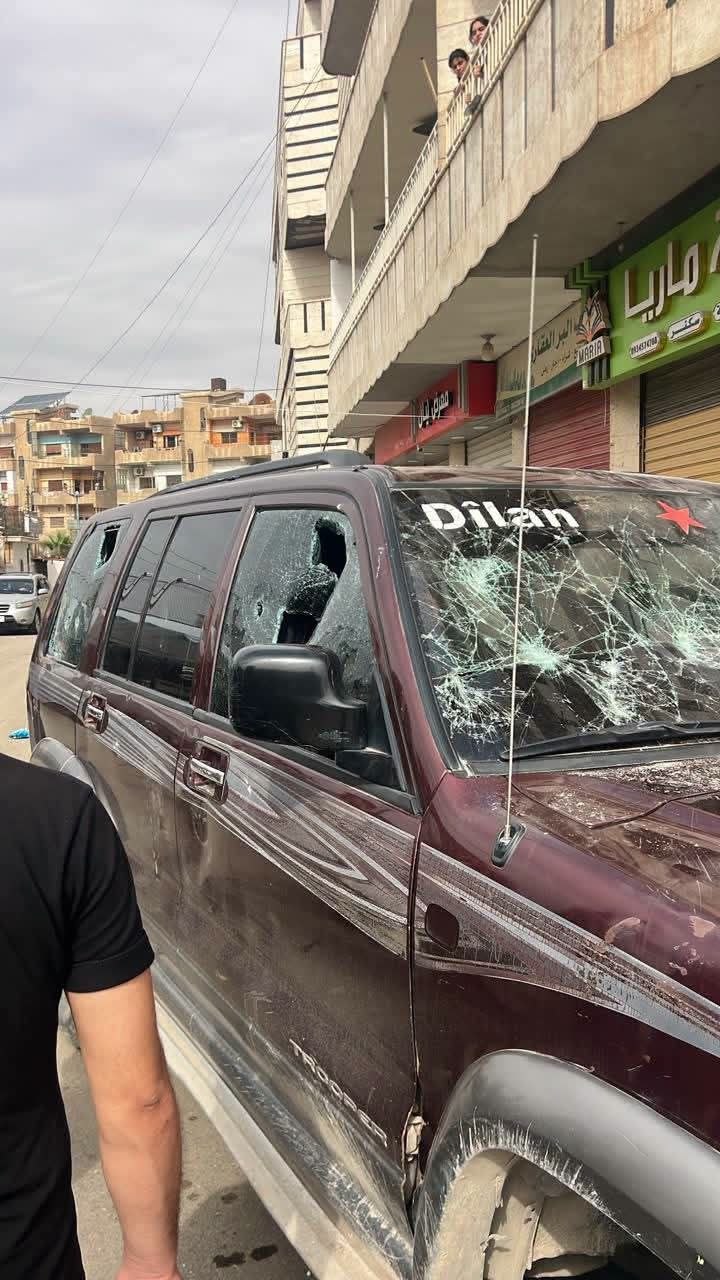
Additionally, a number of protesters assaulted two members of the Internal Security Forces in the Tal Hajar neighborhood while they were on duty, raising fears of escalating confrontations amid ongoing popular movements and security measures.
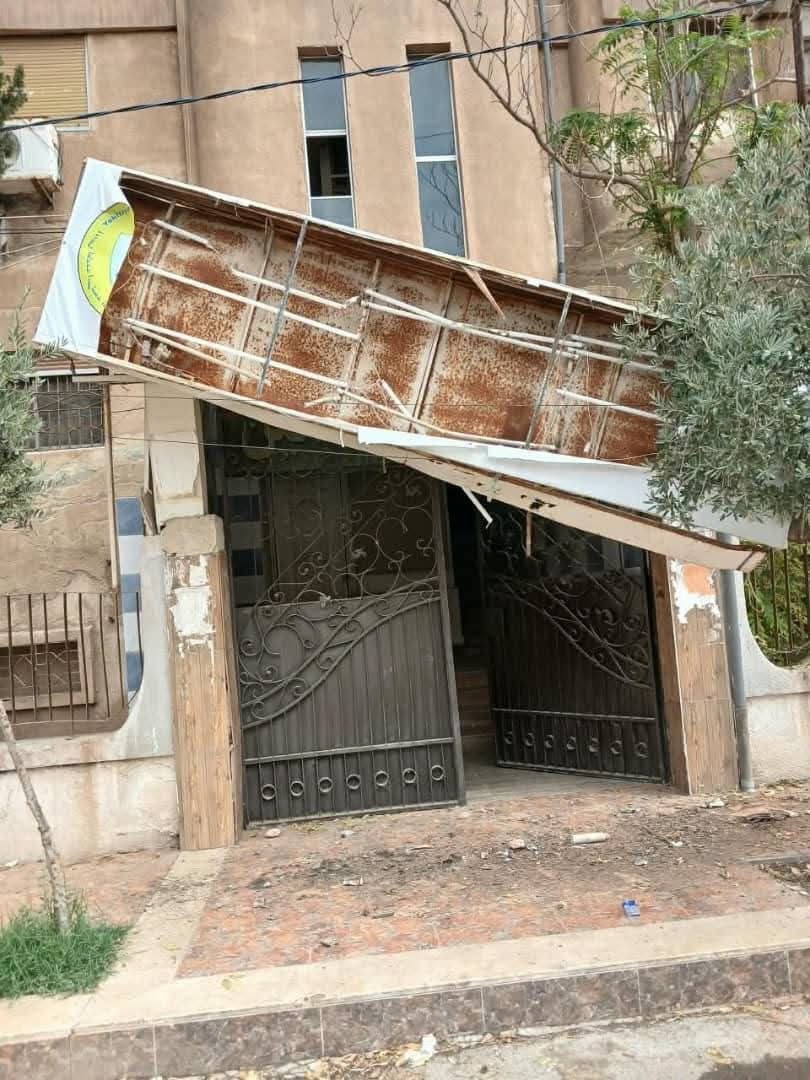
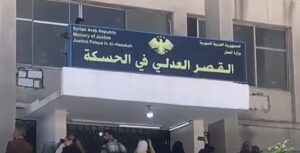
In another development, protesters attacked the Lawyers Syndicate building in Hasakah and removed the sign on the building, which displays text in Kurdish, Arabic, and Syriac, in an incident that coincided with rising tensions in the city.
These developments were accompanied by restrictions on movement between several Hasakah neighborhoods and efforts to prevent protesters from reaching majority-Kurdish areas, amidst civilian demands to regulate movements, prevent attacks, and protect property as well as symbols expressing the city’s national and cultural diversity.
The Syrian Observatory for Human Rights stressed the necessity for responsible authorities to fulfill their duties in protecting civilians and both public and private property, curbing any attacks or violations, and holding those responsible accountable according to legal procedures—while ensuring the right to peaceful demonstration and freedom of movement, and working to prevent practices that inflame tensions and threaten social peace in Hasakah.
Note: This text is translated from the original Arabic version… Read the Arabic version:Click here