The book “Archivnama” (The Archived Letters or The Archive of Letters), written by the author, writer, journalist, and one of the prominent figures of the city of Erbil, Ihsan Rashad Al-Mufti, stands as an eloquent response and a complete refutation to those who claim that the Kurds lack a historical archive, while providing definitive confirmation of their possession of a rich, substantial, and undeniable archive.
This book represents an important historical document that has recently joined the Kurdish library, serving as a sanctuary and a rich source for researchers and enthusiasts of collecting historical documents. Through this 600-page work, the author seeks to refute the allegations claiming that the Kurds lack an archive. Ihsan Rashad Al-Mufti relied on historical documents he gathered over long decades to accomplish this work, documenting it with original photographs and manuscripts, and utilizing paper clippings, interviews, and council conversations as primary sources for recording this archive.
As the author explains in his introduction, “Archivnama” is his second publication following the book “Letters of Kaka Hamad Al-Sheikh,” written during the years (1878–1886), and it is the fruit of decades of painstaking effort in carefully preserving documents, which ultimately transformed into this documentary treasure printed in a prestigious presentation.
Aesthetic Design and Cover Connotations
The title and cover of the book were designed with extreme care to harmonize with the internal content, clearly indicating the nature of the historical documents it contains:
The Front Cover: The author explains that the content of the book consists of selections from his historical archive spanning across decades. The front cover is adorned with a rare handwritten document by Mawlana Khalid Al-Naqshbandi, the prominent religious figure of the Naqshbandi Sufi order, who enjoyed and continues to enjoy a prestigious religious status among Kurds and Muslims around the world. The author also placed an image of the first seal of Mawlana Khalid dating back to the year 1809, which was made during the Sheikh’s presence in India.
The Back Cover: On it, the author provided a summary of the work in three languages, describing it as: “A half-century journey into the world of writing, documents, and manuscripts, within religious and historical atmospheres from the expanses of the Erbil Citadel…”. Alongside the image of the historic Erbil Citadel, the author, in coordination with the cover designer, included two manuscripts; one of them is a letter from the Mufti of Mecca in 1881, Ahmad bin Zaini Dahlan, praising Sheikh Omar Mullah Abu Bakr Al-Kurdi Al-Erbili, confirming the Kurdish identity of this family in Erbil.
The author crafted a precise and concise introduction and attached a detailed index to serve as a gateway for the reader into the world of “Archivnama”. He divided the book into four main parts according to different historical stages, documenting 53 historical topics arranged chronologically by their date of issuance or according to the events the author witnessed.
The Chapters and Four Parts of the Book
Part One: The Fragrance of History and the Rashad Al-Mufti Library
The author introduces this part as “selections from the author’s historical archive,” reviewing important historical documents from past centuries. Most prominent among them is a document for the sale of a house in the Erbil Citadel dating back to the seventeenth century (in which the price was set at 15 Qirsh), which is a valuable document that the family preserved and inherited across generations in the “Rashad Al-Mufti Library.” This chapter also chronicles the living crises, years of drought, and high prices that swept the region (such as the years 1756 and 1880, and the major crisis that followed World War I in 1917). The chapter also includes documents related to the biographical dictionary “Qamus al-A’lam” by the author Shemseddin Sami, and other documents confirming the Kurdistan identity of Kirkuk for more than a century.
Part Two: The Mandate Era and the Monarchy (1918–1958)
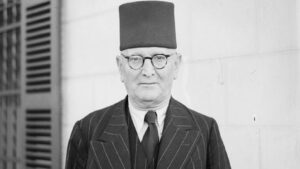
In this part, the author highlights the political and social importance of the city of Erbil during the British Mandate and the Kingdom of Iraq eras. He narrates documented historical events, including the role of the Governor (Mutasarrif) of Erbil in the agreement of Sheikh Mahmoud Al-Hafid with the British authorities in 1927, in addition to the King’s visit to the Erbil Citadel and his stay at the house of the great scholar of Erbil and the Kurds (Mullah Effendi 1863–1942), who was the dean of their family at that time. The chapter also contains documents about the May 1941 uprising (the Rashid Ali Al-Gaylani movement) and aspects of the activities of Erbil’s first Governor, Mahmoud Ahmad Osman.
Part Three: The Republican Era and Peaceful Coexistence (1958–1991)
This part addresses the era extending from the establishment of the Republic up to the Uprising (Intifada) of 1991. In it, the author publishes historical dialogues and narratives drawn from the atmospheres of mosques and the councils of his father, Judge Rashad Mufti, which were a sanctuary for resolving people’s problems, particularly during the Friday council held before the sermon to listen to citizens’ grievances.
He also pointed out the role of prominent Kurdish figures in administration, politics, and Kurdish society in general, and Erbil in particular, such as: Mustafa Al-Uzayri and Shams Al-Din Al-Mufti in the Kurdish movement, and Sheikh Muhammad Al-Khal—who is well known—publishing an eloquent literary letter written by Al-Khal to the author in 1982. The author dedicated a special space to the role of Judge Rashad Mufti in promoting the values of tolerance and peaceful coexistence among religions, citing situations he witnessed firsthand; such as the Judge praying in the church during the funeral of his friend, the first pharmacist in Erbil (Mr. Paul, the Christian), and the participation of non-Muslims in visiting the mosque.
In a personal gesture, the author recalls the first time his name was mentioned in the Kurdish press at the age of six, when his father wrote a poem dedicated to him in “Hetaw” (The Sun) magazine in 1960. He then published his first article about Erbil in the Arabic language in “Majallati” magazine in 1970 at the age of sixteen, leading up to his writings in “Karwan” magazine in 1984.
Part Four: The Post-Uprising Stage (1991–Until the Publication of the Book)
The author dedicated this part to the stage that followed the 1991 uprising, reviewing his professional milestones, journalistic encounters, and private interviews. This section highlights the visit of the late President Jalal Talabani (Mam Jalal) to the late Rashad Al-Mufti, and the conversation that took place between them regarding “Qamus al-A’lam” and the Kurdistan identity of Kirkuk backed by documents and evidence.
Conclusion
In conclusion, the pages of the book “Archivnama” prove with irrefutable evidence that the Kurds possess a rich and rare archival legacy, emphasizing the necessity of continuous work to preserve and document it. With his new book, which won the admiration of readers, the author succeeded in refuting all allegations claiming the weakness of the Kurdish historical archive, ensuring the book remains a living testament documenting a bright and important aspect of Kurdish cultural, political, and social history.
Note: This text is translated from the original Arabic version… Read the Arabic version:Click here