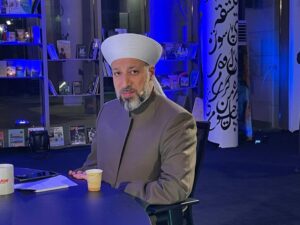
In a compelling article published in the Arabic section of Kurd Online, translator and researcher Khadija Massoud Ketani presented a groundbreaking academic study by the UK-based scholar and university professor, Dr. Hassan Mazouri. The study offers a vital scientific illumination into the deep biological roots of the Kurdish people, effectively decoupling linguistic identity from genetic reality through modern molecular anthropology.
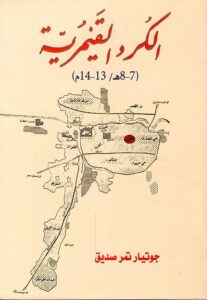
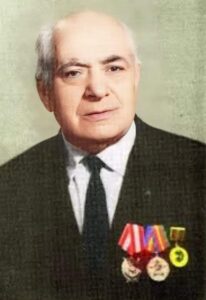
In her introduction, Ketani paid tribute to the decades of grueling historical research conducted by past academics, including her late father, Dr. Massoud Mustafa Ketani, who authored a seminal book on the origins of the Kurds, Kurdistan, and the Kurdish language alongside over 65 scientific and literary works. However, she noted that today’s technological revolution allows genetic laboratories to achieve a level of objective precision that bypasses the historical mazes that exhausted researchers for generations.
The Genetic Verdict: Deeply Rooted in Mesopotamia
According to Dr. Mazouri’s research, the biological ancestry of the Kurdish people is written in their DNA, not in shifting historical narratives. The study synthesizes crucial benchmarks from global peer-reviewed genomic journals:
• The 2022 Brown Study (Molecular Genomes): DNA sequencing conducted on Sorani Kurdish samples from Sulaymaniyah province revealed that the most prevalent Kurdish genetic lineages are historically tied to the primary human groups that first established agriculture in the ancient Near East and the northern Fertile Crescent (\sim 6000 BCE). This scientifically refutes the claim that Kurds are recent migrants, proving they are an indigenous population of the region.
• The Human Immunology Research: Independent research published by scientist Arnas Verine examined human immune genetics—one of the most precise tools for tracking biological lineage. The data demonstrated a profound, cohesive genetic link among Kurds across Iraq, Iran, and Georgia, despite their vast geographic separation.
• The Cavalli-Sforza Framework (1984): The study builds upon the pioneering work of world-renowned geneticist Luigi Luca Cavalli-Sforza, whose team proved that Kurds share a deeply rooted Caucasian-Mediterranean biological base, making them genetically closer to the populations of the Caspian Sea and the Mediterranean rather than populations from Central or East Asia.
The Hurrian Ancestry and the Shield of Zagros
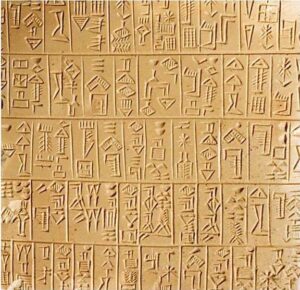
The accumulated data indicates that the biological ancestors of the Kurds are the Hurrians (alongside the Gutians and Lullubi), the indigenous mountaineers documented in ancient cuneiform inscriptions who inhabited the Zagros Mountains over 4,000 years ago. Historically, the Hurrians spoke a Caucasian language, not an Indo-European one.
The research emphasizes that the Zagros Mountains acted as a vital natural geographical barrier. This terrain protected the Kurdish molecular structure from dissolving during massive historical migration waves, serving as the ultimate guardian of Kurdish biological identity.
The Multi-Layered Model: How the Language Shifted
If the Kurds are biologically Caucasian-Mesopotamian, how did they adopt a Western Iranian (Indo-European) language?
Dr. Mazouri addresses this via a “Multi-Layered Model.” During the late Bronze and early Iron Ages, small-scale Eurasian steppe migrations (associated with lineages like R and A1 ) entered the region. While these groups lacked the population density to demographically replace the indigenous inhabitants, they possessed advanced military organization and war chariots, establishing themselves as a ruling elite.
Through cultural integration, the indigenous Hurrian populations adopted the language of this elite over centuries, creating the modern Kurdish language. However, their biological genetic code—passed down faithfully through maternal lines via mitochondrial DNA (mtDNA) and paternal lines via the Y-chromosome—remained entirely intact.
Conclusion
“Genes do not carry political agendas,” Dr. Mazouri emphasizes. The study concludes that while the linguistic label on the door changed over millennia due to historical shifts and cultural blending, the biological foundation of the Kurdish people remains firmly and anciently rooted in the mountains of Mesopotamia.