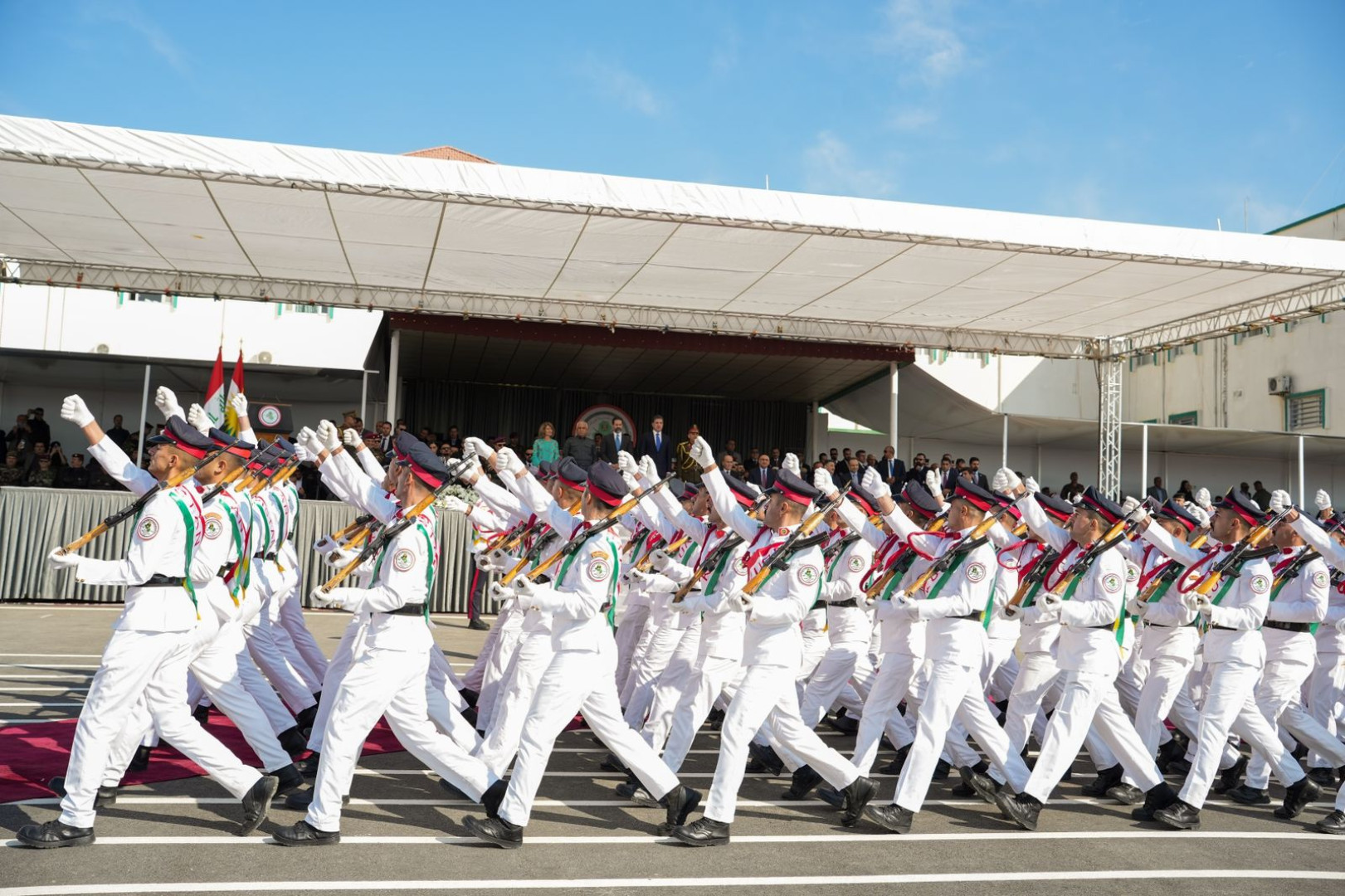
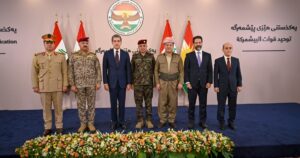
The term “Peshmerga” (Pêşmerge), which literally means “those who face death,” is a historical symbol of Kurdish identity and struggle. Since its official emergence during the Republic of Mahabad in 1946, it has not only been a military designation but also a representation of the sacrifices made by the Kurdish fighter who dedicated his life to defending his land. Over the decades, this designation has transitioned from the realm of armed struggle to an institution, becoming an unparalleled national identity.
However, when we return to our current reality, we find that each entity has its own definition of power. The most coherent definition of a militia is that it is an armed force that follows a specific party and is used for political purposes, which fundamentally contrasts with the definition of a national army that derives its legitimacy from the constitution and owes allegiance solely to the homeland.
Based on these definitions, the Peshmerga emerges as an authentic constitutional military force; it is a regional army and an integral part of the Iraqi armed forces according to Article (121/Fifth) of the Iraqi Constitution, which designates it as the “Guard of the Region.” In its constitutional essence, the Peshmerga represents a shield for the homeland; however, reality imposes a challenge in the form of attempts to drag it into the realm of partisan division.
Security and freedom can only be achieved with a regular army that unites citizens’ loyalty to the state. When a state possesses a unified army, trust is solidified; however, if the military institution is divided, it shifts from being a protector to a threat. From this perspective, the Peshmerga, with its legacy of struggle, finds itself today facing a fateful obligation that requires disentangling itself from the partisan agendas that have distorted its historical struggle.
The Peshmerga has suffered from a historical subjugation to party politics and the infiltration of regional powers, leading to structural fractures and multiple loyalties. This division, which manifests in the multiplicity of units, names, and salaries, does not reflect the true identity of the Peshmerga; rather, it is a reflection of historical mistakes and party competition that previously led to internal conflict. The existence of “party forces” under the name of Peshmerga depletes its national value and threatens the stability of both the region and Iraq as a whole.
Reviving the Peshmerga as a unified national force is an ethical and national duty. Today, everyone recognizes that the continuation of the militia approach is nothing but a dead end. Despite the obstacles, the solution lies in courageous political will that prioritizes the interests of the people over party interests, transitioning the Peshmerga from being “party forces” to being professional and organized “Regional Guard Forces.”
A fundamental awareness of the provisions of the Iraqi Constitution, particularly Article (121), is the gateway that will restore to the Peshmerga its dignity as a regular force, making it the most important pillar and best future for a strong and united Iraq.
Note: This text is translated from the original Arabic version… Read the Arabic version:Click here