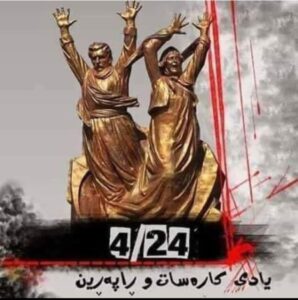
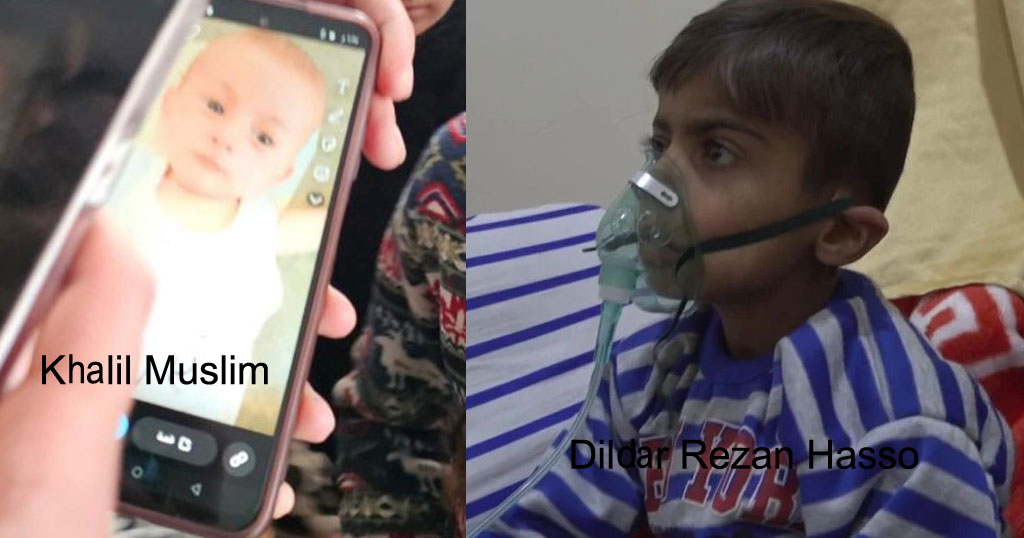
The people of Kurdistan commemorate, with profound sorrow and deep grief, the 38th anniversary of the commencement of the fourth phase of the Anfal operations and the chemical bombardment of the villages of Goktapa and Askar (sub-districts of Aghjalar in Chamchamal) using internationally prohibited weapons. Following the conclusion of the third phase—which spanned a vast area and is considered the most brutal stage of Anfal in Garmian—the fourth phase of this notorious campaign began. On May 3, 1988, the defunct regime bombed the villages of Goktapa, Askar, and Gamy Rezan with chemical weapons in preparation for the fourth stage of the Anfal operations. These operations, carried out in eight consecutive phases across Kurdistan, resulted in the martyrdom of more than 182,000 people and the destruction of over 4,500 villages; approximately 200 people were martyred and at least 500 others were injured in this specific bombardment.
On May 4, 1988, the regime launched a large-scale offensive against the areas of Shwan Plain, Sheikh Bazyani, the slopes of Khalkhalan, and the banks of the Lesser Zab River as part of the fourth phase. During this assault, 237 villages were demolished, and more than 28,550 individuals were arrested and led to an unknown fate. The remains of some were discovered in mass graves in southern Iraq following the fall of the former regime.
On this somber occasion, we bow in reverence to the blood of the martyrs of this painful crime and all the eternal martyrs of Anfal, and we salute their families and all the people of the region. As we remember the bombing of Goktapa and Askar and the fourth phase of Anfal, the relevant authorities in the Kurdistan Region and the Iraqi federal government must strive to uncover the fate of the “Anfalized” victims, search for mass graves, and return their pure remains to their ancestral lands. This is in accordance with Law No. 5 of 2006, which entrusted this matter to the Martyrs’ Foundation. Although the chemical bombardment of Goktapa and Askar did not take a legal path in the Supreme Iraqi Criminal Tribunal as an independent case (unlike the Halabja case), the classification of Anfal as genocide by this court grants this file the right to material and moral compensation for the victims. Efforts must be maximized to rebuild the villages and areas destroyed during the fourth phase and all other stages of the notorious Anfal operations. Furthermore, the federal government must implement Article 132 of the permanent Iraqi Constitution to support the families of the martyrs and victims of the former regime.
The Kurdistan Regional Government must also exert every effort to internationalize these crimes within global circles, capitalizing on the presence of international offices and organizations. These files should be presented scientifically through systematic seminars and conferences, with greater emphasis on defining these crimes politically and legally.
It is no secret that the former regime relied on the support of international companies that supplied the bloody administration with equipment and chemical materials. Therefore, these companies must be punished as accomplices in these crimes. In this regard, we commend the steps taken by certain international entities and volunteer lawyers.
In conjunction with the start of the fourth phase of Anfal, on May 4, 2011, the Supreme Iraqi Criminal Tribunal issued its final verdict on the Barzani Genocide case, classifying it as genocide as it contains all elements agreed upon in international treaties. This ruling is significant for the people of Kurdistan in upholding justice, restoring rights to victims’ families, and punishing the perpetrators involved in the regime’s plans to exterminate the peaceful Kurdish people. We reiterate our call for fair compensation for the victims of the Barzani genocide based on this judicial decision, which followed a lengthy series of court sessions.