A 2015 photo resurfaces allegations of his work with ISIS and its “Amaq” agency.
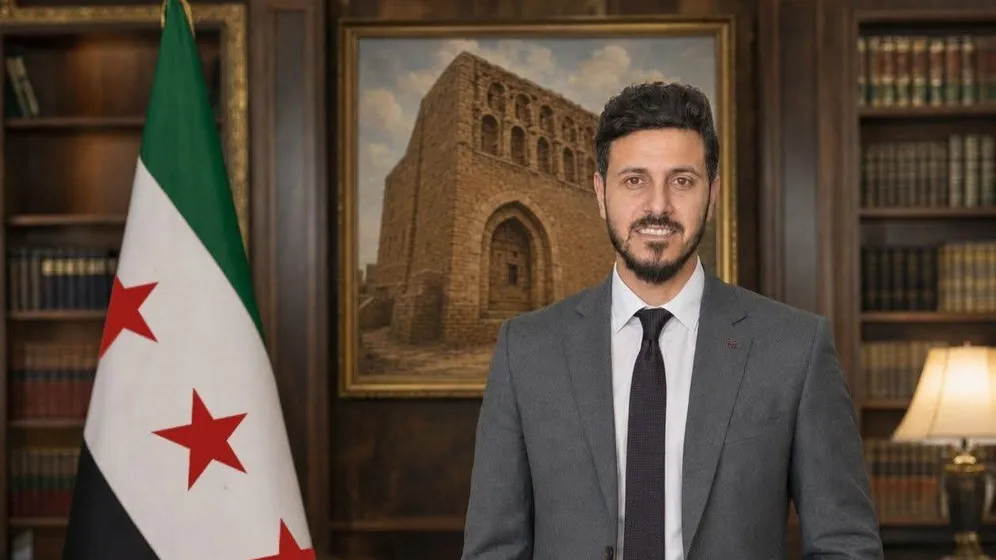
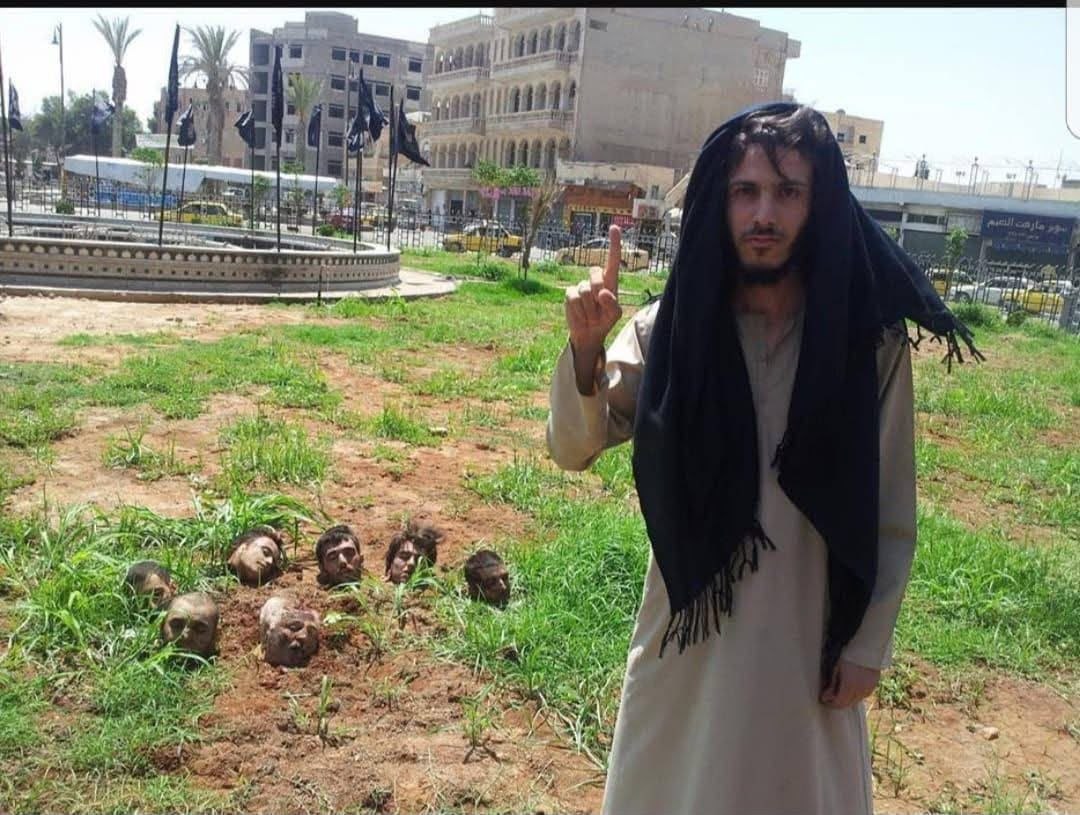
The reappointment of Mohammad Subhi Al-Nashif to the position of Director of Digital Media in Raqqa Governorate during September 2026 has reignited controversy over his past during the period of ISIS control over the city. This comes particularly after the circulation of an old photograph showing him near the Al-Naim roundabout with severed heads behind him, amid allegations by activists of his past ties to the organization and his work with its “Amaq” news agency.
According to the “Verify-Sy” platform, Al-Nashif’s initial appointment to the position dates back to July 2026, before he was referred for investigation following complaints submitted by several local activists. These complaints included allegations regarding his past and connections to ISIS, including working as a photographer and correspondent for the “Amaq” agency while the group controlled Raqqa.
The platform quoted a government source stating that the Syrian Minister of Information recently issued a decision restoring Al-Nashif to his position following an investigation conducted by Internal Security authorities and the Counter-Terrorism Department in the governorate. According to the source, the investigation concluded that there was insufficient evidence to prove the allegations against him.
In contrast, activists re-circulated a 2015 photo showing Al-Nashif near the Al-Naim roundabout in Raqqa with several severed heads behind him, turning the image once again into the focal point of controversy following the announcement of his return to office. The photo had previously raised questions regarding the nature of his relationship with the events taking place in the city during ISIS rule.
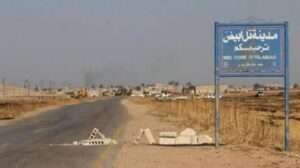
Another aspect of the controversy dates back to 2017, when Al-Nashif’s family announced his death in an airstrike carried out by the International Coalition, and funeral services were held for him, before he reappeared about two years later in the town of Tell Abiad in the Raqqa countryside.
Al-Nashif appeared in Tell Abiad after Turkish forces took control of it in 2019, which raised questions about the circumstances surrounding the prior announcement of his death, amid accounts suggesting that the declaration of his killing was intended to cover up his flight from the International Coalition.
The circulating photo carries particular sensitivity due to its association with the Al-Naim roundabout, which was one of the most prominent locations used by ISIS to carry out public executions and display the bodies and severed heads of victims during its rule over Raqqa. Documented reports from that period indicated that the group hung the heads of government force members at the roundabout as part of practices aimed at spreading fear and terrorizing the city’s residents.
During ISIS rule, Raqqa became a major hub for its activities, while the Al-Naim roundabout was uniquely linked to scenes of public executions, beheadings, and crucifixions. Reports from that era noted that the organization utilized these practices, alongside visual materials and media propaganda, as a means to project its power and entrench a state of fear in the city.
The current controversy falls within a broader context concerning how to handle figures who worked for, or were accused of working with, media institutions or networks affiliated with ISIS while it controlled vast areas of Syria.
Thus, his reappointment has brought back to the forefront the issue of vetting the backgrounds of public officeholders—particularly in the media sector—at a stage when transitional Syria is witnessing debates over individuals assuming official responsibilities and their backgrounds during the years of war, control by armed groups, and extremist organizations.
Note: This text is translated from the original Arabic version… Read the Arabic version:Click here