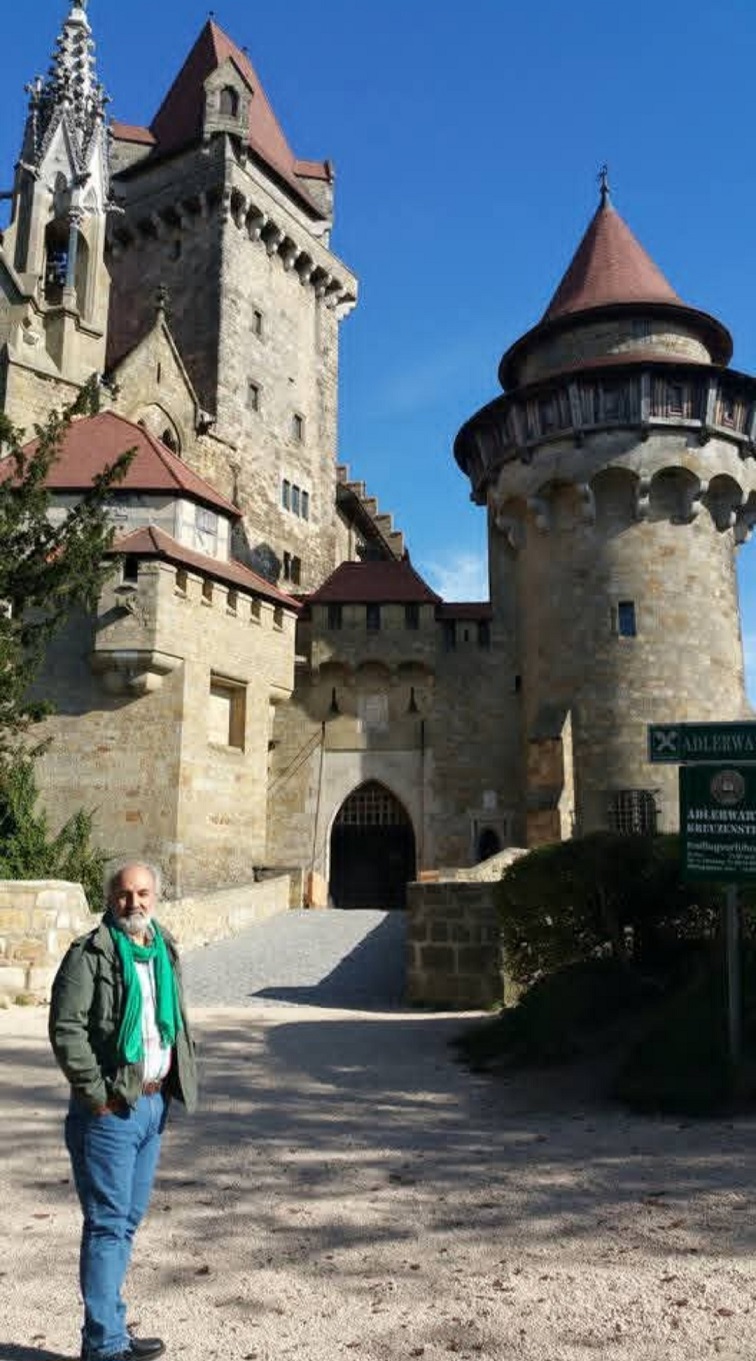
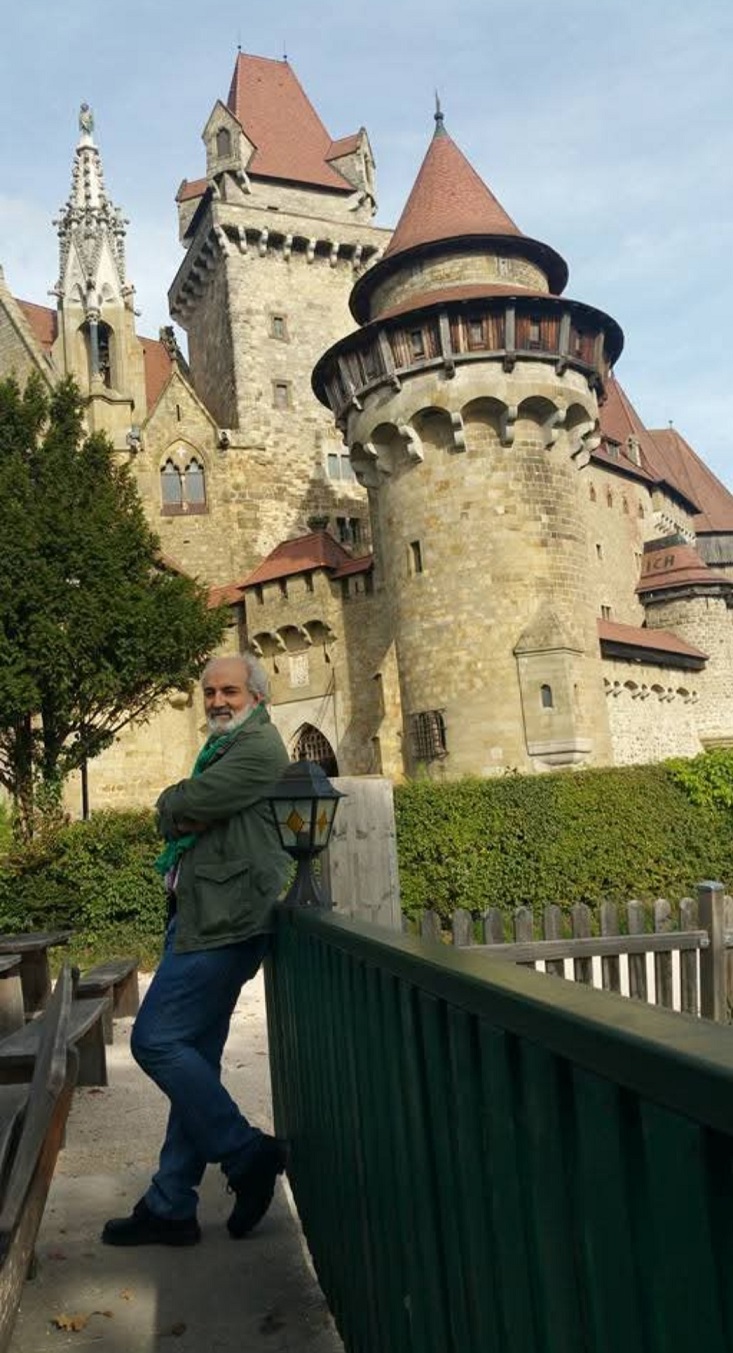
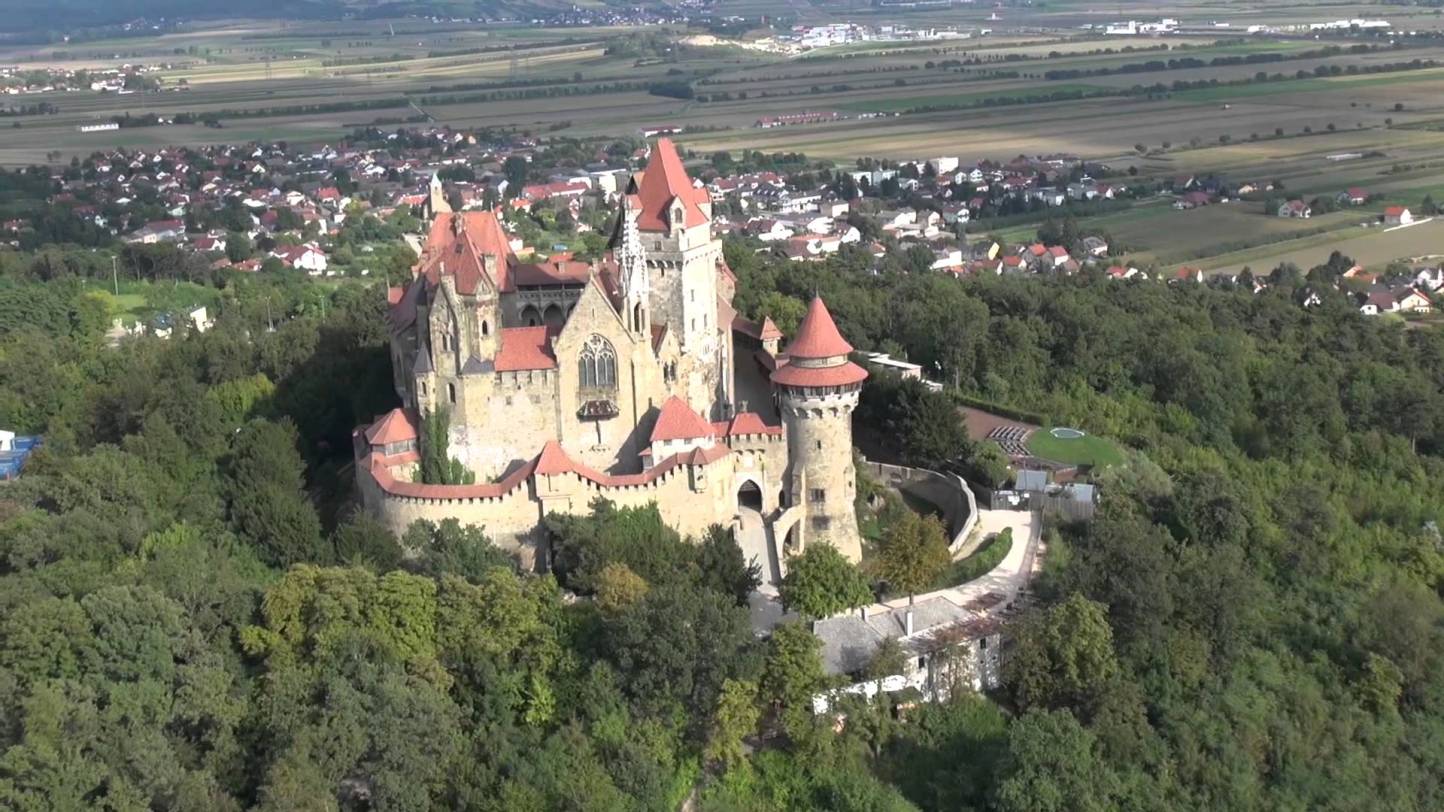
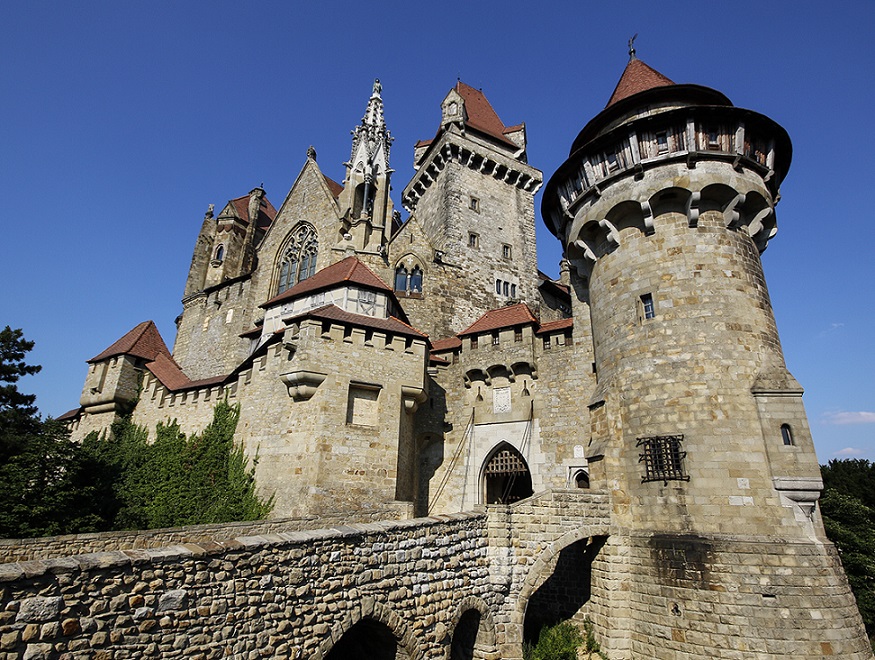
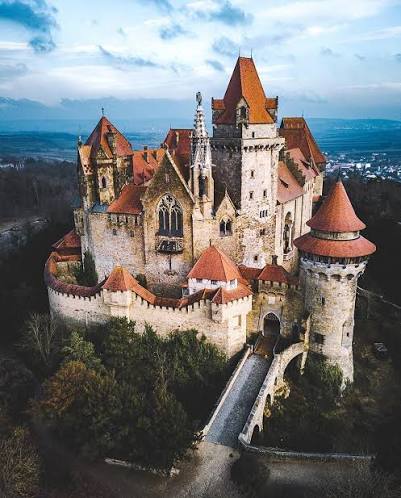
Kreuzenstein Castle… the enchanting pearl and glowing star of Lower Austria visible from afar, situated at an elevation of 260 meters above the level of the Danube River. Among medieval enthusiasts, castle lovers, and romantics, it is known as the jewel of the region and of Austria. Visiting the castle and touring its grounds takes place in groups accompanied by a tour guide, lasting a full hour.
The castle itself is a unique experience of medieval life within walls. It is considered one of the most beautiful and inspiring historical locations for visitors, as well as one of the most stunning, interesting, beloved, and popular tourist attractions, especially for families. The castle doors are open to visitors from the beginning of April until the end of October. A visit to the castle and a tour through its embrace is an enjoyable and exciting journey through the Middle Ages, accompanied by art, history, and refined architecture. The history of the castle dates back to the 12th century, and in the year 1278, it came into the possession of the Habsburgs. It was always an impenetrable fortress against attacks, but during the Thirty Years’ War, the castle was blown up, and by 1645 it lay in ruins. In the 19th century, Count Johann Nepomuk Wilczek laid out the plan to restore and rebuild the castle. His goal was also to build a family crypt beneath the chapel, along with his desire to revive the castle’s medieval features for visitors through a museum curated during the castle’s reconstruction.
The castle was rebuilt in 1874 at an annual cost of 50,000 gulden, and it was believed that the construction would be completed during the visit of the German Emperor, Wilhelm II, in 1906. It is a historical castle perched on a hill among trees overlooking the village of Leobendorf—a charming, picturesque, and ideal location just 22 kilometers from the capital, Vienna, situated between the two towns of Korneuburg and Stockerau. The castle stands at an elevation of 266 meters above sea level, close to the elevation of the Danube River and the Vienna Woods. During my visit to the castle, I saw large numbers of foreign visitors and residents of Vienna heading to visit it, in addition to the beautiful walking trails through the woods. One can also sit at the restaurant and café opposite the castle gate, which enjoys a charming, romantic location where visitors can spend a long time enjoying the view of Lower Austria’s most famous Austrian castle and its architecture, which weaves a medieval architectural masterpiece almost out of fantasy, especially when viewed from afar.
During my visit and tour inside the castle, I noticed giant rocks, and it became clear to me that the castle was built directly on them. The origin stories of the castle state that its importance and existence date back to prehistoric times, but research and documents indicate that the castle was built in the 12th century. In the year 1115 AD, the name “Gritzstein” was mentioned, from which the current name “Kreuzenstein” emerged. It is believed that one of the princes, Dietrich von Kreuzenstein, from the Bavarian family, initiated its planning.
The castle’s bird of prey observatory and arena hold a prominent place among the activities and shows presented at the castle for families and visitors. It offers a unique and magical experience in falconry and bird-of-prey training. The observatory and arena were constructed near the castle, where children, their families, and visitors enjoy watching various species of birds, including falcons and eagles. One can also observe the nests of birds of prey, and workshops are held by trainers for children and bird enthusiasts to learn how to handle and train these birds of prey.
The Castle Armory: The armory inside the castle is considered one of Austria’s largest private historical collections, displaying stunning, priceless artifacts and precious pieces dating back to wartime periods. I saw one of the cannons in the outer moat, which used to be filled with water to defend the castle. The count of heavy weapons reaches one hundred pieces, which were used for castle defense. The weapons in the military depot varied between helmets, armor, hand weapons, and a fine collection of swords. In the museum’s front hall, one can see peasant weapons and a small cannon dating back to the 16th century.
Today, the castle does not belong to the state, as is the case with most Austrian castles; it was sold under conditions requiring the owner to maintain the site and its history, conduct the rituals and celebrations held there during the Middle Ages, and continuously restore it. The castle can be reached by various means, including train and bus. Many feature films have been shot at the castle, and novels and tales have been written about it. Authors who wrote books about it include Johann Paukert, Alfred Ritter von Walcher, and Andreas Nierhaus, in addition to several documentaries produced here. It also houses a hunting hall and hunting paraphernalia. The castle features a wide, charming courtyard with room windows overlooking this beautiful courtyard and magnificent arches, proving that architecture played a significant role in reflecting the taste of princes. A massive gate, towers, pinnacles, history, and medieval times lie just 22 kilometers from Vienna… A journey to the most beautiful Austrian castle in Lower Austria… History itself embraces this enchanting castle… It is Kreuzenstein par excellence!
Note: This text is translated from the original Arabic version… Read the Arabic version:Click here